
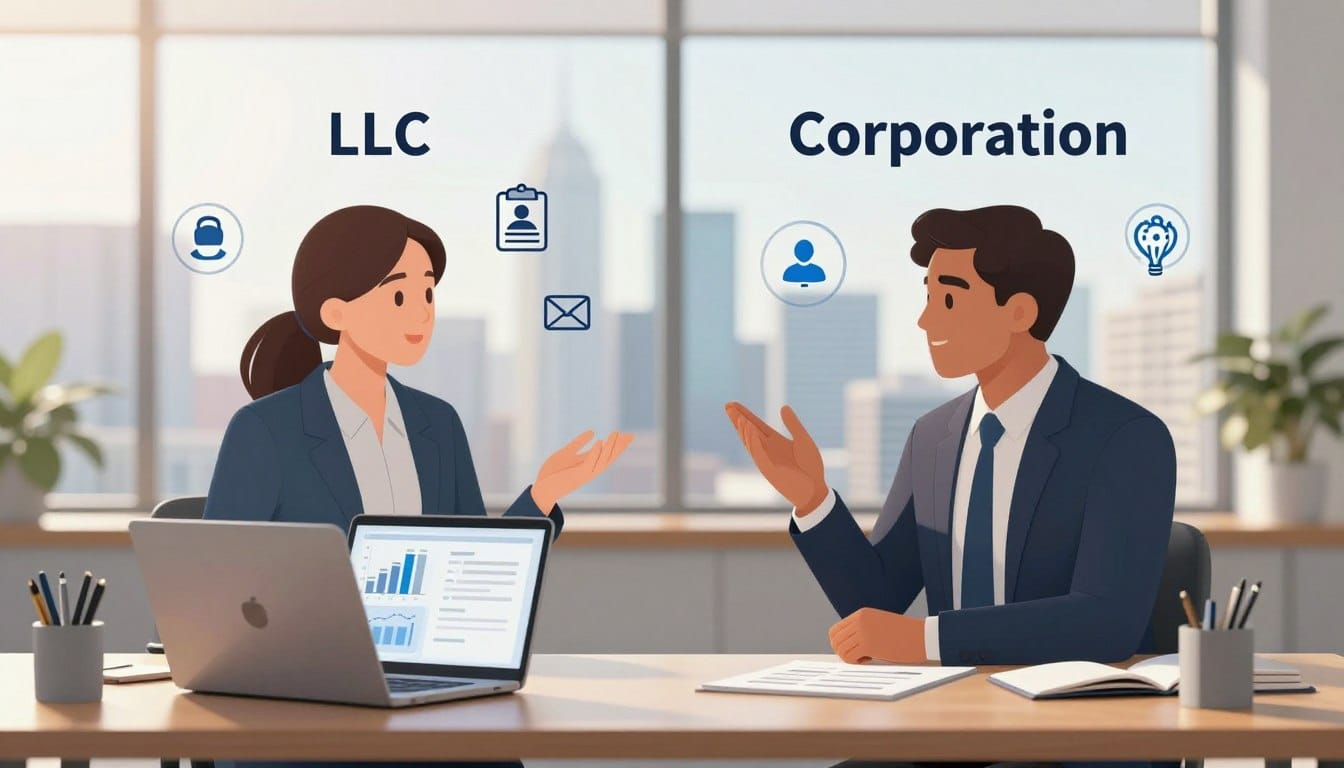


Choosing the right legal foundation for your venture is crucial. New entrepreneurs often face the dilemma of selecting between an LLC and a corporation. This decision impacts everything from daily operations to fundraising and tax obligations.
Both options provide limited liability protection, safeguarding personal assets from business debts and lawsuits. However, the differences between them can significantly influence how profits are taxed and how management is organized.
While an LLC offers operational flexibility and simpler compliance, a corporation presents a formal structure that may appeal to outside investors. Many successful companies start as LLCs and later transition to corporations, but this shift can be complex and costly.
This article serves as a comprehensive guide. It will walk you through the essential considerations, including formation, taxation, and ongoing compliance. By the end, you will have the clarity needed to choose the structure that aligns with your goals and funding needs.
Introduction to LLCs and Corporations
The choice of a legal entity can significantly influence your company’s path. Understanding the purpose of business formation is essential for first-time entrepreneurs. This decision is not merely a matter of paperwork; it has lasting consequences that can shape your venture’s future.
Business formation refers to the legal process of creating a separate entity. This entity can own property, enter contracts, and conduct business independently of its owners. Forming an LLC or a corporation establishes a legal shield between the company’s liabilities and the owners’ personal assets. This protection is crucial for most small business owners.
Without formal business formation, sole proprietors and general partners face unlimited personal liability for all business debts and legal judgments. This means that their personal assets could be at risk if the business encounters financial difficulties.
Choosing the right entity matters because it determines how the business will be taxed, how decisions are made, and how profits are distributed among owners. The wrong structure can lead to excessive taxation, administrative burdens, or difficulty attracting investors, potentially stunting growth.
Both LLCs and corporations are recognized in all 50 states. However, specific formation requirements, filing fees, and ongoing compliance obligations can vary significantly by state. It’s important to understand these nuances when making your decision.
It’s also worth noting that the choice between an LLC and a corporation is not permanent. Conversion is possible, but changing structures midstream can trigger tax consequences and require new filings. Understanding the purpose of business formation helps owners align their legal structure with their long-term vision, whether that involves staying small or pursuing venture capital funding.
This introductory section lays the groundwork for the detailed comparisons that follow. By grasping these fundamental concepts, readers will understand why this decision is foundational to entrepreneurial success.
Key Features and Definitions of LLC and Corporation
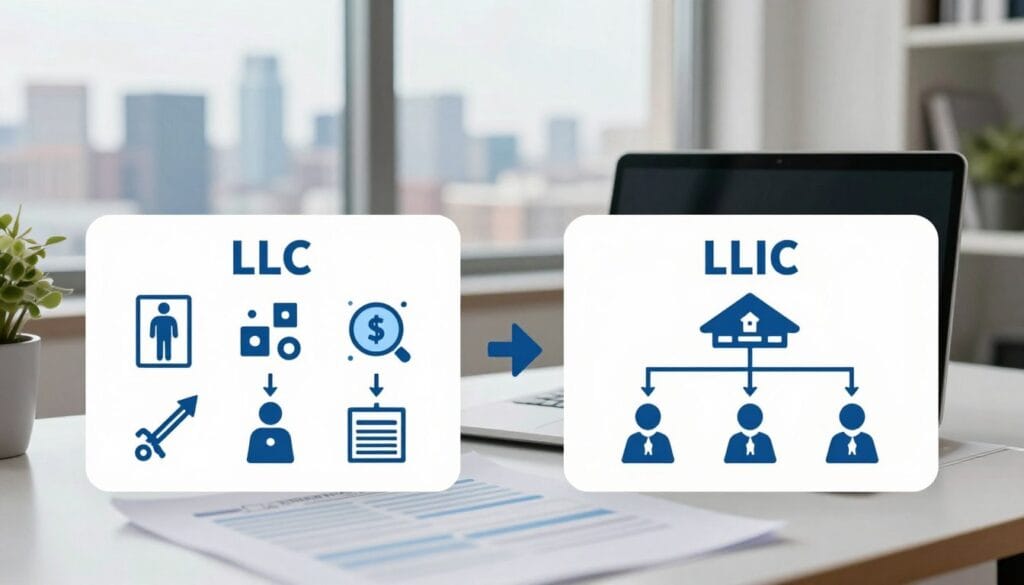
Understanding the core attributes of various business entities is essential for informed decision-making. Two of the most popular forms are the limited liability company and the corporation. Each offers unique benefits and drawbacks that can affect your entrepreneurial journey.
What Is a Limited Liability Company?
A limited liability company (LLC) is a hybrid business structure that combines the liability protection of a corporation with the tax flexibility and operational simplicity of a partnership. This entity type shields its owners, known as members, from personal liability for business debts and obligations.
Members can include individuals, other LLCs, corporations, and even foreign entities. Importantly, there is no limit on the number of members an LLC can have. The default tax treatment for LLCs is known as pass-through taxation. This means that profits and losses flow directly to members’ personal tax returns, avoiding corporate-level taxation.
What Is a Corporation?
A corporation is a distinct legal entity that can own property, sue and be sued, and exist perpetually, regardless of changes in ownership. This separation provides a strong shield against personal liability for the owners, referred to as shareholders.
The default corporate structure is the C corporation, which is subject to double taxation. In this scenario, the corporation pays taxes on its profits, and shareholders also pay taxes on dividends received. To mitigate this, businesses may opt for the S corporation election, allowing them to enjoy pass-through taxation while maintaining a corporate structure. However, this option is limited to 100 shareholders who must be U.S. citizens or residents.
Types of Corporations
Understanding the various types of corporations can help clarify your options:
| Type of Corporation | Description |
|---|---|
| C Corporation | Standard corporate structure subject to double taxation. |
| S Corporation | Allows pass-through taxation, limited to 100 shareholders. |
| B Corporation | A for-profit entity committed to creating public benefit, certified by B Lab. |
| Nonprofit Corporation | Tax-exempt entities organized for charitable purposes under IRS 501(c)(3). |
| Professional Corporation (PC) | Designed for licensed professionals like doctors and lawyers. |
| Close Corporation | Limited shareholders, operates more like a partnership with restrictions on stock transferability. |
Each type of corporation serves different needs and objectives, making it crucial for entrepreneurs to evaluate their specific circumstances.
Management Structures: Differences and Similarities
Understanding how management operates within different legal entities is vital for any entrepreneur. The governance of a company significantly affects its daily operations and overall success. This section will delve into the management structures of limited liability companies and corporations, highlighting their unique features and requirements.
LLC Management: Member-Managed vs. Manager-Managed
In an LLC, members have the flexibility to choose their management style. They can opt for a member-managed structure, where all owners actively participate in decision-making. This setup is ideal for small businesses, allowing founders to maintain hands-on involvement in day-to-day operations.
Alternatively, an LLC can adopt a manager-managed approach. In this case, members appoint one or more managers—who may be members themselves or outside professionals—to handle business affairs. This allows other owners to remain passive investors, which can be beneficial for those who prefer not to engage in daily operations.
Corporate Management: Shareholders, Board of Directors, and Officers
Corporations, on the other hand, have a more structured management hierarchy. Shareholders elect a board of directors to oversee major business decisions and strategy. The board then appoints officers, such as a CEO and CFO, to manage day-to-day operations.
It’s important to note that corporate directors must be natural persons and cannot vote by proxy. This creates a more formal governance environment compared to the flexible proxy voting allowed in LLCs.
Compliance Requirements for Management and Meetings
Corporations face stringent compliance requirements. They must hold annual shareholder meetings, provide proper notice, and maintain recorded minutes. Formal board resolutions are also necessary for significant decisions.
In contrast, LLCs are generally not required to hold annual meetings or maintain formal minutes. However, adopting such practices can enhance liability protection by demonstrating adherence to proper business formalities.
When deciding between member-managed and manager-managed structures, it’s crucial for owners to document their choice in the operating agreement. This can help prevent disputes among members.
For startups seeking venture capital, the corporate board structure is often more familiar to investors. It provides clear governance mechanisms that the flexibility of an LLC cannot replicate.
Ownership and Transferability of Interests

Ownership dynamics play a crucial role in shaping the future of your venture. Understanding how ownership is structured can help you navigate the complexities of your venture. This section will clarify the differences between ownership in limited liability companies and corporations, focusing on how easily ownership interests can be sold, transferred, or diluted.
LLC Members and Membership Interests
In a limited liability company, ownership is represented by membership interests. These interests are typically expressed as a percentage. Each member’s rights and obligations are detailed in the operating agreement. This document outlines how profits are distributed and the responsibilities of each member.
Corporation Shareholders and Stock Ownership
Corporation ownership is divided into shares of stock. These shares can be issued in different classes, each with varying voting rights, dividend preferences, and liquidation priorities. Shareholders elect a board of directors to oversee the company’s operations and make significant decisions.
Transferability and Flexibility in Ownership
One of the key advantages of corporations is the ease of transferring stock. Shareholders can sell their interests without disrupting business operations or needing approval from other owners. This flexibility makes corporations attractive for outside investment and public stock offerings.
In contrast, transferring membership interests in an LLC is often more restrictive. Most LLCs require the consent of existing members before admitting a new member. This limitation can complicate ownership transfers and make it harder to bring in new investors.
Corporations can issue common stock with voting rights, preferred stock with priority on dividends, or non-voting stock. This variety allows them to attract different types of investors. While LLCs can also create different classes of membership interests, they allow for financial rights to be split among members, enabling some to receive larger profit distributions than others.
It is important to note that S corporations are limited to one class of stock, which restricts their ability to create preferential distribution arrangements among shareholders. Additionally, corporations enjoy perpetual existence, meaning the business continues even if shareholders leave or pass away. In some states, an LLC may dissolve if a member departs unless the operating agreement specifies otherwise.
Professional investors, including venture capitalists, often prefer corporations because of their standardized governance structure and the ease of transferring stock. For business owners planning to eventually sell the company or go public, the transferable stock structure of a corporation provides a clear path to liquidity that LLC membership interests cannot easily replicate.
| Feature | LLC | Corporation |
|---|---|---|
| Ownership Representation | Membership interests (percentage) | Shares of stock |
| Transferability | Requires member consent | Generally unrestricted |
| Classes of Ownership | Multiple classes allowed | Multiple classes allowed (with restrictions for S corps) |
| Perpetual Existence | Not guaranteed | Guaranteed |
| Investor Preference | Less preferred | More preferred |
Taxation Differences Between LLCs and Corporations
The way your venture is taxed can greatly affect its profitability and growth potential. Understanding the taxation structure of each entity is crucial for making an informed decision. Here, we will explore the differences between taxation for limited liability companies and corporations.
Pass-Through Taxation vs. Double Taxation
For many entrepreneurs, the concept of pass-through taxation is appealing. This tax treatment allows business profits and losses to flow directly to the owners’ personal tax returns. Consequently, owners avoid taxation at the entity level entirely. Here are key points regarding pass-through taxation:
- Single-member entities are taxed as sole proprietorships, requiring the owner to report business income on Schedule C of their personal tax return.
- Multi-member entities are taxed as partnerships, with each member receiving a Schedule K-1 to report their share of profits.
In contrast, corporations typically face double taxation. This means the corporation pays federal and state corporate income tax on its profits. Afterward, shareholders pay personal income tax on dividends distributed from those profits. This can significantly impact the overall income received by owners.
S Corporation Election and Its Impact
Some corporations and LLCs can elect to be taxed as an S corporation. This option allows them to enjoy pass-through taxation while potentially reducing self-employment tax obligations. However, there are specific eligibility requirements:
- No more than 100 shareholders.
- All shareholders must be U.S. citizens or residents.
- Only one class of stock is permitted.
By meeting these criteria, businesses can avoid double taxation, making this an attractive option for many owners.
Tax Flexibility and Planning Options
One of the significant advantages of limited liability companies is their tax flexibility. They can choose how they want to be taxed, whether as:
- Sole proprietorships
- Partnerships
- C corporations
- S corporations
In contrast, corporations have less flexibility. The default is C corporation taxation, and while S corporation election is possible, eligibility restrictions may prevent some from qualifying.
Additionally, the Tax Cuts and Jobs Act of 2017 introduced a 20% qualified business income deduction for eligible pass-through entities. This allows owners to deduct up to 20% of qualified business income from their taxable income, further enhancing the appeal of pass-through taxation.
Ultimately, effective tax planning should involve consultation with a qualified CPA or tax professional. The optimal tax structure will depend on factors such as profit levels, owner compensation, and long-term growth strategies.
Compliance, Recordkeeping, and Formalities
Maintaining good standing requires understanding the compliance obligations of your chosen entity. Both limited liability companies and corporations have specific requirements that must be met to avoid penalties. New business owners often overlook these crucial details, which can lead to serious consequences.
One of the primary obligations for both entities is the filing of annual reports. These reports, which may be biennial in some states, must include essential information such as the company name, principal office address, registered agent details, and the names of managing officials. Failure to file these reports can result in losing good standing status, which could escalate to administrative dissolution.
Filing Requirements: Annual Reports and Franchise Taxes
In addition to annual reports, many states impose franchise taxes. These are fees charged for the privilege of operating as an LLC or corporation. The calculation of these taxes varies by state; some are based on revenue, while others may use net worth or a flat fee. Not paying these taxes can lead to severe penalties, including loss of limited liability protection.
Registered Agent Obligations
Every LLC and corporation must appoint a registered agent. This individual or company must have a physical address in the formation state. The registered agent is responsible for receiving legal documents and official state communications. It is crucial to have a reliable registered agent to ensure that time-sensitive documents are received promptly, protecting the business from default judgments.
Business owners are encouraged to consider using a professional registered agent service rather than appointing an employee or owner. This can help maintain privacy and ensure reliable communication.
Record Maintenance and Inspection Rights
Both LLC members and corporate shareholders have specific recordkeeping obligations. Companies must maintain governing documents, owner lists, and certain tax returns at their principal place of business. Additionally, members and shareholders have statutory rights to inspect these records. They can demand access to additional documents if they have a proper purpose and follow the required procedures.
Furthermore, both entities may be required to file a beneficial ownership information report with FinCEN. This report discloses individuals with substantial control over the company, enhancing transparency and compliance.
While corporations face stricter formalities, such as mandatory annual meetings and recorded minutes, LLCs can benefit from adopting similar practices. This can reinforce liability protection and help prevent veil-piercing claims.
| Requirement | LLCs | Corporations |
|---|---|---|
| Annual Reports | Required (biennial in some states) | Required (biennial in some states) |
| Franchise Taxes | State-imposed fees | State-imposed fees |
| Registered Agent | Required | Required |
| Record Maintenance | ||
| Inspection Rights |
How to Decide: LLC vs Corporation: Which Business Structure Is Best
Selecting the appropriate legal form for your operation can greatly impact your future. This decision is not merely about compliance; it shapes your business goals, funding strategies, and overall management style. Here, we will explore essential factors to help you make an informed choice.
Business Goals and Long-Term Vision
First, consider your business goals. If you aim to remain a small, owner-operated venture, an LLC’s simplicity and tax advantages may suit you well. However, if you envision rapid growth or outside investment, a corporation may be the better choice.
Funding Needs and Investor Preferences
Funding needs are crucial in this decision. Venture capitalists and angel investors typically prefer corporations due to their familiar governance structure. The ability to issue preferred shares and easily transfer stock makes corporations more attractive for investment.
Operational Flexibility and Management Preferences
Next, think about operational flexibility. LLCs allow owners to design their management structure through the operating agreement, which can be tailored to their needs. Conversely, corporations have a standardized framework that can scale well with larger teams.
Tax Implications for Your Business
Tax implications also play a significant role. A solo entrepreneur with modest profits may benefit most from an LLC taxed as a sole proprietorship. In contrast, a high-growth startup planning to reinvest profits might prefer a corporation, despite the double taxation.
Professional Advice and Resources
Finally, seeking professional advice is invaluable. Consulting with a certified public accountant or business attorney can help clarify state-specific laws and individual tax situations. Resources like Stripe Atlas can assist founders in incorporating and obtaining necessary legal documents.
Both LLCs and corporations offer liability protection, shielding personal assets from business liabilities when properly maintained. Regardless of your choice, understanding these differences will empower you to make the best decision for your venture.
| Consideration | LLC | Corporation |
|---|---|---|
| Ideal for Small Businesses | Yes | No |
| Attracting Investors | Less preferred | More preferred |
| Management Flexibility | High | Standardized |
| Tax Structure | Pass-through | Double taxation |
| Personal Asset Protection | Yes | Yes |
Conclusion
Choosing the right legal foundation for your enterprise influences its operational success and financial health. LLCs provide flexibility, simplicity, and pass-through taxation, while corporations offer a formal structure that facilitates capital raising and ownership transfer.
Both options deliver essential liability protection, safeguarding personal assets from business debts. The decision ultimately depends on your specific goals. If you aim for venture capital or an IPO, a corporation may be the better choice. Conversely, if you prioritize operational simplicity and tax efficiency, consider an LLC.
Remember, many successful companies start as LLCs and transition to corporations as their needs evolve. However, such conversions can be complex. Take the time to consult professionals and understand your state’s requirements. Investing in this knowledge can lead to reduced tax burdens and a strong legal foundation for growth.
With the right choice, you empower your venture for long-term success.


 By
By