


In today’s digital age, a virtual currency has emerged as a revolutionary form of payment. This currency is widely recognized for its potential as both an investment and a means to purchase goods and services. Its volatile nature requires users to grasp the underlying system effectively.
This comprehensive guide will delve into the world of cryptocurrency, specifically focusing on its decentralized nature. Operating independently of traditional government or banking systems, this digital asset presents unique opportunities and challenges.
Readers will discover how this currency functions as a speculative investment while also serving as a practical medium for various global services. Our analysis will cover the fundamental mechanics of the network, ensuring you are equipped with the knowledge to make informed decisions.
By the end of this guide, you will have a solid understanding of the core concepts surrounding cryptocurrency and how to navigate the modern financial landscape.
Key Takeaways
- This guide provides essential insights into virtual currency.
- Understand the decentralized nature of this digital asset.
- Learn about its dual role as an investment and payment method.
- Explore the fundamental mechanics of the cryptocurrency network.
- Gain knowledge to make informed financial decisions.
Overview of Bitcoin and Its Evolution
The rise of digital currencies has transformed the landscape of modern finance. Bitcoin, the first of its kind, was introduced in 2009 by an anonymous entity known as Satoshi Nakamoto. This innovative form of currency emerged from a whitepaper published in 2008, laying the groundwork for a decentralized monetary system.
Since its inception, bitcoin has evolved significantly. Initially viewed as an experimental technology, it has grown into a globally recognized digital asset. The protocol ensures that this currency operates independently of any central authority, providing a transparent form of money.
A major milestone in its history is the hard cap of 21 million coins, designed to create scarcity similar to that of physical gold. This limit not only adds value but also attracts a growing community of users and investors.
| Year | Milestone | Significance |
|---|---|---|
| 2008 | Whitepaper Published | Foundation of bitcoin concept by Satoshi Nakamoto |
| 2009 | Launch of Bitcoin | First transaction and mining of the first block |
| 2010 | First Commercial Transaction | Bitcoin used to purchase goods, increasing its legitimacy |
| 2017 | Price Surge | Bitcoin reaches an all-time high, gaining media attention |
Understanding Blockchain Technology
The emergence of digital currencies marks a pivotal shift in financial transactions. At the heart of this transformation lies blockchain technology, a globally distributed public ledger. This system records and validates every transaction across a vast network of servers.
Blockchain technology serves as the backbone of the entire ecosystem, acting as a permanent and immutable record of all historical transactions. This decentralized ledger is distributed across thousands of nodes, ensuring that no single entity can manipulate or alter the recorded data.
By utilizing advanced cryptography, the network ensures that each block of data is securely linked to the one that preceded it. The transparency of this blockchain technology allows any participant to verify the integrity of the system without needing a central intermediary.
Security is maintained through these mathematical proofs, which protect the network against unauthorized access and fraudulent attempts to spend the same funds. Below is a summary of the essential features of blockchain technology:
| Feature | Description |
|---|---|
| Decentralization | No central authority controls the ledger. |
| Immutability | Once recorded, transactions cannot be altered. |
| Transparency | All transactions are visible to participants. |
| Security | Advanced cryptography secures data and ownership. |
The Fundamentals of Bitcoin Transactions
The world of digital currencies operates on a unique framework that defines how transactions occur. Each time a user initiates a transaction, the details are broadcast to the network. Here, miners play a crucial role in verifying the legitimacy of the request.
Typically, the time required to confirm these transactions ranges from 10 to 60 minutes, depending on network activity. This variability is essential for users to understand, as it affects how quickly they can complete their transactions.
Users must also consider transaction fees, which usually range from $0.50 to $2.50. These fees can fluctuate based on the size of the data being processed and the current congestion of the network.
Once a transaction is verified and added to a block, it becomes a permanent part of the blockchain. This irreversible process allows for global payments to be settled efficiently, without relying on traditional banking systems.
What Is Bitcoin and How Does It Work
Digital currency operates on a decentralized framework that empowers users to transact directly without intermediaries. At its core, bitcoin is a digital currency that enables people to send money globally without relying on a traditional bank.
This system functions as a decentralized network where thousands of computers adhere to the same rules established by Satoshi Nakamoto. Because there is no central authority, no single government or corporation can freeze funds or unilaterally change the rules of the protocol.
This technology relies on a shared digital system that records balances and verifies ownership through a public ledger accessible to everyone. Understanding the essence of this digital asset requires recognizing that it exists solely in digital form, with no physical counterpart.
| Feature | Description |
|---|---|
| Decentralization | Users transact directly without intermediaries. |
| Governance | Rules established by Satoshi Nakamoto guide the network. |
| Accessibility | Public ledger allows anyone to verify transactions. |
| Physical Form | Bitcoin exists purely as a digital asset. |

Exploring Cryptocurrency and Digital Currency Benefits
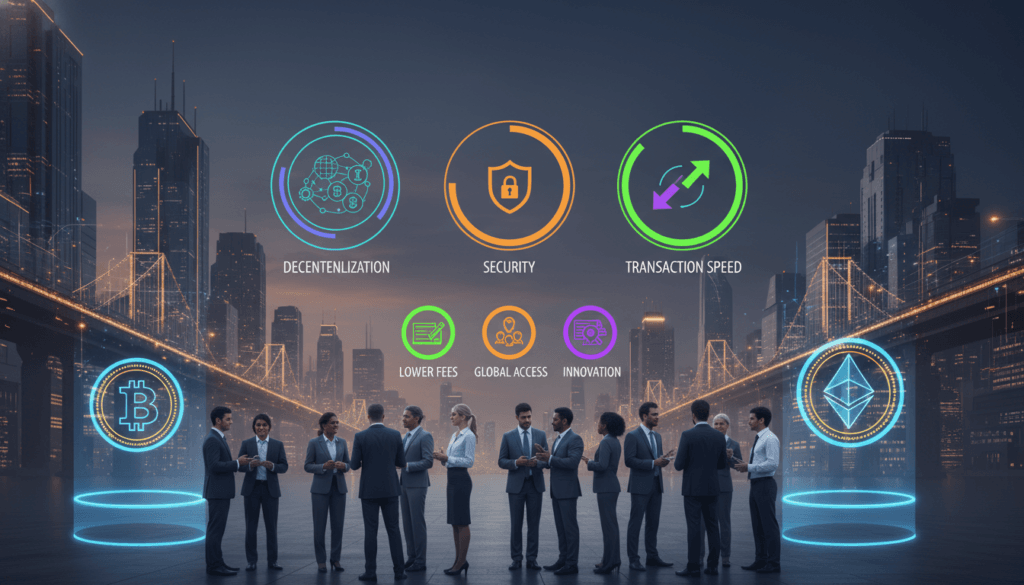
The rise of cryptocurrencies introduces fresh opportunities for individuals seeking financial independence. These digital assets provide significant advantages over traditional forms of currency.
One primary benefit of cryptocurrency is its ability to offer global access to financial services for people who lack traditional bank accounts. This accessibility allows users to send and receive funds without the constraints of conventional banking.
Additionally, digital currency enables faster international transfers compared to legacy systems, which often take several days to settle across borders. Users maintain direct control over their funds through private keys, eliminating the need to trust a third-party financial institution.
The decentralized nature of this currency serves as a hedge against inflation and government-led monetary policies that impact traditional fiat money. By removing intermediaries, the system reduces friction and costs typically associated with moving value across different countries.
Bitcoin Wallets, Exchanges, and Payment Process
The introduction of virtual currencies is changing the way individuals engage in financial activities. A bitcoin wallet is essential for storing the cryptographic keys that grant access to digital assets on the blockchain. Selecting the right wallet is critical, as hardware wallets provide superior security by keeping private keys offline, protecting them from internet threats.
To buy or trade bitcoin, users must open an account on a reputable cryptocurrency exchange. These platforms serve as marketplaces for converting local fiat currency into bitcoin or other digital assets. While software wallets offer convenience for daily payments, paper wallets present a low-tech solution for long-term storage.
When comparing exchanges, consider factors like fee structures, security protocols, and the variety of supported digital assets. Managing your own wallet comes with responsibility; losing access to private keys means losing funds permanently, with no recovery options available.
Risks, Volatility, and Market Dynamics
Virtual currencies are reshaping the way individuals perceive and engage with money. The market for these assets is marked by extreme volatility, where the price can fluctuate rapidly. Investor sentiment and global economic trends heavily influence these changes.
As of October 2025, one bitcoin reached a staggering $120,000, showcasing the unpredictable nature of its value. This volatility highlights the potential for both significant gains and losses.
Investors must remain vigilant. The lack of historical data complicates predictions about future performance. Therefore, managing risk is crucial.
- Consider diversifying your portfolio to mitigate potential losses.
- Only invest money you can afford to lose in this speculative market.
- Be cautious of scams and fraudulent websites targeting new investors.
- Utilize well-established and regulated platforms for trading.
| Aspect | Description |
|---|---|
| Market Volatility | Rapid price changes based on sentiment and trends. |
| Investment Risk | High potential for loss due to unpredictable nature. |
| Price Example | Bitcoin reached $120,000 in October 2025. |
| Investor Caution | Use regulated platforms to avoid scams. |
Mining, Nodes, and Transaction Verification
Mining and network nodes form the backbone of transaction verification in the realm of cryptocurrency. The integrity of this system relies on over 18,000 nodes that actively monitor blockchain activity. These nodes ensure that all incoming transactions adhere to the established protocol rules.
Miners play a vital role by competing to solve complex cryptographic puzzles. This process secures the network and validates the history of transactions. Each time a miner successfully solves a puzzle, they add a new block to the chain and earn newly created bitcoin along with transaction fees.
This mining process is essential for controlling the issuance of new coins into circulation. Without these dedicated nodes and miners, the decentralized technology would struggle to maintain its integrity or prevent double-spending of digital assets.
Participants can also run their own nodes to access valuable information about the network’s status. This contribution enhances the overall health of the system, promoting transparency and security.
Steps to Buy and Use Bitcoin
Acquiring digital currency is now easier than ever, thanks to the growing number of platforms and services. To start, investors must set up an account on a regulated exchange. This process involves verifying identity to comply with financial regulations.
Once the account is funded, users can buy or sell bitcoin directly. Alternatively, they can opt for indirect exposure through recently approved spot bitcoin exchange-traded products. On January 10, 2024, the SEC approved trading in these products, making it simpler for users to invest.
For everyday use, you can send bitcoin as a payment to any merchant that accepts digital currency. This is done by scanning a unique address provided by the merchant. Additionally, bitcoin ATMs offer an alternative way to acquire coins, allowing users to pay with cash or debit cards without using online exchanges.
Always ensure your payment details are correct before sending. Transactions are irreversible and cannot be recovered if sent to the wrong address.
Bitcoin as an Investment and Currency
In the evolving landscape of finance, digital assets are gaining traction as both a currency and an investment. Many investors treat bitcoin as a long-term investment, comparing its scarcity to physical gold due to the fixed 21 million coin limit.
As a currency, it offers a borderless way to store value. However, its utility as a medium of exchange is often limited by price volatility. The potential for future value appreciation drives interest among those looking to diversify their portfolios beyond traditional stocks and bonds.
While it functions as a currency, its primary use for many remains as a speculative asset held for potential gains over several years. Investors should carefully consider the role of bitcoin in their overall financial strategy, keeping in mind the risks of a new asset class.
- Many investors view bitcoin as a long-term investment.
- Its scarcity mirrors that of gold, enhancing its appeal.
- Price volatility limits its utility as a currency.
- It offers diversification beyond traditional investments.
- Investors must assess risks associated with this new asset class.
The Future of Bitcoin and Its Impact on Finance
In an era of rapid technological growth, digital currencies are poised to redefine financial transactions. The future of this asset largely depends on how government agencies regulate its integration into the global financial market.
Emerging trends indicate that more institutions are likely to adopt blockchain technology. This shift could lead to greater mainstream acceptance of digital assets, enhancing their legitimacy.
However, regulatory developments pose a significant risk. New laws may affect how individuals buy, sell, and store their bitcoin holdings. Governments are currently gathering information to determine how to tax and monitor cryptocurrency transactions, aiming to prevent fraud and illegal activities.
As the market matures, the influence of this currency on traditional finance will likely grow. Banks may need to adapt to these new digital realities to remain relevant.
Conclusion
The advent of decentralized currencies is reshaping our understanding of financial systems. Bitcoin signifies a revolutionary shift, utilizing blockchain technology to create a transparent financial framework. While the potential for investment growth is substantial, the inherent volatility requires participants to remain cautious and well-informed.
We have explored essential information about how mining, nodes, and wallets work together to secure the entire cryptocurrency ecosystem. As you continue your journey, remember that grasping the fundamentals is crucial for navigating the complexities of this digital market.
Whether you use it for payments or as a long-term store of value, bitcoin remains a cornerstone of the modern cryptocurrency landscape.

 By
By