
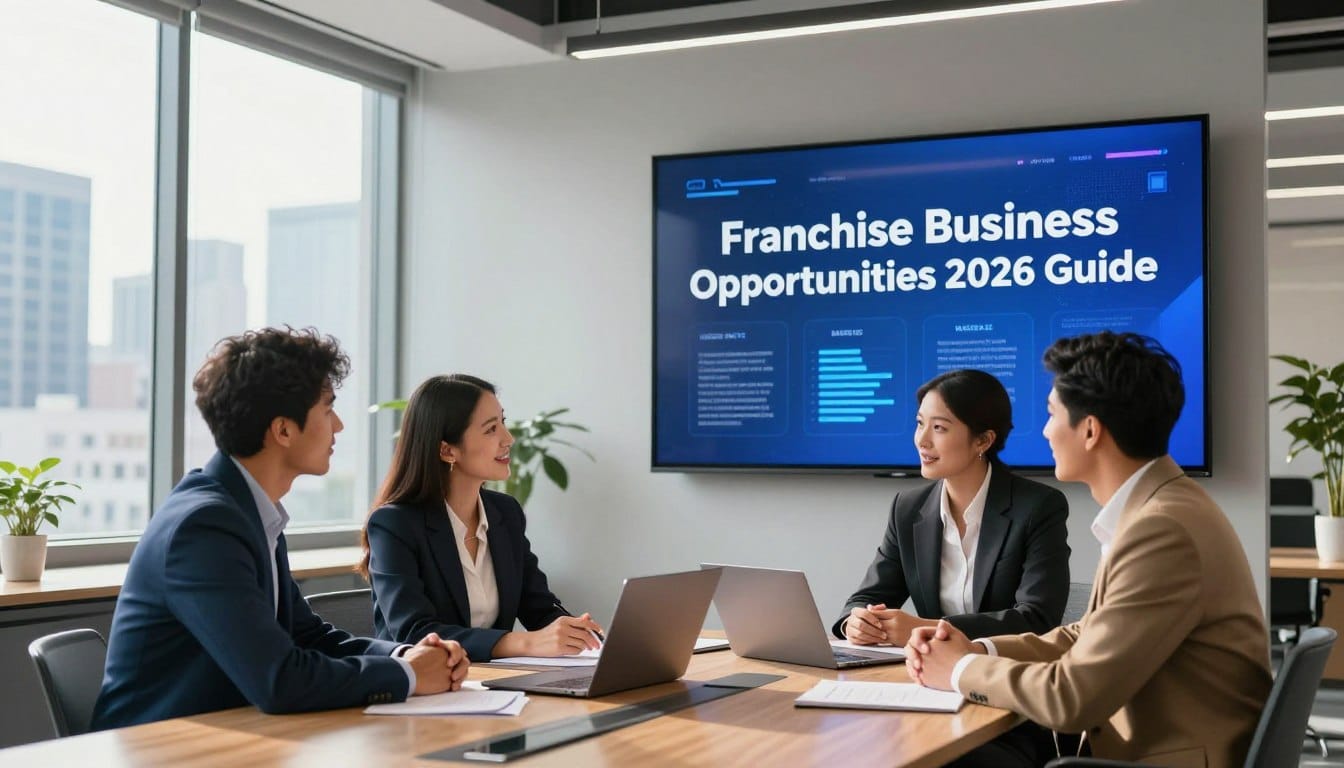


Entering the American market requires a clear vision and a reliable roadmap. Our comprehensive Franchise Business Opportunities 2026 Guide serves as an essential resource for aspiring entrepreneurs ready to take the next step. This sector is evolving rapidly, offering diverse paths for those seeking financial independence.
Navigating the complexities of ownership demands rigorous due diligence. By evaluating current market trends, you can identify ventures that align perfectly with your professional background and long-term financial goals. Success in this competitive landscape is rarely accidental; it is the result of careful preparation.
This Guide helps you filter through various Opportunities to find a model that fits your lifestyle. Whether you are a first-time owner or an experienced investor, strategic planning remains the cornerstone of your journey. Use this 2026 framework to build a sustainable Business and secure your future in the thriving Franchise ecosystem.
Key Takeaways
- Understand the current landscape of the American market for new owners.
- Prioritize thorough due diligence to mitigate potential financial risks.
- Align potential ventures with your specific professional experience and goals.
- Utilize strategic planning to ensure long-term operational success.
- Leverage expert resources to navigate complex ownership requirements effectively.
The State of the Franchise Industry in 2026
As we navigate 2026, the franchise sector is proving to be more resilient and innovative than ever before. Investors are closely watching how franchise industry trends influence long-term profitability and operational success. This year, the market is defined by a blend of technological integration and a renewed focus on consumer convenience.
Emerging Trends Shaping the Market
Modern consumers now demand seamless digital experiences, forcing brands to prioritize mobile-first platforms and AI-driven customer service. Sustainability has also moved from a niche preference to a core business requirement. Many top-tier brands are now adopting eco-friendly supply chains to attract younger, value-driven demographics.
“The most successful franchises in 2026 are those that view technology not as an expense, but as the primary engine for customer loyalty and operational efficiency.”
Economic Outlook for Small Business Owners
The economic climate for small business owners remains complex yet promising. While interest rates have stabilized, entrepreneurs must remain diligent regarding capital management and debt servicing. Labor market stability has improved, allowing owners to focus more on retention and team development rather than constant recruitment.
Strategic planning is vital for those seeking new franchise opportunities in this environment. By focusing on lean operations and high-margin services, owners can mitigate risks associated with broader economic fluctuations. Financial discipline remains the cornerstone of success for any new venture.
The Shift Toward Service-Based Franchises
There is a clear transition occurring as service-based models continue to outperform traditional retail sectors. These businesses often require lower overhead costs and provide essential services that remain in demand regardless of economic cycles. Key areas experiencing rapid growth include:
- Home maintenance and repair services
- Personalized health and wellness coaching
- Specialized professional consulting
- Tech-enabled logistics and delivery solutions
This pivot toward service-oriented franchise opportunities highlights a fundamental change in how Americans spend their disposable income. Investors who align their portfolios with these high-growth sectors are better positioned to capitalize on current franchise industry trends. Ultimately, the ability to adapt to these shifting demands will define the leaders of the 2026 market.
Key Franchise Business Opportunities 2026 Guide for Success
Navigating the complex landscape of entrepreneurship requires a clear vision of where the market is heading. The Franchise Business Opportunities 2026 Guide serves as a vital resource for investors aiming to align their capital with high-demand industries. By focusing on sectors with proven scalability, you can position yourself for long-term success in a competitive economy.
High-Growth Sectors in the United States
Several industries are currently outpacing others in terms of expansion and consumer interest. These sectors offer some of the best franchise opportunities for those looking to enter the market with a strong foundation.
- Healthcare and Wellness: Aging populations continue to drive demand for home health care and specialized medical services.
- Home Services: From professional cleaning to HVAC repair, homeowners are increasingly outsourcing maintenance tasks.
- Specialized Education: Tutoring centers and skill-based training programs remain essential as families prioritize academic and professional development.
Identifying Recession-Resistant Business Models
A smart investor knows that stability is just as important as growth. Recession-resistant models are those that provide essential services which consumers cannot easily cut from their budgets, regardless of the economic climate.
“The most resilient businesses are those that solve a fundamental problem for the customer, ensuring steady demand even when the economy faces headwinds.”
To identify these models, look for businesses with low overhead, recurring revenue streams, and a loyal customer base. These traits often define the best franchise opportunities during periods of financial uncertainty.
Evaluating Emerging Brands vs Established Giants
Choosing between a new, trendy brand and a well-known industry leader involves a careful balance of risk and reward. Each path offers distinct advantages that can impact your bottom line.
| Feature | Emerging Brands | Established Giants |
|---|---|---|
| Initial Cost | Lower | Higher |
| Brand Recognition | Developing | High |
| Growth Potential | High (Early Adopter) | Stable |
Emerging brands often provide more flexibility and prime territory availability, while established giants offer proven systems and immediate brand trust. Your choice should reflect your personal risk tolerance and your desire for either rapid market disruption or steady, predictable growth. Utilizing this Franchise Business Opportunities 2026 Guide will help you weigh these factors effectively as you make your final decision.
Evaluating Profitable Franchise Models
Smart investors know that the best franchise opportunities are built on solid, transparent data. Moving past the initial excitement of a brand requires a cold, hard look at the numbers that drive daily operations.
Analyzing Unit Economics and Profit Margins
To identify profitable franchises, you must examine the Item 19 disclosures within the franchise document. This section provides a window into the financial performance of existing units, helping you estimate your potential return on investment.
Focus your analysis on gross profit margins and the projected break-even timeline. Understanding these metrics is essential to ensure that the business model remains viable in your specific market conditions.
“The secret to success in franchising is not just finding a popular brand, but finding one where the unit economics support long-term sustainability.”
Assessing Brand Reputation and Support Systems
Beyond the balance sheet, the strength of a brand’s reputation serves as a key indicator of future success. When researching various franchise opportunities, look for companies that maintain high levels of customer loyalty and positive public perception.
A robust support system is equally vital for your growth. Evaluate the following components provided by the franchisor:
- Comprehensive initial training programs for staff.
- Ongoing operational guidance and field support.
- Access to centralized marketing and supply chain resources.
Understanding the Importance of Territory Protection
Securing a protected territory is a critical step in safeguarding your investment. Without clear contractual language, you risk market saturation caused by the franchisor opening competing locations nearby.
Always verify that your agreement includes specific geographic boundaries or population-based protections. This strategic advantage prevents internal competition and allows you to focus entirely on building a loyal customer base within your designated area.
Financial Requirements and Investment Planning

Navigating the financial landscape is a critical step for any aspiring entrepreneur looking to enter the world of franchise business. A clear understanding of your capital needs ensures that you remain solvent during the early stages of operation. Proper planning helps you avoid common pitfalls that often derail new business owners.
Calculating Total Initial Investment Costs
Every franchise investment opportunities profile begins with a detailed look at the initial capital required. You must account for the upfront franchise fee, which grants you the right to operate under the brand’s name. Beyond this, you need to budget for leasehold improvements, specialized equipment, and initial inventory.
Working capital is another vital component that many new owners overlook. You should maintain enough cash reserves to cover at least six months of operating expenses. This buffer protects your business while you build a loyal customer base in your local market.
Securing Financing and Small Business Loans
Many entrepreneurs rely on external funding to launch their ventures. The Small Business Administration (SBA) offers various loan programs that provide favorable terms for those starting a franchise business. These loans often feature lower down payments and longer repayment periods compared to traditional bank financing.
If you do not qualify for government-backed loans, consider alternative lending options. Many franchisors maintain relationships with preferred lenders who understand their specific business model. Exploring these franchise investment opportunities early in the process can save you significant time and stress.
Managing Ongoing Royalty Fees and Advertising Funds
Once your doors are open, you must prepare for recurring financial obligations. Most agreements require you to pay a percentage of your gross sales as a royalty fee. These funds support the ongoing training, research, and development provided by the corporate office.
Additionally, you will likely contribute to a national advertising fund. This pool of capital allows the brand to maintain a consistent marketing presence across the country. Managing these expenses requires strict discipline and accurate financial reporting to ensure long-term profitability.
| Expense Category | Estimated Range | Payment Frequency |
|---|---|---|
| Initial Franchise Fee | $20,000 – $50,000 | One-time |
| Equipment & Build-out | $50,000 – $250,000 | One-time |
| Royalty Fees | 4% – 8% of Gross Sales | Monthly |
| Advertising Fund | 1% – 3% of Gross Sales | Monthly |
Legal Considerations and the Franchise Disclosure Document
Navigating the complex legal landscape is a critical step when starting a franchise business. Before you commit your capital, you must understand the regulatory framework that governs the relationship between you and the franchisor. This process ensures that you are fully aware of your rights and responsibilities from day one.
Decoding the Franchise Disclosure Document
The Franchise Disclosure Document (FDD) is a comprehensive legal document that every franchisor must provide to prospective buyers. It contains 23 distinct items that outline the history of the company, the background of its executives, and the total investment required. Carefully reviewing these items is essential for anyone starting a franchise business to avoid hidden pitfalls.
Pay close attention to Item 19, which covers financial performance representations. While not all franchisors provide this data, it offers valuable insight into the potential profitability of the model. Always verify these figures against your own market research to ensure they align with local economic conditions.
Essential Clauses to Review with Legal Counsel
Never sign a franchise agreement without consulting with an attorney who specializes in franchise law. Your legal counsel will help you identify critical clauses that could impact your long-term success. These include renewal terms, which dictate your ability to continue operating after the initial contract expires.
Termination rights are another vital area of focus. You must understand the specific conditions under which a franchisor can end the agreement and what happens to your assets if that occurs. Protecting your interests through clear, negotiated terms is a non-negotiable part of the process.
Understanding Franchise Agreements and Obligations
The franchise agreement is the binding contract that formalizes your partnership with the brand. It details your operational obligations, such as adhering to brand standards, participating in mandatory training, and paying ongoing royalty fees. Transparency and clarity in these documents are signs of a reputable franchisor.
Before finalizing your decision, ensure you have a clear grasp of your territory protection rights. Knowing exactly where you can operate and whether the franchisor can open competing units nearby is essential for your business security. Taking the time to decode these legal requirements will provide a solid foundation for your future growth.
Market Research and Site Selection Strategies
When starting a franchise business, your physical location often dictates your long-term profitability. A prime spot can accelerate brand recognition, while a poor choice may hinder growth regardless of your operational excellence.
Conducting Demographic Analysis for Your Territory
Before signing any agreements, you must verify that your target audience lives or works within your chosen territory. Use census data and consumer spending reports to ensure your product or service aligns with the local population’s needs.
Understanding the local culture is just as important as analyzing income levels. A brand that thrives in a dense urban center might struggle in a suburban sprawl, so match your model to the specific community profile.
“Location is the most important factor in the success of a retail business, but it must be supported by a deep understanding of the people who live there.”
Evaluating Foot Traffic and Accessibility
High visibility is a major advantage for most service-based franchises. You should observe the site at different times of the day to gauge actual foot traffic patterns rather than relying on estimates.
Accessibility remains a critical component of customer engagement. Ensure that your location offers convenient parking, clear signage, and easy entry points for your target demographic.
Negotiating Commercial Lease Terms
Securing a favorable lease is essential when starting a franchise business to protect your bottom line. Focus on negotiating rent escalations, tenant improvement allowances, and renewal options early in the process.
Always consult with a commercial real estate attorney before finalizing your contract. Protecting your investment through clear, flexible lease terms provides the stability needed to navigate the initial years of operation successfully.
Leveraging Technology in Modern Franchise Operations
Integrating advanced digital solutions is no longer optional for those exploring various franchise business ideas. Modern owners must embrace digital transformation to remain competitive in a fast-paced market. By adopting the right software, you can turn complex operational challenges into streamlined processes that drive long-term profitability.
Implementing Point of Sale and Inventory Systems
A robust Point of Sale (POS) system acts as the central nervous system of your franchise. These platforms provide real-time data insights, allowing you to track sales trends and inventory levels with precision. When you know exactly what is selling, you can make informed decisions about stock replenishment and menu or product adjustments.
Modern inventory management tools prevent overstocking and reduce waste significantly. By automating these tracking processes, you ensure that your franchise business ideas remain lean and highly efficient. This level of visibility is essential for maintaining consistent quality across multiple locations.
Utilizing Digital Tools for Customer Relationship Management
Building a loyal customer base requires more than just a great product; it requires meaningful engagement. Customer Relationship Management (CRM) tools allow you to collect valuable data on buyer preferences and shopping habits. You can use this information to create personalized marketing campaigns that encourage repeat visits.
“Digital transformation is the bridge between a traditional business model and a future-proof enterprise. Technology does not just save time; it creates deeper connections with the people who matter most: your customers.”
Automating Administrative Tasks for Efficiency
Administrative burdens often distract owners from focusing on growth. Automating routine tasks like payroll, scheduling, and accounting can significantly reduce labor costs. When your staff spends less time on paperwork, they can focus on delivering exceptional service to your guests.
The following table highlights how specific technologies improve operational performance for those evaluating different franchise business ideas:
| Technology Category | Primary Benefit | Operational Impact |
|---|---|---|
| Cloud-based POS | Real-time Reporting | High Accuracy |
| Automated CRM | Customer Retention | Increased Revenue |
| Inventory Software | Waste Reduction | Cost Efficiency |
| Payroll Automation | Time Savings | Lower Labor Costs |
By leveraging these tools, you create a scalable foundation for your business. Technology empowers you to manage your franchise business ideas with confidence, ensuring that every dollar invested works toward your ultimate success.
Building a Strong Local Marketing Presence

While national campaigns build brand recognition, your local efforts drive the actual foot traffic through your doors. Many successful franchise business ideas rely on the ability to tailor broad corporate messaging to the specific needs of a neighborhood. By focusing on your immediate territory, you create a sense of familiarity that global brands often struggle to replicate.
Developing a Localized Digital Marketing Strategy
A robust digital plan starts with optimizing your online presence for local search results. Ensure your Google Business Profile is accurate, featuring updated hours, high-quality photos, and consistent contact information. Local SEO is essential for capturing customers who are searching for services in your specific area.
Consider running geo-targeted social media advertisements to reach potential clients within a five-mile radius of your location. These targeted campaigns allow you to highlight unique promotions that resonate with your specific demographic. Integrating these tactics helps turn general franchise business ideas into actionable revenue streams.
Engaging with the Community Through Local Events
Building trust requires more than just digital visibility; it demands a physical presence in the community. Sponsoring local youth sports teams or participating in town festivals creates lasting connections with your neighbors. These interactions foster a positive reputation that encourages word-of-mouth referrals.
Hosting grand opening events or seasonal workshops can also draw significant attention to your storefront. When you support local causes, you demonstrate that your business is a committed partner in the growth of the town. This community-first mindset is a hallmark of many profitable franchise business ideas.
Maximizing Social Media for Brand Awareness
Social media platforms serve as the digital storefront for your business. Use these channels to share behind-the-scenes content, highlight your staff, and showcase customer testimonials. Consistent engagement with followers builds a loyal community that feels personally invested in your success.
Encourage your customers to tag your location in their posts to increase your organic reach. Responding promptly to comments and reviews shows that you value customer feedback and care about their experience. By maintaining an active and authentic voice, you solidify your brand as a staple of the local market.
Staffing and Management Best Practices
Human capital remains the most critical asset when scaling profitable franchises in today’s market. While systems and processes provide the framework, your employees are the ones who bring the brand experience to life for every customer. Investing in your team is not just a management task; it is a core business strategy.
Recruiting and Retaining Quality Talent
Finding the right people in a competitive labor market requires a proactive approach. Instead of relying solely on job boards, successful owners often leverage local community networks and social media to attract candidates who align with their brand values. Attracting talent is only the first step, as retention is where the real value lies.
To keep your best employees, focus on offering competitive wages and clear paths for career advancement. When staff members feel that their contributions are recognized, they are far more likely to stay committed to your business. This stability is essential for maintaining the high standards required by profitable franchises.
Standardizing Training Programs for Consistency
Consistency is the hallmark of a successful franchise system. You must implement rigorous, standardized training programs that ensure every team member understands their role and the brand expectations. Whether it is a new hire or a veteran employee, everyone should follow the same operational procedures.
Utilize digital training modules and hands-on mentorship to reinforce these standards. By creating a repeatable process, you minimize errors and ensure that customers receive the same high-quality service regardless of which shift they visit. Standardization is the key to protecting your brand reputation and operational efficiency.
Fostering a Positive Workplace Culture
A healthy workplace culture is the ultimate driver of employee productivity and long-term success. When you foster an environment built on mutual respect and open communication, you naturally reduce turnover rates. Employees who feel valued are more engaged, which directly translates to better customer interactions.
Encourage feedback from your team and act on it to show that their voices matter. A positive culture acts as a magnet for new talent and helps you maintain the high performance levels necessary for profitable franchises. Remember that your leadership style sets the tone for the entire organization.
Navigating Franchisee and Franchisor Relationships
Understanding the nuances of the franchisor-franchisee dynamic is a critical skill for any modern business owner. Success in the franchise industry trends landscape requires more than just capital; it demands a collaborative spirit. When both parties work in harmony, the entire brand ecosystem thrives.
Communicating Effectively with Corporate Support
Maintaining an open line of communication with your corporate support team is vital for operational success. You should treat your franchisor as a strategic partner rather than a distant authority figure. Regular check-ins ensure that your local unit remains perfectly aligned with national brand standards.
Proactive communication helps you stay ahead of shifting franchise industry trends. By sharing your local insights with corporate, you provide them with valuable data that can improve the entire system. Always document your interactions to ensure clarity and accountability on both sides.
Participating in Franchisee Advisory Councils
Joining a Franchisee Advisory Council (FAC) is one of the most effective ways to influence the direction of your brand. These councils act as a bridge between the corporate leadership and the individual owners. They provide a platform where your voice can be heard regarding new policies or marketing initiatives.
Active participation allows you to gain early access to upcoming operational changes. You can advocate for your fellow franchisees while ensuring that corporate decisions reflect the realities of the field. This involvement fosters a sense of community and shared purpose across the network.
Resolving Conflicts and Maintaining Compliance
Conflicts are sometimes inevitable in any business relationship, but they do not have to be destructive. The key is to address disagreements early through formal channels rather than letting them escalate. Always refer back to your franchise agreement to understand your rights and obligations clearly.
Maintaining strict compliance is the best way to protect your long-term investment. When you follow the established systems, you minimize legal risks and preserve the integrity of the brand. Use the following table to understand how to manage different types of professional interactions effectively.
| Interaction Type | Primary Goal | Best Practice |
|---|---|---|
| Operational Support | Efficiency | Use official ticketing systems |
| Strategic Feedback | Brand Growth | Join the Advisory Council |
| Conflict Resolution | Compliance | Review the Disclosure Document |
| Marketing Alignment | Brand Awareness | Follow corporate guidelines |
Scaling Your Franchise Business for Long-Term Growth
Scaling your operations requires a shift in mindset from daily management to strategic oversight. Once you have mastered the fundamentals of your initial location, you can begin to explore the potential of a larger franchise business network. This transition allows you to move beyond the role of an operator and into the role of an enterprise owner.
Strategies for Multi-Unit Ownership
Multi-unit ownership offers significant advantages, including economies of scale that reduce your per-unit costs. By centralizing administrative tasks and supply chain management, you can improve your overall profit margins. This approach helps you dominate a specific geographic territory and build stronger brand recognition.
Successful multi-unit owners often implement standardized systems across all locations to ensure consistency. When every unit operates with the same high standards, the entire franchise business benefits from a unified reputation. This consistency is vital for maintaining customer loyalty as you expand your footprint.
Reinvesting Profits for Expansion
Financial discipline is the cornerstone of sustainable growth. Instead of withdrawing all profits, savvy owners choose to reinvest capital back into their operations. This strategy provides the necessary funding for opening new locations or upgrading existing technology.
You should maintain a clear separation between personal income and business capital. By keeping a portion of your earnings in a dedicated expansion fund, you ensure that your franchise business remains agile. This preparation allows you to act quickly when prime real estate or new market opportunities arise.
Preparing Your Business for Future Exit Strategies
Every long-term plan should include a vision for your eventual exit. Whether you intend to sell your portfolio to a private equity firm or pass the business to a successor, preparation is essential. Keeping meticulous financial records and maintaining strong operational documentation will significantly increase your business valuation.
Consider the following table to understand how your focus shifts as you scale your enterprise:
| Growth Stage | Primary Focus | Operational Goal |
|---|---|---|
| Single Unit | Daily Operations | Achieve Profitability |
| Multi-Unit | Systems & Management | Economies of Scale |
| Exit Planning | Valuation & Legacy | Successful Transition |
Ultimately, a well-structured franchise business is an asset that provides value long after you decide to move on. By focusing on sustainable growth and clear documentation, you ensure that your hard work results in a lasting legacy. Planning for the future today secures your success for years to come.
Conclusion
Success in the business world requires a blend of vision, discipline, and strategic planning. You now possess the foundational knowledge to evaluate various franchise investment opportunities with a critical eye. By prioritizing thorough research and sound financial management, you position yourself for long-term stability.
The path to ownership involves more than just capital. It demands a commitment to operational excellence and a deep understanding of your local market. Brands like Subway or Marriott International thrive because they follow proven systems that prioritize consistency and customer satisfaction.
Take the time to review your goals and align them with the right business model. Evaluating current franchise investment opportunities allows you to make informed decisions that match your personal risk tolerance and professional aspirations. Your journey toward becoming a business owner starts with a single, well-calculated step.
Begin your search today by applying these principles to your due diligence process. Clarity and purpose will serve as your best tools as you build a legacy in the competitive landscape of 2026. Your future as an entrepreneur is within reach.


 By
By















I really appreciate how this guide highlights the importance of aligning franchise opportunities with your professional background. Doing thorough market research upfront can make a huge difference in avoiding pitfalls and setting yourself up for long-term success.
Thank you for the excellent feedback! You’ve highlighted two of the most critical factors in franchise success. Many people assume a franchise is a plug-and-play shortcut, but without aligning it with your personal expertise and conducting deep local market research, it’s easy to run into unexpected roadblocks. Matching your background with the right business model is truly the best way to leverage your existing skills for long-term growth. We really appreciate you sharing this valuable insight with our readers!