


In today’s fast-paced digital marketplace, the role of efficient operations cannot be overstated. Fulfillment centers serve as the vital link between online retailers and their customers. They handle everything from receiving inventory to processing orders and ensuring timely delivery. This makes them essential for any business aiming to thrive in the competitive e-commerce landscape.
As customer expectations continue to rise, optimizing these centers becomes crucial. A well-optimized operation not only enhances efficiency but also drives customer satisfaction. When orders are processed quickly and accurately, businesses can stand out from the competition.
This guide will explore the intricacies of improving operations within these facilities. Readers will learn how to leverage technology, reduce costs, and adapt to future trends. By partnering with experienced providers, businesses can gain access to advanced solutions without hefty investments.
Ultimately, the journey of enhancing fulfillment processes is ongoing. With the right strategies, businesses can achieve remarkable improvements in order management and customer experiences.
Key Takeaways
- Understanding the importance of efficient operations in e-commerce.
- Recognizing fulfillment centers as critical hubs for order processing.
- Realizing that customer expectations drive the need for optimization.
- Exploring technology’s role in enhancing operational efficiency.
- Identifying benefits from partnering with expert fulfillment providers.
- Viewing optimization as a continuous journey, not a one-time task.
Understanding the Importance of Fulfillment Center Optimization for E-commerce
As online shopping grows, the importance of operational excellence becomes increasingly clear. Today’s consumers have high expectations when it comes to order fulfillment. They demand speed, accuracy, and affordability in their delivery experiences.
One key aspect is the two-day delivery window popularized by major retailers. Customers now expect their orders to arrive quickly, often within 48 hours. This shift has reshaped the entire fulfillment landscape, pushing businesses to adapt.
Statistics reveal the stakes involved. A staggering 79% of consumers may not return after a poor post-purchase experience. This highlights how crucial it is for businesses to prioritize efficient operations.
Moreover, 29% of customers abandon their carts due to slow shipping. This statistic emphasizes that fulfillment speed is not just a convenience; it directly impacts revenue and customer retention.
Understanding user intent is also vital. Business owners and operations managers actively seek solutions to enhance their logistics infrastructure. They aim to reduce errors, accelerate delivery times, and scale operations without significant cost increases.
As customer expectations evolve, they now encompass the entire unboxing experience. Accurate order picking, sustainable packaging, and hassle-free returns are essential components of the modern shopping journey.
In saturated markets, having superior fulfillment capabilities can be a competitive advantage. It often becomes the deciding factor for consumers when choosing between similar products.
Reliable fulfillment builds trust and enhances brand perception. Consistent, accurate, and timely deliveries encourage repeat purchases and reduce negative feedback.
Investing in fulfillment optimization translates into measurable outcomes. Improved customer experience metrics lead to increased average order values, higher retention rates, and stronger word-of-mouth referrals.
| Customer Expectation | Impact on Business | Fulfillment Strategy |
|---|---|---|
| Two-day delivery | Higher customer retention | Streamlined logistics |
| Real-time tracking | Increased customer satisfaction | Advanced tracking systems |
| Affordable shipping | Reduced cart abandonment | Negotiated shipping rates |
What Are Fulfillment Centers and Their Role in E-commerce?
The landscape of online retail is evolving, and understanding the role of specialized facilities is crucial. A fulfillment center is a dedicated facility where third-party logistics and e-commerce companies manage the storage, processing, and shipping of customer orders. Unlike traditional warehouses, which primarily focus on long-term inventory storage, fulfillment centers actively engage in order processing and real-time inventory management.
These centers are more complex operations, utilizing advanced systems to handle customer-facing tasks that warehouses typically do not manage. Their functions extend beyond mere storage, making them essential for successful e-commerce operations.
Differences Between Fulfillment Centers and Warehouses
While both fulfillment centers and warehouses store products, their purposes differ significantly. Fulfillment centers are designed to:
- Receive and store inventory from suppliers.
- Process and verify customer orders.
- Execute efficient picking and packing workflows.
- Conduct quality control inspections.
- Manage shipping and delivery logistics.
In contrast, warehouses mainly focus on holding inventory for extended periods, lacking the operational complexity needed for rapid order fulfillment.
Key Functions of Fulfillment Centers
Understanding the key functions of fulfillment centers is vital for e-commerce success. Here are the five primary roles they play:
- Receiving and Storing Inventory: Centers accept products from manufacturers and suppliers, organizing them for easy access.
- Order Processing: They handle the verification and processing of customer orders, ensuring accuracy.
- Picking and Packing: Fulfillment centers execute efficient workflows to gather and prepare items for shipment.
- Quality Control: Rigorous inspections ensure that the right products are shipped in excellent condition.
- Shipping Coordination: They manage relationships with shipping carriers to facilitate timely delivery.
These functions make fulfillment centers a critical intermediary between e-commerce businesses and their customers. They transform digital orders into tangible products delivered to consumers.
Moreover, fulfillment centers enable scalability for growing e-commerce brands. They allow businesses to expand into new markets and handle seasonal demand without the need for proprietary warehouse infrastructure. By leveraging advanced technologies, such as warehouse management systems and automated sorting equipment, these centers maintain high accuracy and efficiency.
Partnering with established fulfillment centers offers businesses strategic advantages, including access to global networks and bulk shipping rates. Understanding the distinct roles and capabilities of fulfillment centers is essential before implementing any optimization strategies.
| Function | Description |
|---|---|
| Receiving Inventory | Accepting products from suppliers and organizing them. |
| Order Processing | Verifying and processing customer orders for accuracy. |
| Picking and Packing | Gathering and preparing items for shipment efficiently. |
| Quality Control | Inspecting products to ensure they meet quality standards. |
| Shipping Coordination | Managing shipping logistics and carrier relationships. |
Core Fulfillment Processes in E-commerce Operations
In a competitive digital marketplace, the strength of operational processes can make or break a business. Understanding the core fulfillment processes is vital for achieving success in e-commerce. These processes include order processing, inventory management, picking and packing, and shipping logistics.
Order Processing and Management
When a customer places an order online, fulfillment centers receive the order data electronically. They verify the details, check product availability against real-time inventory records, and generate picking lists for warehouse associates. This stage is crucial for ensuring accurate order processing, which includes order confirmation and package tracking.
Inventory Storage and Real-Time Management
Effective inventory management is key to success. Fulfillment centers serve as storage hubs, managing stock levels and tracking inventory movement. Products are strategically slotted based on velocity, size, and seasonal demand patterns. This organization minimizes travel time and maximizes storage density, allowing for efficient operations.
Picking, Packing, and Quality Control
The picking and packing process is where the fulfillment magic happens. Team members gather items according to order specifications, using barcode scanners to verify each product. They select appropriate packaging materials based on the characteristics of the items and conduct final inspections to ensure everything is in order before shipment.
Shipping and Logistics Coordination
Once items are packed, fulfillment centers ship and monitor order delivery. They leverage relationships with major carriers like UPS, FedEx, and USPS to secure bulk discounted rates. This coordination includes generating shipping labels and scheduling daily package pickups, ensuring timely delivery to customers.
Quality control plays a vital role in reducing return rates and protecting brand reputation. Thorough inspections and adherence to packaging standards significantly decrease the likelihood of shipping incorrect or damaged products. Each core process is interconnected, meaning inefficiencies in one stage can cascade downstream. Therefore, holistic optimization is essential.
Leading fulfillment providers integrate these processes seamlessly, using technology to create a continuous flow from order receipt to carrier handoff with minimal manual intervention. Mastering these four core processes forms the operational foundation upon which all advanced strategies are built.
Leveraging Technology for Fulfillment Center Optimization
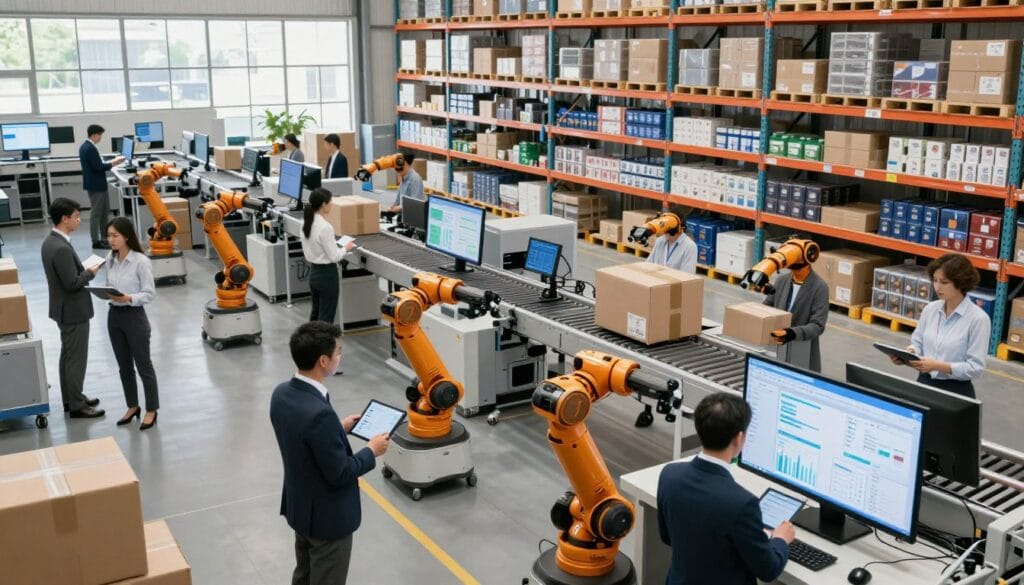
Harnessing the power of technology is essential for improving operations in today’s e-commerce landscape. The integration of advanced systems can significantly enhance efficiency and accuracy in order processing. By adopting innovative tools, businesses can streamline their workflows and better meet customer expectations.
Warehouse Management Systems (WMS)
Warehouse Management Systems are the digital brain of modern fulfillment operations. These software applications manage day-to-day activities, from receiving and storing inventory to optimizing picking paths and generating shipping labels. A robust WMS provides real-time visibility into operations, ensuring that every aspect of inventory management is monitored effectively.
Automation and Robotics in Fulfillment
The role of automation and robotics is rapidly expanding within fulfillment operations. Technologies such as automated guided vehicles (AGVs) transport shelving units to stationary pickers, while robotic arms handle repetitive sorting tasks. Automated storage and retrieval systems maximize vertical space, allowing for more efficient use of warehouse resources.
Inventory Management Software and Barcode Technologies
Inventory management software, combined with barcode technologies, delivers real-time visibility into stock levels. Each product is assigned a unique barcode, scanned at every touchpoint to maintain perpetual inventory accuracy. This integration ensures instant updates across all sales channels, helping businesses avoid stockouts and overstock situations.
Integration with E-commerce Platforms and Order Management Systems
Seamless integration between technology stacks and e-commerce platforms is critical. It allows order data to flow automatically, minimizing manual data entry errors. According to Gartner, 51% of organizations adopt inventory management tools to address operational inefficiencies. This underscores the importance of technology investment in competitive fulfillment operations.
Real-time inventory data empowers businesses to make informed decisions regarding replenishment timing and safety stock levels. Implementing these technologies requires careful planning, including staff training and system compatibility assessments. By embracing these advancements, fulfillment centers can achieve optimization at scale in the current e-commerce environment.
Effective Inventory Management Strategies to Prevent Stockouts and Overstock
Effective inventory management is the backbone of successful e-commerce operations. Accurate tracking of stock levels is crucial to avoid stockouts or overstock situations. Implementing robust inventory management systems and utilizing real-time tracking technologies enable fulfillment centers to maintain precise inventory counts.
By analyzing historical sales patterns, businesses can forecast customer demand. This helps in optimizing stock levels at both stores and fulfillment facilities. There is a delicate balance between having too much inventory, which risks poor cash flow, and having too little, which can lead to missed sales opportunities.
To establish effective inventory management as a strategic linchpin, it is essential to recognize that even the most efficient picking and packing operations cannot compensate for inaccuracies in inventory. Therefore, companies must focus on precise stock level management.
Forecasting Customer Demand and Stock Level Optimization
Forecasting customer demand involves a thorough analysis of historical sales data. Identifying seasonal trends and cyclical patterns is key. Additionally, incorporating marketing calendar events and utilizing predictive analytics powered by artificial intelligence can greatly enhance accuracy.
Stockouts can lead to immediate revenue loss from missed sales opportunities. Long-term damage to customer loyalty occurs when shoppers turn to competitors due to unavailability. Moreover, stockouts negatively impact search rankings and marketplace performance metrics.
On the other hand, overstock situations can incur increased carrying costs. Excess inventory takes up valuable warehouse space and may require margin-eroding markdowns to clear aging products. Therefore, finding the right balance is critical.
Replenishment Automation and Real-Time Tracking
Replenishment automation serves as a technology-driven solution. It sets predefined reorder points based on lead times, sales velocity, and safety stock requirements. This triggers purchase orders automatically when inventory levels dip below established thresholds.
Real-time tracking provides perpetual inventory visibility across all fulfillment locations. This enables businesses to make data-driven decisions regarding inventory allocation and inter-facility transfers. Having accurate data ensures that products are available when needed.
Practical Strategies for Stock Level Optimization
Several practical strategies can enhance stock level optimization:
- ABC Analysis: Prioritize high-value SKUs to ensure optimal stock levels.
- Economic Order Quantity: Calculate to minimize total inventory costs.
- Safety Stock Formulas: Account for demand variability and supplier reliability.
In conclusion, effective inventory management is a continuous discipline. It requires ongoing monitoring, regular strategy refinement, and a willingness to adapt as product catalogs evolve and market conditions shift.
Streamlining Fulfillment Operations to Increase Efficiency

To succeed in today’s competitive environment, businesses must focus on streamlining their fulfillment processes. This involves designing efficient warehouse layouts, employing effective picking strategies, optimizing packing procedures, and establishing strong shipping partnerships.
Warehouse Layout Design and Travel Time Reduction
Designing an efficient warehouse layout is essential for minimizing travel time and improving productivity. Key principles include:
- Slotting high-velocity products in easily accessible forward-pick locations.
- Grouping frequently ordered items in adjacent zones.
- Creating logical aisle configurations to minimize backtracking and congestion.
These strategies contribute to efficient movement, allowing associates to navigate the warehouse with ease.
Picking Strategies: Batch, Zone, and Cluster Picking
Different picking strategies can significantly impact efficiency:
- Batch Picking: Consolidates multiple orders into single warehouse passes, enhancing productivity.
- Zone Picking: Assigns associates to specific areas, with orders passed between zones for completion.
- Cluster Picking: Enables simultaneous fulfillment of numerous orders using multi-compartment carts.
Choosing the optimal picking strategy depends on operational characteristics such as order volume, SKU count, and average order size.
Optimizing Packing Processes and Materials
Efficient packing processes enhance both speed and protection. Consider the following:
- Standardized packing stations with ergonomic designs can increase throughput.
- Pre-positioned materials and integrated scale-and-scan systems reduce repetitive strain injuries.
When selecting packing materials, consider the product’s size, weight, and sturdiness. Common options include:
- Lightweight poly mailers for soft goods.
- Bubble mailers for small fragile items.
- Corrugated boxes for heavier products.
Establishing Shipping Partnerships and Route Optimization
Building strong shipping partnerships with multiple carriers allows fulfillment centers to compare rates and service levels in real time. This enables the selection of the optimal shipping method for each order. Additionally, route optimization technologies help determine the most cost-effective shipping origin based on inventory availability and customer destination.
In conclusion, streamlining operations is an iterative process. Regular time-motion studies, employee feedback, and a willingness to adapt workflows are crucial as order profiles and product mixes evolve over time.
| Strategy | Description | Benefits |
|---|---|---|
| Warehouse Layout | Efficient design to minimize travel time. | Increased productivity and reduced congestion. |
| Batch Picking | Consolidates orders into single passes. | Boosted productivity and reduced picking time. |
| Standardized Packing | Utilizes ergonomic stations and pre-positioned materials. | Enhanced throughput and reduced injuries. |
| Shipping Partnerships | Multiple carriers for rate comparison. | Optimal shipping methods and cost savings. |
Cost Reduction Techniques through Fulfillment Center Optimization
Cost efficiency is paramount in today’s competitive business landscape. Businesses can achieve significant savings by leveraging specialized facilities. These centers handle high volumes of orders, allowing companies to benefit from bulk shipping rates and optimized warehouse space.
Outsourcing order management helps e-commerce stores avoid hefty investments in their own facilities. This strategy reduces operational expenses and allows businesses to focus on core activities.
Shipping costs contribute significantly to overall expenses. By determining cost-effective shipping options, businesses can save money while meeting delivery time objectives. In some cases, it may be cheaper to send a customer’s order in two shipments rather than one.
Here are some effective strategies for reducing costs:
- Economies of Scale: Aggregating shipping volume enables third-party logistics providers to negotiate discounted rates that individual businesses cannot access.
- Cost Breakdown: Understanding components like receiving fees, storage charges, and pick and pack fees helps identify optimization opportunities.
- Labor Management: Cross-training staff to adapt during demand fluctuations can lower costs without sacrificing service quality.
- Automation Benefits: Investing in automation can lead to long-term savings through increased throughput and reduced errors.
- Warehouse Space Optimization: Techniques like vertical racking and dynamic slotting minimize storage costs and improve efficiency.
- Packaging Cost Reduction: Negotiating bulk purchasing agreements for materials can lower overall packaging expenses.
- Advanced Cost Reduction Tactics: Strategies like order splitting and zone skipping can help minimize total landed costs.
To summarize, sustainable cost reduction requires a holistic approach. Businesses must balance short-term savings with long-term operational health. Avoiding cuts that degrade customer experience is crucial for maintaining competitiveness.
Enhancing Customer Satisfaction with Accurate and Timely Fulfillment
Achieving high levels of customer satisfaction is crucial for businesses looking to excel in today’s competitive landscape. This satisfaction hinges on the accuracy of orders and the efficiency of delivery methods. Customers expect their items to arrive on time and in perfect condition, making fulfillment processes a key focus for improvement.
Implementing stringent quality control measures ensures accurate order fulfillment and minimizes errors. Regular inspections of picked items, adherence to packaging standards, and thorough quality checks reduce the chances of shipping incorrect or damaged products. High-quality packaging materials and proper labeling contribute to product protection and customer satisfaction.
Ensuring Order Accuracy and Quality Control
Establishing a direct relationship between fulfillment accuracy and customer satisfaction is vital. Error-free orders are the baseline expectation, not a differentiator. Even a single incorrect shipment can permanently damage a customer relationship. Optimized fulfillment centers implement comprehensive quality control protocols, including:
- Multi-point verification checks during picking, packing, and pre-shipment stages.
- Weight verification systems that flag discrepancies between expected and actual package weights.
- Photographic documentation of packed orders for dispute resolution.
Fast and Reliable Delivery Methods
Fast and reliable delivery is essential from the customer’s perspective. This includes not just transit speed but also order cutoff times, same-day processing capabilities, and weekend shipping options. The accuracy of delivery date promises communicated during checkout is equally important. By utilizing distributed inventory strategies, businesses can place products in multiple fulfillment centers closer to end customers. This dramatically reduces shipping zones, transit times, and delivery costs, enabling competitive offerings like free two-day shipping.
Effective Returns and Reverse Logistics Management
Effective returns and reverse logistics management are often overlooked but crucial for customer retention. A frictionless return experience significantly influences repeat purchase decisions. According to industry research, 92% of consumers will buy again if returns are easy. Best practices for returns management include:
- Automated return authorization generation.
- Prepaid return label provision.
- Integration with platforms like Loop or Returnly for branded return portals.
- Efficient inspection and restocking workflows that quickly return sellable inventory to available stock.
Proactive communication throughout the fulfillment and delivery journey enhances perceived reliability. Shipping confirmation emails, tracking number provision, delivery notifications, and exception alerts all contribute to a positive customer experience. Ultimately, customer satisfaction is the ultimate metric against which all fulfillment center efforts should be measured. It directly impacts customer lifetime value, referral generation, and long-term brand sustainability.
Future Trends in Fulfillment Center Optimization for E-commerce
The future of logistics in e-commerce is rapidly evolving, driven by technological advancements. As businesses strive to meet customer demands, several key trends are emerging. These trends will redefine how fulfillment operations are managed and executed.
Advanced Robotics, Artificial Intelligence, and Machine Learning
One of the most significant shifts involves the adoption of advanced robotics and automation technologies. Robots are now capable of handling tasks like picking, packing, and sorting. This reduces manual labor and boosts productivity. Furthermore, artificial intelligence (AI) plays a crucial role in demand forecasting, inventory management, and quality control.
Machine learning (ML) algorithms are being utilized to optimize operations continuously. These systems analyze real-time data to improve performance, making fulfillment processes more efficient.
Omnichannel and Same-Day Fulfillment Expansion
As the line between online and offline retail blurs, fulfillment centers must adapt to an omnichannel approach. This means supporting various fulfillment methods, including ship-from-store and curbside delivery. Customers increasingly expect faster delivery options, including same-day and last-mile delivery.
To meet these expectations, businesses are exploring micro-fulfillment centers in urban areas and partnerships with crowdsourced delivery platforms.
Sustainability and Eco-Friendly Fulfillment Practices
Environmental sustainability is becoming a critical focus. Companies are adopting eco-friendly practices, such as using renewable energy sources and optimizing packaging to reduce waste. Strategies like right-sized packaging and biodegradable materials are not just ethical imperatives; they also serve as competitive differentiators.
Data Security, Workforce Challenges, and Continuous Improvement
With the rise of connected fulfillment operations, data security is paramount. Businesses must implement robust cybersecurity measures to protect sensitive customer information. Additionally, workforce challenges, including labor shortages and the need for skilled training, require attention.
Continuous improvement must be ingrained in the culture of fulfillment centers. Regular evaluations of workflows and openness to new technologies will ensure long-term competitiveness.
| Trend | Description | Impact |
|---|---|---|
| Advanced Robotics | Use of robots for picking, packing, and sorting. | Increased productivity and reduced labor costs. |
| AI and Machine Learning | Utilization for demand forecasting and optimization. | Enhanced accuracy and efficiency in operations. |
| Omnichannel Fulfillment | Support for various fulfillment methods. | Improved customer satisfaction and loyalty. |
| Sustainability Practices | Adoption of eco-friendly materials and processes. | Competitive advantage and reduced environmental impact. |
| Data Security | Implementation of cybersecurity measures. | Protection of customer data and trust building. |
Conclusion
In the dynamic nature of e-commerce, effective operational management is critical. Businesses must embrace strategies that encompass inventory management, efficiency, and customer satisfaction. By leveraging technology and sustainable practices, companies can enhance their operations and meet evolving consumer demands.
It’s essential to remember that the landscape is continuously changing. Fulfillment centers that prioritize innovation and improvement will thrive amidst competitive pressures. Partnering with experienced third-party logistics providers can offer businesses the infrastructure and expertise needed to succeed.
Conducting regular assessments of fulfillment operations against best practices will help identify optimization opportunities. Remember, this journey of improvement is ongoing. Investing in these strategies today prepares businesses for future growth and success in a competitive market.
Ultimately, optimizing operations is not just about efficiency; it’s about delivering on promises and building lasting customer loyalty.


 By
By