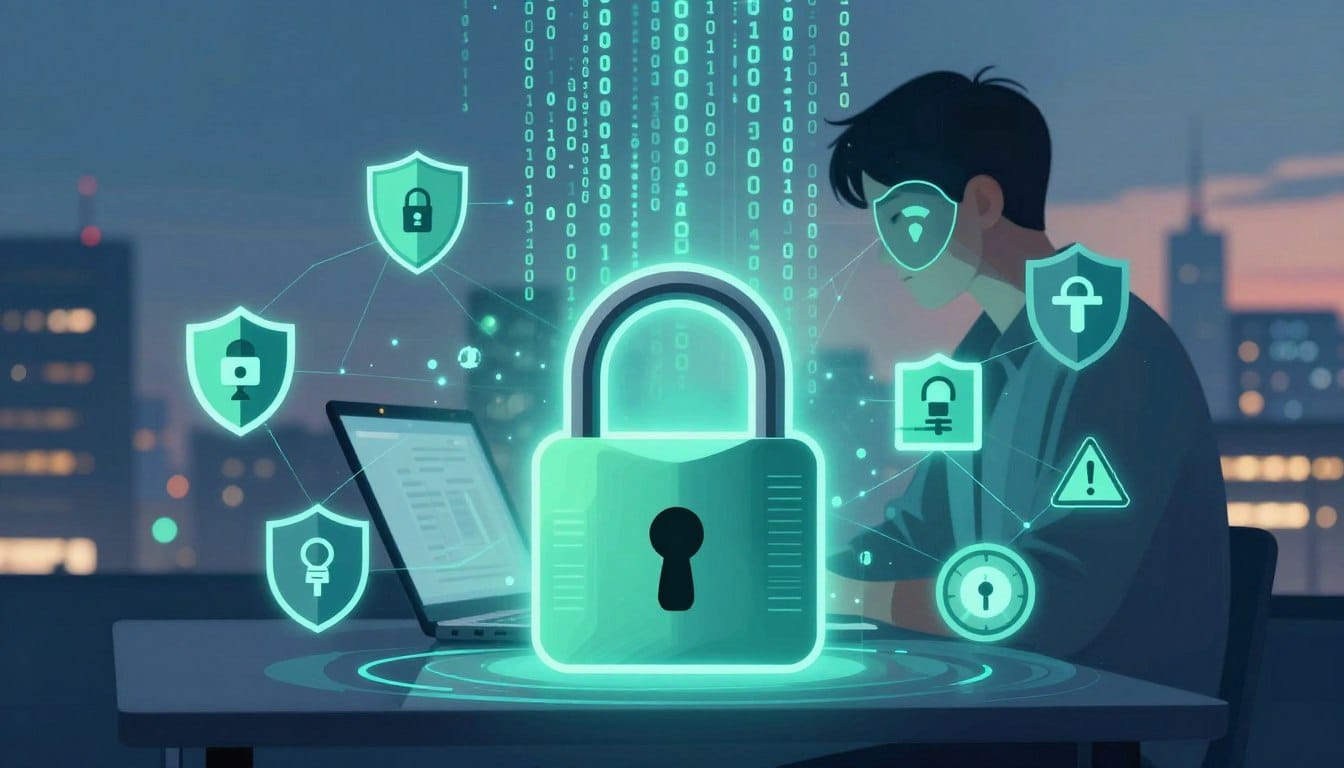


In our modern, hyper-connected world, the safety of our digital footprint has become a fundamental necessity for every person living in the United States. As we navigate daily life online, we often overlook the risks hidden behind simple clicks and logins.
Proactive measures serve as the most effective way to stop issues before they escalate into major problems. Taking control of your digital life is not a one-time chore, but an ongoing process that requires consistent attention.
Understanding how to manage Cybersecurity Threats: Protect Your Personal Data is essential for maintaining peace of mind. By prioritizing personal data protection, you build a stronger defense against unauthorized access and identity theft.
Key Takeaways
- Digital safety is a continuous habit rather than a single task.
- Proactive steps significantly reduce the risk of major security breaches.
- Every internet user in the United States needs to stay vigilant.
- Consistent monitoring helps identify vulnerabilities before they cause harm.
- Small, daily actions create a robust shield for your private information.
The Current Landscape of Digital Risks
Understanding the current landscape of digital risks is the first step toward reclaiming your online safety. The internet has evolved into a complex environment where cybersecurity threats are no longer just distant news headlines but immediate concerns for every household.
The Evolution of Cyber Attacks
In the early days of the internet, cyber attacks were often the work of curious individuals testing system boundaries. Today, these activities have transformed into highly organized, professional operations driven by financial gain and political agendas.
Modern attackers utilize automated tools and artificial intelligence to scan for vulnerabilities at lightning speed. This shift means that even the most casual user can become a target if their digital defenses are not properly maintained.
Why Personal Data is a High-Value Target
While large corporations once bore the brunt of digital crime, the focus has shifted toward individual users. Personal information, such as social security numbers, medical records, and banking credentials, is now a highly lucrative commodity on the dark web.
“Data is the new oil, and the protection of that data is the most critical challenge of our digital age.”
Criminals find it easier to exploit the weaker security measures of individuals than to breach the hardened firewalls of major enterprises. By aggregating small pieces of data from thousands of people, attackers can build comprehensive profiles for identity theft and fraud.
The Psychological Impact of Data Breaches
The consequences of data breaches extend far beyond financial loss. Victims often experience significant emotional distress, feeling a profound sense of violation regarding their personal privacy.
The stress of recovering a stolen identity can be overwhelming and time-consuming. Maintaining a proactive stance is essential to prevent these incidents and protect your peace of mind in an increasingly connected world.
Understanding Common Cybersecurity Threats: Protect Your Personal Data
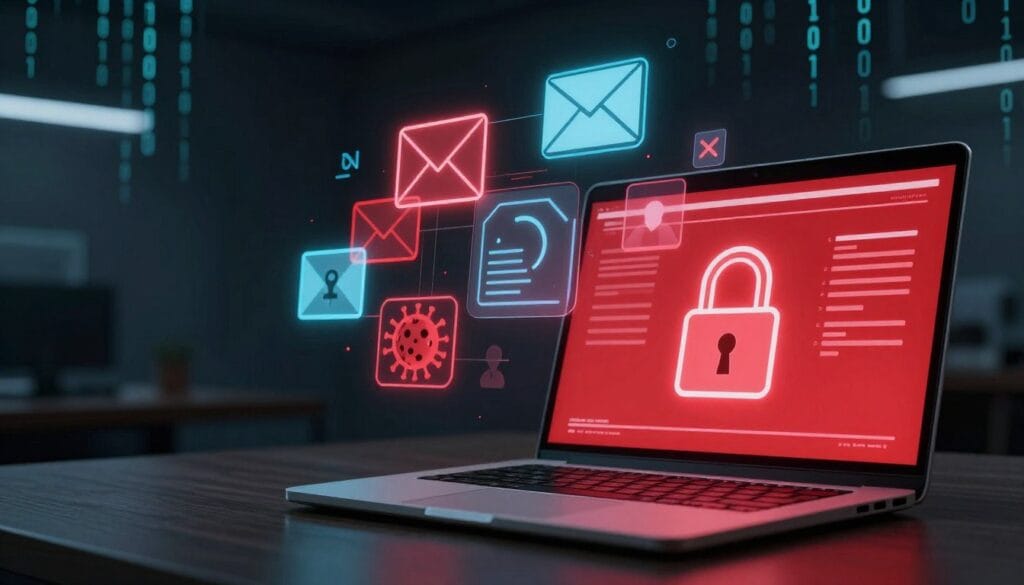
Understanding the mechanics of digital attacks is the first step toward building a robust personal defense. By learning how these dangers operate, you can better Cybersecurity Threats: Protect Your Personal Data and keep your information safe from malicious actors.
Malware and Ransomware Explained
Malware is a broad term for any software designed to infiltrate or damage a computer system without the owner’s consent. It includes viruses, worms, and spyware that track your activity. Ransomware is a specific, dangerous subset of malware that encrypts your files and demands payment for the decryption key.
Once a device is infected, the attacker holds your data hostage. This can lead to permanent loss of personal photos, documents, and financial records if you do not have backups.
Man-in-the-Middle Attacks
A Man-in-the-Middle (MitM) attack occurs when a hacker secretly intercepts communication between two parties. The attacker positions themselves between your device and the server you are accessing. This allows them to steal sensitive information like login credentials or credit card numbers in real-time.
These cybersecurity threats often happen on unsecured public Wi-Fi networks. Because the data is not encrypted, the attacker can easily read or modify the traffic passing through the connection.
Credential Stuffing and Brute Force Methods
Attackers frequently exploit weak authentication habits through automated methods. Credential stuffing involves using lists of leaked usernames and passwords from one site to gain unauthorized access to other accounts. Many users reuse the same password across multiple platforms, which makes this tactic highly effective.
Brute force attacks, on the other hand, use software to guess your password by trying thousands of combinations per second. These cybersecurity threats highlight why unique, complex passwords are essential for every account you own.
| Threat Type | Primary Goal | Common Vector |
|---|---|---|
| Malware | System disruption or data theft | Malicious downloads |
| Ransomware | Extortion via encryption | Phishing emails |
| MitM Attack | Interception of data | Unsecured public Wi-Fi |
| Credential Stuffing | Account takeover | Password reuse |
Strengthening Your Password Hygiene
Establishing robust password habits is one of the most effective digital security measures you can adopt today. Your login credentials serve as the primary gatekeeper for your personal information, financial accounts, and private communications. By refining how you create and store these keys, you significantly reduce the risk of unauthorized access.
The Dangers of Password Reuse
Many users rely on the same password across multiple websites for the sake of convenience. This habit creates a domino effect; if one minor site suffers a data breach, hackers can use those same credentials to compromise your more sensitive accounts. Automated systems frequently test leaked email and password combinations against major banking and social media platforms.
When you reuse passwords, you essentially provide cybercriminals with a master key to your digital life. Breaking this cycle is essential to maintaining your online safety. You must treat every account as a unique entity that requires its own distinct authentication string.
Best Practices for Creating Complex Passwords
A strong password should be long, unpredictable, and unique. Experts recommend using a combination of uppercase letters, lowercase letters, numbers, and special symbols to increase entropy. Avoid using easily guessable information such as birthdays, pet names, or common dictionary words.
Consider using a passphrase, which is a long string of random words that is easy for you to remember but difficult for a computer to crack. The longer the sequence, the harder it becomes for brute-force software to guess your credentials. Aim for at least 16 characters to ensure a high level of protection.
Utilizing Password Managers for Enhanced Security
Keeping track of dozens of complex, unique passwords is nearly impossible for the human brain. This is where password managers become vital digital security measures. These applications generate, store, and auto-fill your credentials in an encrypted vault, ensuring you only need to remember one master password.
Reputable services like 1Password, Bitwarden, or Dashlane offer seamless integration across your devices. By adopting these tools, you eliminate the temptation to reuse passwords while maintaining maximum security for every account you own. Investing in a password manager is a simple yet powerful step toward securing your digital footprint.
Implementing Multi-Factor Authentication
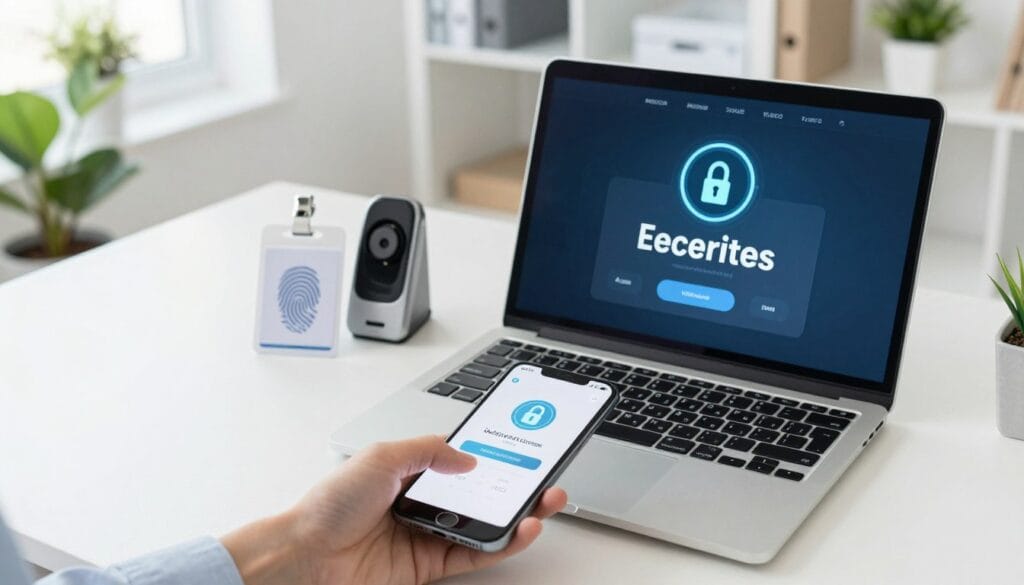
Modern digital security measures rely heavily on multi-factor authentication (MFA) to keep intruders out of your private accounts. Even if a hacker manages to steal your password, they will still face a significant hurdle before they can gain access to your sensitive data.
How Multi-Factor Authentication Stops Unauthorized Access
MFA works by requiring two or more independent categories of credentials for verification. This process typically combines something you know, like a password, with something you have, such as a mobile device or a physical token.
“Security is not a product, but a process. Implementing multiple layers of verification is the single most effective way to prevent account takeovers.”
By adding this extra layer, you ensure that a stolen password alone is useless to a cybercriminal. This simple step effectively neutralizes the threat posed by credential stuffing and brute force attacks.
Comparing Authentication Methods: SMS vs. Authenticator Apps
While any form of MFA is better than none, not all methods offer the same level of protection. Many users rely on SMS-based codes, but these are vulnerable to interception through techniques like SIM swapping.
Authenticator apps, such as Google Authenticator or Authy, provide a much safer alternative. These apps generate time-sensitive codes directly on your device, which are far harder for attackers to intercept.
| Method | Security Level | Convenience |
|---|---|---|
| SMS Codes | Low | High |
| Authenticator Apps | Medium-High | Medium |
| Hardware Keys | Very High | Low |
Hardware Security Keys as the Gold Standard
For those handling high-stakes accounts, hardware security keys represent the gold standard of digital security measures. These physical devices, such as YubiKey, require a physical touch or connection to authenticate your login attempt.
- Phishing Resistance: Hardware keys cannot be tricked by fake login pages.
- Portability: They are small, durable, and easy to carry on a keychain.
- Offline Capability: They do not require a cellular signal or internet connection to function.
Investing in a hardware key provides the highest level of assurance against sophisticated remote attacks. By adopting these advanced digital security measures, you take full control over your online safety and protect your most valuable information from unauthorized access.
Securing Your Home and Public Network Connections
Protecting your home and public network connections is essential for maintaining robust internet security. Every device you own relies on these pathways to communicate with the outside world. If these gates remain unguarded, you leave your personal data exposed to potential intruders.
Configuring Your Home Router for Maximum Safety
Your router acts as the front door to your digital life. Many people leave their routers with default settings, which makes them easy targets for hackers. You should immediately change the default administrator password to something unique and complex.
Furthermore, ensure that your router firmware is always up to date. Manufacturers frequently release patches to fix security holes that could compromise your online privacy. Finally, enable WPA3 encryption if your hardware supports it to provide the strongest possible defense for your local network.
The Risks of Using Public Wi-Fi Networks
Public Wi-Fi is convenient, but it often lacks the necessary protections to keep your information safe. When you connect to an open network at a coffee shop or airport, you are essentially sharing a digital space with strangers. Malicious actors can easily intercept your traffic through techniques like packet sniffing.
These attackers look for unencrypted data to steal login credentials or sensitive financial details. You should avoid accessing banking apps or private accounts while connected to these public hotspots. If you must use public internet, treat every connection as potentially compromised.
Using Virtual Private Networks to Encrypt Traffic
A Virtual Private Network (VPN) is a powerful tool for enhancing your online privacy. By creating an encrypted tunnel for your data, a VPN ensures that even if someone intercepts your connection, they cannot read your information. This adds a vital layer of internet security when you are browsing away from home.
When choosing a VPN, look for providers that maintain a strict no-logs policy. This ensures that your browsing history remains private and is not stored by the service provider. Implementing this simple step significantly reduces the risk of data exposure in public environments.
Recognizing Phishing and Social Engineering Tactics
You are the first line of defense against sophisticated attempts to steal your personal data through deception. Cybercriminals often bypass technical firewalls by targeting human psychology instead of software vulnerabilities. By learning to spot these manipulative patterns, you can significantly reduce your risk of falling victim to a digital scam.
Identifying Deceptive Emails and Text Messages
Phishing remains a primary method for attackers to harvest login credentials and financial details. These messages often arrive disguised as urgent notifications from legitimate companies like banks, shipping services, or government agencies. Always inspect the sender’s email address carefully, as attackers frequently use slight misspellings or unofficial domains to mimic real organizations.
Be wary of messages that create a false sense of urgency or threaten negative consequences if you do not act immediately. If an email demands that you click a link to “verify your account” or “prevent suspension,” it is likely a trap. Hover your mouse over any links before clicking to see the actual destination URL, which often reveals a suspicious or unrelated website.
Vishing and Smishing: Voice and SMS Fraud
Social engineering has expanded beyond email into voice calls and text messages. Vishing, or voice phishing, involves scammers calling you while pretending to be technical support or fraud investigators. They may use spoofing technology to make their caller ID appear as if it is coming from a trusted institution.
Smishing, or SMS phishing, uses text messages to deliver malicious links directly to your mobile device. These messages often claim you have won a prize, have a pending package delivery, or need to address a security alert. Never reply to these texts or click the links provided, as doing so confirms your phone number is active and may lead to further targeted attacks.
Verifying Sources Before Sharing Sensitive Information
Developing a healthy level of skepticism toward unsolicited communication is a vital skill for long-term digital safety. If you receive a request for sensitive information, take a moment to pause and verify the source independently. Do not use contact information provided within the suspicious message itself.
Instead, navigate to the official website of the organization or call the customer service number listed on the back of your bank card. Legitimate companies will never ask you to provide your password, full social security number, or multi-factor authentication codes over an unsolicited call or email. When in doubt, it is always safer to ignore the request and contact the entity through a verified, trusted channel.
Managing Privacy Settings on Social Media and Devices
Modern devices and social platforms often default to sharing more information than necessary. By taking a proactive stance, you can significantly improve your personal data protection and maintain better online privacy. Auditing these settings is a critical step in securing your digital life against unnecessary tracking.
Limiting Data Exposure on Major Social Platforms
Social media giants often collect vast amounts of behavioral data to fuel targeted advertising. You should regularly visit the privacy dashboards of platforms like Facebook, Instagram, and LinkedIn to restrict who can see your posts and profile information. Limiting your audience to friends only is a simple yet effective way to reduce your public footprint.
Furthermore, disable features that allow search engines to index your profile. Check the “Off-Facebook Activity” settings to clear data that third-party websites share with the platform. This ensures that your browsing habits remain private and disconnected from your social identity.
Adjusting Privacy Permissions on iOS and Android
Your smartphone acts as a gateway to your personal life, making it a prime target for data collection. On iOS, navigate to the Privacy & Security menu to see which apps have access to your location, camera, and microphone. You should disable location services for any app that does not strictly require it for core functionality.
Android users should utilize the Privacy Dashboard to monitor app behavior over the last 24 hours. Both operating systems now offer “App Tracking Transparency” features that allow you to block apps from monitoring your activity across other companies’ websites. Enabling these restrictions is essential for maintaining robust online privacy.
Reviewing App Permissions and Data Tracking
Many applications request permissions that exceed their actual needs, such as a flashlight app asking for contact access. Periodically review your installed apps and revoke any permissions that seem suspicious or unnecessary. This practice is a cornerstone of effective personal data protection.
| Platform | Primary Privacy Focus | Recommended Action |
|---|---|---|
| Social Media | Data Sharing | Restrict Profile Visibility |
| iOS/Android | System Access | Disable Unused Permissions |
| Third-Party Apps | Tracking | Block Cross-App Monitoring |
Always prioritize apps that offer transparent data policies. If an application continues to demand excessive access, consider deleting it and finding a more privacy-conscious alternative. Taking these small, consistent actions will keep your information safe from unauthorized exploitation.
The Role of Antivirus and Endpoint Protection Software
While modern operating systems have improved their native defenses, they often leave gaps that specialized security suites can effectively close. Relying solely on default settings may expose your devices to sophisticated cyber attacks that bypass standard filters. A dedicated security layer acts as a vital safety net for your digital life.
Why Modern Operating Systems Need Additional Security
Built-in protections are designed for general use, but they rarely account for the rapid evolution of malicious software. Hackers frequently target specific vulnerabilities that standard OS tools might overlook until it is too late. Proactive monitoring is essential to detect threats before they compromise your sensitive data.
Advanced endpoint protection provides a deeper level of analysis than basic firewalls. It inspects incoming traffic and file behavior in real-time to identify suspicious patterns. This level of vigilance is a cornerstone of robust internet security in an era of constant connectivity.
Features to Look for in Security Suites
When selecting a security suite, you should prioritize tools that offer comprehensive coverage rather than just basic scanning. The following table outlines the essential features that provide the best defense against modern threats.
| Feature | Primary Benefit | Security Impact |
|---|---|---|
| Real-time Scanning | Immediate threat detection | High |
| Behavioral Analysis | Identifies unknown malware | High |
| Firewall Management | Controls network traffic | Medium |
| Automatic Updates | Patches known exploits | High |
Keeping Software Updated to Patch Vulnerabilities
Software updates are not just about new features; they are critical for maintaining your internet security. Developers release patches to fix known flaws that attackers use to gain unauthorized access to your system. Ignoring these updates leaves your device open to preventable cyber attacks.
You should enable automatic updates for your operating system, web browsers, and all installed applications. This simple habit ensures that your defenses remain current against the latest threats. Consistency is key when it comes to protecting your personal information from evolving digital risks.
Responding to Data Breaches and Identity Theft
Discovering that your personal information has been compromised can feel overwhelming, but taking swift action is the best way to regain control. When you face data breaches, your immediate response determines how effectively you can mitigate the fallout. A calm, methodical approach is your strongest asset during this stressful time.
Steps to Take Immediately After a Breach
The first priority is to contain the damage by securing your accounts. You should immediately change your passwords for any affected services, especially if you use those credentials elsewhere. Enable multi-factor authentication on every account that offers it to add an extra layer of defense.
Next, contact your financial institutions if you suspect your banking or credit card details were exposed. They can place a temporary freeze on your accounts or issue new cards to prevent unauthorized transactions. Quick communication with your bank is vital to stopping potential financial loss.
Monitoring Your Credit and Financial Accounts
Proactive vigilance is the cornerstone of effective identity theft prevention. You should request a free copy of your credit report from major bureaus to check for suspicious activity. Look for accounts you did not open or inquiries you did not authorize.
“The best defense against identity theft is constant vigilance and the willingness to act quickly when something seems wrong.”
Consider placing a credit freeze on your files with Equifax, Experian, and TransUnion. This action prevents new creditors from accessing your report, which makes it much harder for criminals to open fraudulent accounts in your name. Consistent monitoring ensures you catch issues before they escalate.
Reporting Cybercrime to Federal Authorities
If you have been a victim of a crime, you must report it to the proper channels. The Federal Trade Commission (FTC) provides a dedicated portal at IdentityTheft.gov to help you create a recovery plan. Additionally, you should file a report with the FBI’s Internet Crime Complaint Center (IC3) to assist in tracking broader data breaches.
Reporting these incidents helps authorities identify patterns and protect others from similar threats. By documenting your experience, you contribute to a safer digital environment for everyone. Remember that identity theft prevention is an ongoing process that requires your attention and cooperation with law enforcement when necessary.
Conclusion
Maintaining a secure digital life requires a proactive mindset rather than a one-time setup. Cyber threats evolve rapidly, but your commitment to safety remains the strongest defense against unauthorized access.
Integrate these security habits into your daily routine to build lasting protection. Small actions like updating software on your Apple or Microsoft devices create significant barriers for attackers. Consistent vigilance turns your personal data into a difficult target for malicious actors.
Stay informed about emerging risks to keep your defenses sharp. Share these essential practices with your family and friends to foster a safer online community. Your dedication to privacy ensures that your sensitive information stays under your control in an increasingly connected world.

 By
By