

In the modern digital landscape, maintaining a clean contact database is vital for any professional business. This comprehensive guide explores how smart verification tools safeguard company messages. It improves deliverability rates so that every email reaches a real person.
Successful marketing relies on valid addresses and engaged recipients. Many teams struggle with bad data or spam traps that hurt their reputation. Using a reliable service helps find these issues before they waste money or time.
This article looks at the full cleanup steps for an email list. We cover account setup and how to use accurate data to make better choices. Readers will learn how to lower bounce rates and keep a high sender score for every campaign.
Key Takeaways
- Improve inbox reach by removing invalid addresses.
- Safeguard company reputation with email checks.
- Use real-time data for better verification.
- Clean up a mailing list to save marketing funds.
- Boost engagement by reaching truly active recipients.
What Is ZeroBounce Email Verification and Why Your Business Needs It
Every successful digital strategy relies on a foundation of clean data to ensure messages land in the right inboxes. For any modern company, the ability to reach customers and prospects is critical for growth. Using an email verification service protects your domain reputation from the damage caused by high bounce rates.
Without this validation, you risk your messages being marked as spam by internet providers. Protecting your deliverability is essential for maintaining a professional image. High-quality communication starts with knowing that your recipient list contains active and real users.
A reliable business cannot afford to ignore the health of its contact lists. Regular maintenance ensures that your resources go toward actual people rather than dead accounts. This proactive approach saves time and keeps your communication channels open and effective.
Understanding Email Verification Technology
This technology works by systematically examining every email address in your list. It checks the syntax to make sure the format is correct and identifies potential risks. The verification process looks at server records to see if the mailbox actually exists.
| Address Type | Status | Risk Level |
|---|---|---|
| Syntax Error | Invalid | High |
| Active Inbox | Valid | Low |
| Spam Trap | Toxic | Critical |
It acts as a shield, ensuring your marketing efforts are not wasted on non-existent users. By filtering out bad data, you improve the overall health of your digital ecosystem. Modern algorithms can even detect catch-all servers that might result in soft bounces.
The system validates the Domain Name System (DNS) and Mail Exchanger (MX) records. This confirms that the domain is configured to receive messages. It prevents the costly consequences of sending campaigns to invalid addresses, including damaged sender reputation.
The Role of ZeroBounce in Email Marketing Success
ZeroBounce provides a comprehensive verification service that goes through multiple validation stages. It processes your email addresses to remove harmful entries like spam traps and disposable accounts. This helps in maintaining a high sender score, which is vital for email marketing success.
When a business uses this service, they focus their budget on real people with active inboxes. The platform ensures that your messages reach the intended destination without being blocked. Email marketing success depends heavily on reaching real people with active inboxes.
“Reaching the inbox is not just about the content; it is about the quality of the list you build.”
The verification tool serves as an indispensable asset for marketers seeking optimal campaign performance. It identifies problematic addresses before you ever hit the send button. This allows for proactive list hygiene rather than reactive damage control measures.
Who Benefits Most from Email Verification Services
A company across any industry can benefit from these professional services. If you rely on email for customer support or transactional messages, you need clean data. Marketers with large databases or frequent lead generation activities find the verification process indispensable.
Large enterprises with strict communication compliance requirements must verify their contacts regularly. They cannot afford the deliverability issues caused by unverified contact data. Small teams also benefit by ensuring their limited marketing budget reaches actual prospects.
- E-commerce brands looking to protect transactional email delivery.
- B2B marketers focusing on high-value lead generation and outreach.
- SaaS companies that need to ensure user notifications are received.
- Non-profits maintaining engagement with a large donor base.
Understanding how email verification works enables you to implement better strategies for growth. It turns your contact list into a powerful tool for generating revenue. Proper validation ensures that your email marketing remains a top-performing channel for years to come.
How Email Verification Protects Your Sender Reputation
Your domain acts like a digital fingerprint that internet service providers track to judge your trustworthiness. Every business that sends electronic messages carries a numerical score known as a sender reputation. This score describes the quality of your campaigns and determines if your messages deserve to reach the inbox.
If your business carries a poor reputation, your messages often land in spam folders. High-quality email habits lead to better results and higher trust from receiving servers. Think of this score as a credit report for your digital communication identity.
Maintaining a clean list is the most effective way to protect this asset. When you verify your contacts, you protect your brand from being flagged as a nuisance. Consistent validation ensures that you only communicate with real people who want to hear from you.
The Connection Between Invalid Emails and Sender Score
Sending messages to invalid emails is one of the fastest ways to destroy your sender score. These addresses generate hard bounces, which tell providers that you do not practice good list hygiene. To an internet service, a high bounce rate looks like the behavior of a bot or a low-quality marketer.
A professional email validation tool identifies these dead ends before you ever hit the send button. By removing non-existent accounts, you prevent the technical errors that trigger red flags. This proactive service keeps your account in good standing and keeps your deliverability high.
Consistently hitting inactive accounts signals that your data is outdated or purchased. Internet service providers punish this lack of care by lowering your reach. High-volume senders must be especially careful, as even small percentages of invalid emails can cause major damage.
Internet Service Providers and Email Reputation Management
Modern providers use complex algorithms to monitor sender habits across the globe. They look at how many people open your email and how many mark it as spam. If your domain constantly triggers filters, the internet service will eventually block your access entirely.
Proper validation helps you maintain the clean sending patterns that these systems reward. When you only target valid addresses, your engagement rates naturally climb. This positive activity tells the internet service providers that your content provides value to their users.
Managing your sender reputation requires constant attention to your data quality. It is not a one-time task but a recurring commitment to excellence. A healthy reputation ensures that your marketing investments actually turn into sales and growth.
Avoiding Blacklists Through Proper Email Validation
Domain blacklists represent the most severe consequence for any professional sender. Once you end up on a blacklist, almost every service will reject your incoming messages. This can paralyze your business communication and destroy your deliverability for months.
Neglected list hygiene is the primary cause of these severe penalties. Using a robust email validation process helps you catch spam traps and risky hidden threats. These traps are designed specifically to identify and block companies with poor data management habits.
Investing in regular validation creates a performance cycle that yields compounding returns. You save money by not sending to dead addresses and earn more by reaching the inbox. Protecting your reputation is the smartest move you can make for your long-term email success.
| Metric Type | High Reputation Senders | Low Reputation Senders | Impact Level |
|---|---|---|---|
| Bounce Rate | Less than 1% | Higher than 3% | Critical |
| Inbox Placement | 95% or higher | Below 70% | High |
| Spam Complaints | Very rare | Frequent | Severe |
| Data Quality | Verified & Clean | Unchecked & Old | Essential |
Getting Started with ZeroBounce: Account Setup and Registration
Launching your first validation project requires a quick and secure registration process to protect your data. This initial step ensures you have the right tools to clean your contact lists effectively. You can get started today by visiting the sign-up page and entering your basic details.
The platform design focuses on user experience and speed. You will find that the service is built to handle high volumes of records with ease. Setting up your profile takes only a few moments of your time.
Creating Your ZeroBounce Account
Creating a ZeroBounce account begins with providing a valid email address that serves as your identity. This address will become your primary login credential for the dashboard. It also acts as the main communication channel for important account notifications and billing updates.
You must ensure the data you provide is accurate during this step. Using a professional email address helps you stay organized with your marketing projects. Once you submit the form, the system prepares your unique environment for list cleaning.
The registration process triggers an automated confirmation email immediately after you click the sign-up button. This message contains a secure verification link that activates your full access. Without this step, you cannot utilize the advanced features of the platform.
Email Confirmation Process
The verification link serves as a security measure to protect your account. When you receive the notification, open the message and follow the link inside. This action proves you own the email address and prevents unauthorized access.
After clicking the button, you’ll be automatically redirected to the ZeroBounce sign-in screen. This seamless transition allows you to enter your credentials and see the dashboard for the first time. The service then unlocks all available tools for your campaigns.
Efficiency is a core value for our platform. Most users complete this entire cycle in less than two minutes. Once you log in, you can begin uploading lists for verification and analysis.
Troubleshooting Registration Issues
If you did not automatically receive your account confirmation email, do not worry. Sometimes internet traffic or server delays affect the delivery time. Wait several minutes before attempting to resend the request or contacting the customer support team.
Troubleshooting registration issues requires a systematic approach. Most problems stem from simple connectivity or filtering errors rather than platform failures. Staying patient ensures a smoother onboarding experience for every new user.
Our customer support experts are available 24/7 by phone or live chat if issues persist. They can manually help you activate your address if technical barriers remain. This support ensures you never face delays when you need to clean your data.
Checking Email Folders for Confirmation
Your email provider might misinterpret the automated message. Systematically check folders including spam, promotions, and social tabs. These areas often catch confirmation messages by mistake.
If you find the message in the spam folder, mark it as safe. This tells your provider to deliver future messages directly to your main inbox. This simple step keeps your account updates visible and organized.
Verifying Email Address Spelling
Confirming the spelling accuracy of the email address entered during registration prevents delivery failures. A single misplaced character in the address will stop the message from reaching you. It is a common cause of registration frustration.
If you suspect a typo, try to register again with the correct email address. The system will recognize the new address as a fresh entry. Ensuring accuracy from the start saves you time and effort.
Resolving Spam Filter Conflicts
Strict corporate spam filters occasionally prevent confirmation messages from reaching their destination. These filters might see the automated link as a potential risk. This conflict requires a quick white-list action or customer service intervention.
In some cases, your IT department may need to allow email from the ZeroBounce domain. If you are a solo user, adding our contact email to your safe-sender list usually works. This ensures that every verification report and notification arrives on schedule.
Managing Your ZeroBounce Account Security

Securing your business tools is a primary step in data protection. When you manage a list, you handle sensitive information that requires constant vigilance. ZeroBounce offers multiple layers of defense to keep your account safe.
A proactive approach to security prevents unauthorized access and keeps your proprietary information private. By utilizing the platform’s built-in features, you can ensure that your marketing assets remain under your control. Security is not a one-time event but a continuous habit.
Changing and Updating Your Password
Your login credentials are the first line of defense against unauthorized entry. Regularly updating your password helps maintain the integrity of your email marketing efforts. This simple service helps protect your stored information from bad actors.
Updating Password Through Profile Settings
To start the update, sign in to your profile and locate the menu in the top-right corner. You will need to enter your current credentials before establishing a new email login key. This ensures that only authorized users can modify access levels.
Your new credentials should have at least 8 characters. We recommend a mix of letters and numbers to improve the strength of your account. Stronger passwords make it harder for automated tools to guess your entry details.
Password Reset Process
If you lose access, navigate to the sign-in page and select the option for forgotten credentials. The system will ask for your primary email address to begin the recovery. You will receive a secure link to regain entry shortly after.
This reset link remains valid for only 30 minutes to provide maximum safety. Ensure you have access to your inbox to complete the process within this time frame. If the link expires, you must request a new one to proceed.
Best Practices for Secure Passwords
Avoid using the same password across more than one online service. Creating a unique phrase for this platform prevents a single leak from affecting all your business tools. This practice is essential for maintaining a high standard of security.
Incorporating special characters further hardens your defense against breaches. High-quality security habits protect your customer records from being exposed. Always store your login details in a secure manager rather than on paper.
Maintaining account security is the cornerstone of any successful digital operation. Without it, the trust of your clients is at risk.
Understanding Password-Protected Downloads
This platform provides an additional security layer for your downloaded results. Even if an attacker gains account access, they cannot view your sensitive contacts without a secondary key. This encryption keeps your business intelligence safe from prying eyes.
Every file you export requires a unique password to open. This feature is crucial for protecting the data you have worked hard to collect. It ensures that your verification files remain private during transfer and storage.
Managing your verification steps properly involves keeping your export settings locked. When you handle a large email list, the volume of information increases the risk of a breach. Always prioritize the safety of your data over convenience.
When and How to Disable Download Protection
Some users may need to disable this feature for automated workflows or specific integrations. However, doing so leaves your sensitive data vulnerable to anyone with access to your downloads. We strongly discourage this action for long periods.
If you must turn it off, do so only for the necessary time required to complete your task. Remember to re-enable the protection immediately to secure your customer information again. A safe address list is only as secure as its weakest link.
You should verify every email address before sending out a marketing campaign. This process helps you maintain a clean mailing address list for your brand. Using a secure email platform ensures your reputation stays intact.
| Security Feature | Primary Purpose | Recommended Action |
|---|---|---|
| Account Password | Identity Verification | Update every 90 days |
| Download Protection | Data Encryption | Keep enabled for exports |
| Password Reset Link | Emergency Access | Use within 30 minutes |
Your final results are protected by a system that demands extra authentication. This ensures that only you can see the contacts you have uploaded for cleaning. Protecting each email address is a commitment to privacy.
When you download your cleaned email files, check the security settings again. A secure email environment protects your customer base from potential spam or phishing. This verification tool is built to keep your info safe.
If you send an email to an invalid email address, your sender score might drop. Therefore, keeping your account data secure is just as vital as the cleaning itself. Use the email tools provided to audit your login history regularly.
Every business address in your database represents a real person. Securing your results means you respect their privacy and your company’s future. Always use the latest email safety features for the best protection.
The Complete Email Verification Process Explained
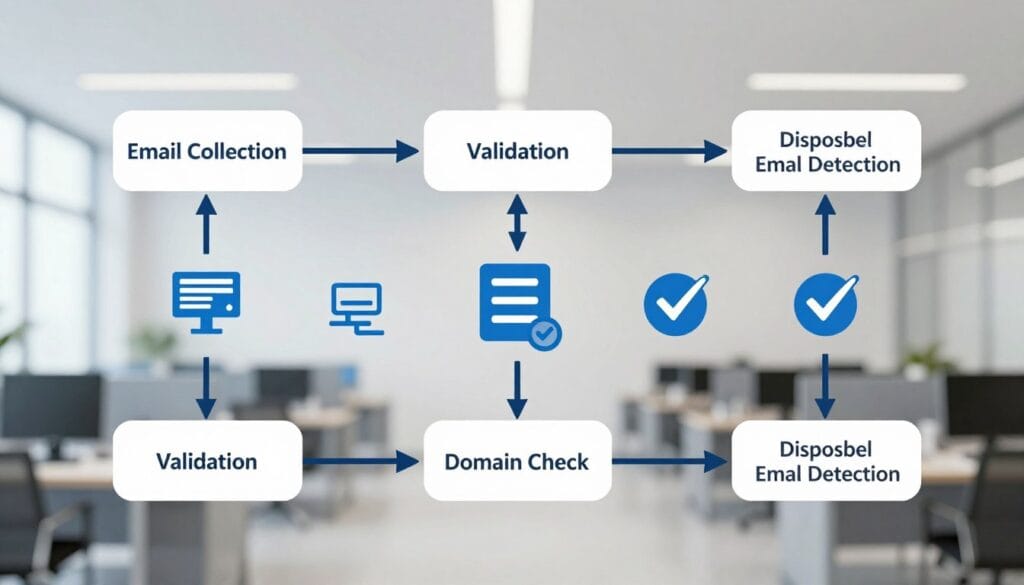
The path from a messy contact list to a high-performing asset involves several technical milestones. High-speed email verification ensures that your messages reach real people instead of disappearing into a digital void. Modern systems can process 100,000 email addresses in approximately 45 minutes, providing rapid feedback for busy marketers.
Every quality service must handle a variety of technical checks to ensure your list remains healthy. This rigorous scrubbing removes dead ends and protects your sender reputation from damage. By understanding each step, you can better appreciate how automated tools maintain your connection with customers.
Step 1: Syntax and Format Validation
This initial phase examines the basic structure of your email addresses. It looks for necessary symbols like the “@” sign and valid period placements. The system identifies illegal characters and common typos that might prevent a message from being sent.
Automated validation helps catch simple mistakes like “gnail.com” instead of “gmail.com.” Correcting these small errors saves valuable contacts that would otherwise be lost. It serves as the first line of defense in maintaining a clean database.
Step 2: DNS and MX Record Verification
Once the format is confirmed, the system looks at the domain level. It checks the Domain Name System (DNS) to ensure the website actually exists. Without a valid web home, an email cannot reach its destination.
The process also verifies Mail Exchange (MX) records. These records tell the internet which server is responsible for accepting messages for that specific address. If these records are missing or broken, the email will bounce immediately.
Step 3: Spam Trap Detection
Protecting your list from spam traps is vital for long-term success. These are hidden addresses used by internet providers to catch senders who use poor list-building habits. Hitting even one trap can land your business on a global blacklist.
Advanced verification technology scans your list against known trap signatures. This proactive spam prevention helps you maintain a high sender score. It ensures your marketing efforts are not wasted on monitoring bots.
Step 4: SMTP Check and Server Health
The SMTP check is a real-time conversation between the validation software and the recipient’s mail server. The system asks the server if the specific mailbox exists without actually sending a message. This “ping” provides the most accurate status for each contact.
Measuring server response times also helps determine overall infrastructure health. Slow or unresponsive servers might indicate a risky email environment. This step confirms the infrastructure is ready to receive your upcoming campaigns.
Step 5: Proprietary Technology Validation
Top-tier providers use proprietary algorithms to go beyond standard checks. This advanced email verification technology delivers an industry-leading 99.6% accuracy guarantee. It identifies over thirty distinct status types for every contact processed.
Using deep data analysis, the system spots patterns that basic tools might miss. This level of precision gives you the confidence to send large-scale campaigns. You can trust that your results will reflect genuine engagement.
Step 6: High-Risk Email Identification
Not all technically valid addresses are safe to use for marketing. High-risk addresses include catch-all domains, which might accept mail but eventually lead to a bounce. The system also flags disposable addresses used for temporary sign-ups.
Identifying abuse complainers is another critical part of this step. These users frequently mark messages as spam, even if they originally opted in. Removing them protects your reputation from unnecessary complaints and legal issues.
Step 7: Unknown Results Retesting
Sometimes a server provides an “unknown” response due to temporary technical issues. To solve this, the verification process includes automated retesting using different IP addresses. This helps circumvent “greylisting” where a server temporarily rejects unknown senders.
By rotating geographical locations, the system finds the true status of stubborn results. This persistent approach minimizes the number of “unknown” labels in your final report. It ensures you get the most value out of every credit spent.
Step 8: Email List Enrichment and Data Appending
The final step adds valuable context to your verified contacts. List enrichment appends data such as first and last names, gender, and geographical location. This information allows for much better personalization in your outreach.
Knowing the domain age and the SMTP provider helps refine your sending strategy. You can tailor your content based on whether a user has a paid or free email account. These insights turn a simple list into a powerful tool for customer relationship management.
| Verification Step | Primary Function | Expected Outcome |
|---|---|---|
| Syntax Check | Examines formatting and typos | Removes malformed addresses |
| MX Record Check | Verifies server configurations | Confirms domain can receive mail |
| Risk Identification | Flags traps and complainers | Protects sender reputation |
| Data Enrichment | Appends subscriber details | Improves campaign personalization |
Understanding Email Bounce Types and Their Impact
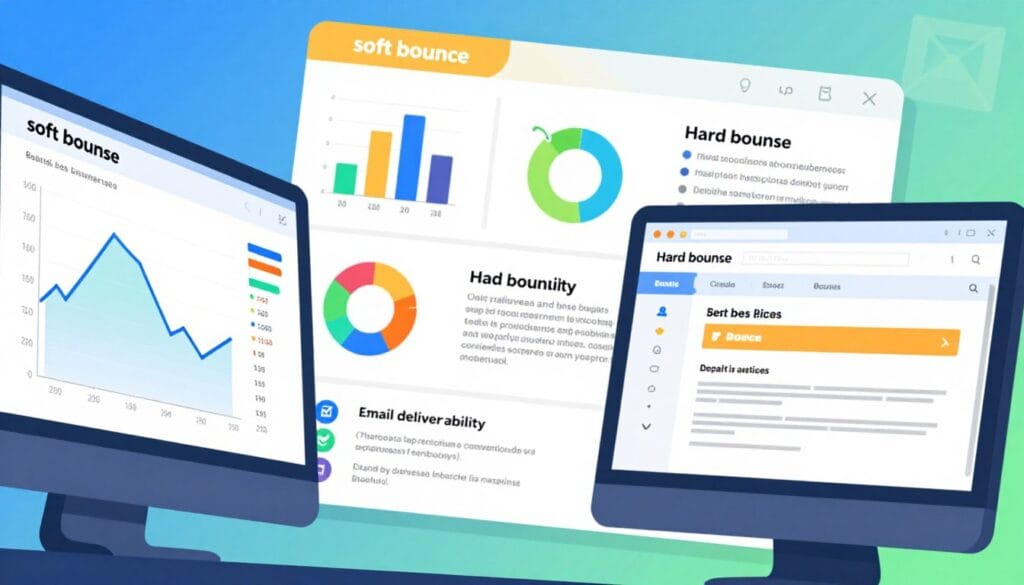
To maintain a healthy email list, you must decode the signals sent back by receiving servers. These signals, known as bounces, tell a story about your data quality. High volumes of rejected messages alert an internet service provider to potential spamming or poor list management.
Monitoring these metrics is not just about keeping numbers low. It is about protecting the path between your server and the customer’s inbox. When you ignore these warnings, you risk losing the ability to reach your audience entirely.
Every bounce event provides a specific error code. These codes help you decide whether a contact is still viable or if it belongs in the trash. Understanding these nuances allows for better list maintenance and improved ROI on every campaign.
What Is a Hard Bounce and Why It Matters
A hard bounce signifies a permanent delivery failure that you cannot fix through retries. This usually happens because the email addresses are invalid or simply do not exist. In many cases, it means the recipient’s domain name is incorrect or the account was closed.
When you encounter a hard bounce, you must remove those specific addresses immediately from your active database. Continuing to send to these accounts damages your sender score. It signals to ISPs that you are not practicing proper hygiene.
Hard bounces are the primary reason for a sudden drop in sender reputation. If your list contains many dead email accounts, your brand looks suspicious. Advanced verification tools identify these dead ends before they can hurt your standing with major providers.
Soft Bounces: Temporary Delivery Failures
Unlike permanent failures, a soft bounce indicates a temporary problem at the recipient’s end. The recipient’s service might be experiencing a brief outage, or their personal inbox could be full. In some cases, the message is simply too large for their server to handle at that specific time.
You do not need to delete these contacts right away because the issue may resolve itself. Most automated systems will try to redeliver the email several times over a 24-hour period. If the server eventually accepts the message, your deliverability remains intact.
However, you should keep a close eye on these temporary errors over time. If a contact soft bounces across multiple campaigns, it may be time to move them to a suppression list. Persistent soft failures often mask a deeper issue with the recipient’s account status.
Why Emails Bounce in the First Place
There are many reasons why emails fail to reach their intended destination. Recipient addresses might have been mistyped during the initial signup process. Even a single character error turns a valid lead into a permanent failure.
Aggressive spam filters also play a massive role in why your emails might be rejected. If your sender reputation is low, a server might block your domain entirely to protect its users. This results in a bounce even if the address itself is perfectly valid.
Bounced emails are a telltale sign that some contacts on your email list are invalid. Internet and email service providers look for senders to maintain a 2-5% bounce rate. However, you must keep it at 2% or lower to protect your sender reputation.
Technical issues, such as misconfigured DNS records or SPF authentication failures, can also trigger rejections. These technical hurdles make it look like your email is coming from an unauthorized source. Fixing these backend settings is just as important as cleaning the list itself.
Acceptable Bounce Rate Benchmarks
Industry standards for an acceptable rate are surprisingly strict. While many believe a 5% failure rate is fine, the reality is much more demanding. Most professionals recommend staying below 2% to ensure your deliverability stays at peak levels.
When your bounce numbers creep upward, ISPs start to throttle your messages. This means your email might be delayed or sent directly to the junk folder. Maintaining a clean list is the only way to avoid this downward spiral.
Consistent monitoring helps you spot invalid data patterns early. If you see a sudden spike in failures, it might indicate a bot attack on your signup forms. Staying vigilant protects your rate and ensures your messages reach real people who want to hear from you.
| Bounce Category | Failure Type | Common Reason | Recommended Action |
|---|---|---|---|
| Hard Bounce | Permanent | Invalid email addresses | Delete immediately |
| Soft Bounce | Temporary | Full inbox or server down | Monitor and retry |
| Block Bounce | Reputation-based | Blacklisted domain or IP | Check sender reputation |
| Technical Bounce | Configuration | Failed SPF or DKIM | Update DNS settings |
Real-Time Email Verification with API Integration
A digital illustration showing a glowing API key connecting a modern website registration form to a secure cloud database, with green checkmarks appearing over validated email fields to represent successful real-time email verification.
The most effective way to stop invalid data is to verify it at the point of entry using an api. This proactive approach ensures that your list stays clean from the very first second a user interacts with your brand. You no longer have to wait for a weekly or monthly cleanup to see results.
By checking addresses as they are typed, you prevent typos and fake entries from ever reaching your database. This saves you time and money that would otherwise be spent on bounce-back management. It also creates a seamless experience for every legitimate user who wants to hear from you.
ZeroBounce provides a robust solution that works behind the scenes to keep your marketing ecosystem healthy. Protecting your reputation starts with the very first click. This technology is essential for any business that relies on digital communication to grow.
What Is an Email Verification API
An email verification api is a specialized interface that connects your website or app to a powerful cleaning engine. It allows your systems to communicate instantly with the ZeroBounce service. When a user submits a form, the api immediately checks the status of that specific email.
This tool does much more than just check for a “@” symbol. It looks for complex issues like spam traps, abuse accounts, and disposable addresses. The process happens in milliseconds, so your users never experience a lag or delay during their sign-up process.
Using these tools means you are delegating the hard work of validation to a system built for accuracy. It acts as a gatekeeper for your database. Only high-quality, reachable leads are allowed to pass through the gate.
Benefits of Real-Time Email Validation
The primary benefit of real-time email checks is the immediate feedback provided to the customer. If a visitor accidentally swaps two letters in their address, the system alerts them right away. This allows them to fix the error before leaving your site.
Implementing email validation at the source dramatically reduces list contamination. You won’t have to deal with “dirty” data that can trigger blacklists or harm your sender score. It makes your entire marketing strategy more predictable and successful.
Another advantage is the elimination of batch processing delays. While bulk verification is great for old lists, live validation keeps the new entries perfect from the start. Email marketing becomes much more efficient when every new subscriber is a valid one.
Setting Up the ZeroBounce API
Setting up the api is a straightforward process designed for developers and business owners alike. ZeroBounce provides all the documentation you need to link your platforms. You can integrate this service with landing pages, databases, or custom-built apps.
To get started, you only need two main components: the api code and your unique key. The system is flexible enough to handle various programming languages. This ensures it fits perfectly into your existing tech stack without requiring major changes.
Obtaining Your API Key
First, you must sign up for a ZeroBounce account to access your dashboard. Once logged in, you will find a dedicated section for api management. Here, you can generate your unique key, which acts as a secure password for your requests.
Some businesses prefer to use multiple keys for different platforms or websites. This helps you track which forms are bringing in the most data. Real-time email monitoring is easier when you can see exactly where each request originates.
Remember that free accounts come with 100 credits to help you test the waters. This is a great way to see how the verification works in a live environment. Strong security measures ensure your key remains private and protected at all times.
Integrating API Code
Once you have your key, you must add it to the appropriate field within the provided code snippets. You then place these snippets into your website’s form submission handler. This ensures every email undergoes validation before being accepted.
The code works by intercepting the submission and sending the address to ZeroBounce. The api then returns a status code indicating if the address is “valid,” “invalid,” or “risky.” Your website can then decide whether to accept the user or ask for a correction.
If you run into any trouble during this stage, support is available 24/7. You can reach out via phone or live chat for expert api assistance. They can help you troubleshoot your code to ensure the time you spend on setup is minimal.
Testing API Functionality
Testing is a crucial step to ensure your real-time email system is working as expected. You should submit several known “good” and “bad” addresses through your live forms. Watch how your system reacts to each different response from the ZeroBounce servers.
Check if the error messages are clear and helpful for the customer. A good test confirms that valid users get through easily while bots and fake addresses are blocked. This verification step gives you peace of mind before you launch a major campaign.
Verify that the data is being recorded correctly in your backend database. You want to make sure the validation status is saved along with the contact info. Using these tools correctly will lead to much better long-term deliverability.
Best Places to Install Real-Time Verification
The most common place for real-time email checks is the account sign-up section. By requiring a valid address here, you ensure your user base is composed of real people. This is especially important for SaaS companies and membership websites.
Newsletter subscription boxes are another high-traffic area that benefits from email validation. These forms are often targets for bots and malicious entries. An api prevents these fake sign-ups from bloating your list and costing you extra money.
Finally, consider adding verification to your checkout process and CRM entry points. Ensuring customer contact info is accurate helps with shipping updates and order confirmations. Keeping your data clean at every touchpoint is the ultimate secret to professional communication.
How Often Should You Verify Your Email List
Smart business owners know that a static database is a dying database, making scheduled maintenance essential. Your email list naturally degrades over time as people change jobs or abandon their old accounts. Experts estimate that nearly 23% of your contacts become invalid every single year due to these shifts.
Failing to clean your records leads to poor deliverability and wasted marketing spend. Regularly removing bad data ensures that your messages actually reach the people who want to read them. A consistent schedule is the only way to protect your sender reputation from gradual decay.
Quarterly Verification: The Standard Approach
Verifying your email list at least once per quarter is a great rule of thumb for most teams. This three-month cycle helps you keep up with growth while fighting the effects of data decay. It ensures your marketing efforts don’t go to waste on non-existent users.
Quarterly cleaning provides enough hygiene to keep your bounce rates within a safe range. It strikes a perfect balance between the cost of verification and the benefits of high deliverability. Most small to medium-sized companies find this frequency ideal for maintaining a healthy subscriber list.
If you wait longer than six months, the number of invalid addresses can grow too large. This sudden spike in bounces might alert internet service providers to your poor list management. Regular maintenance keeps your account in good standing without requiring daily attention.
High-Volume Businesses and Frequent Verification
A large business generating thousands of new leads every month faces unique challenges. These high-volume organizations often see their data quality drop much faster than smaller peers. Rapid growth frequently brings a higher risk of fake or mistyped addresses entering the system.
In these cases, waiting three months for a full list cleaning might be too risky. Many enterprise-level senders choose to verify their new contacts every month or even every week. This proactive approach prevents invalid data from overwhelming their sender score and hitting spam filters.
Proactive teams also use an API to clean new emails the moment a user signs up. Real-time verification acts as a gatekeeper, stopping bad data before it ever touches your database. This reduces the need for massive bulk cleanups later on.
Monitoring Key Metrics to Determine Verification Frequency
While a schedule is helpful, your actual performance data should dictate your actions. You must keep a close eye on your email analytics to spot early warning signs of list decay. Sudden changes in your metrics usually indicate that it is time for a fresh cleaning.
| Metric Type | Warning Threshold | Recommended Action |
|---|---|---|
| Bounce Rate | Exceeding 2% | Immediate Bulk Cleaning |
| Spam Complaints | Above 0.1% | Identify and Remove Abuse Emails |
| Open Rates | 15% Drop | Re-verify Entire List |
Bounce Rate Indicators
Internet service providers look for senders to maintain a bounce rate between 2% and 5% at most. However, you should strive to keep it at 2% or lower to truly protect your reputation. If your hard bounces start to climb, your email server might get flagged as untrustworthy.
Spam Complaint Rate Monitoring
A single spam complaint per 1,000 emails sent is the maximum safe limit for any sender. Rising complaints indicate that your list may contain abuse accounts belonging to chronic complainers. Using verification services helps you identify these problematic users so you can purge them immediately.
Engagement Rate Signals
Low open rates often signal that your emails are hitting “ghost” accounts or abandoned mailboxes. These addresses might not bounce yet, but they definitely hurt your overall engagement score. Pruning unengaged subscribers during your verification process keeps your active list strong and profitable.
“Consistent list cleaning is not just a chore; it is a fundamental pillar of professional email communication.”
By watching these signals, you can adjust your verification frequency to match your specific needs. This data-driven strategy ensures your business always stays ahead of the filters. Keeping your list clean is the simplest way to boost your ROI and reach more customers.
ZeroBounce Email Verification: Protect Your Email List & Increase Deliverability
Achieving the best results in your digital communication starts with implementing a robust validation strategy for every contact. ZeroBounce Email Verification: Protect Your Email List & Increase deliverability represents the core value proposition of comprehensive validation services that safeguard sender reputation. By systematically auditing your data, you ensure that every message sent has the highest chance of reaching its intended recipient.
Maintaining a clean database is not a luxury; it is a fundamental requirement for modern marketing success. When you allow outdated or incorrect data to remain in your system, you risk alienating the very platforms that control your access to the inbox. This section explores how specialized validation technology transforms your outreach by focusing on precision and list hygiene.
Lowering Email Bounce Rates to Zero
Lowering email bounce rates to zero becomes achievable through systematic identification and removal of invalid email addresses. Email verification will lower your bounce rate by eliminating non-functional data from your database before you hit send. This proactive approach ensures your resources are spent on real people rather than dead ends.
Internet and email service providers look for senders to keep a bounce rate of 2% or lower. Staying under this threshold is critical for maintaining a healthy relationship with providers like Google and Outlook. High-quality email verification will help you decrease your bounce rate to zero by filtering out problematic contacts instantly.
The system also helps correct common typos and remove duplicate emails so you can confidently send campaigns to valid contacts. This level of detail prevents the small errors that often lead to delivery failures. By cleaning your list, you present a more professional image to the servers managing global traffic.
Eliminating Invalid Email Addresses
Eliminating invalid emails from databases prevents the hard bounces that damage sender scores and signal poor list hygiene practices. When an address no longer exists, continuing to send to it suggests that you are not monitoring your audience. ISPs view this as a sign of a low-quality sender, which can lead to your legitimate mail being filtered.
The process of identifying these addresses involves checking syntax, domain health, and mailbox existence. By removing invalid emails, you ensure that your engagement metrics remain accurate and reflective of your true reach. This clarity allows for better decision-making when planning future marketing budgets and strategy adjustments.
“Quality always trumps quantity when it comes to subscriber lists, as a smaller, verified audience produces far better results than a massive, unmanaged database.”
Protecting Against Spam Traps
Protecting against spam traps requires advanced detection capabilities that identify honeypot addresses planted by blacklist operators. These addresses are not used by real people but exist solely to catch senders with questionable list acquisition methods. Even a single hit on a trap can significantly disrupt your deliverability and lead to blacklisting.
The ZeroBounce email verifier can identify known spam complainers, also known as abuse emails. These individuals frequently mark legitimate messages as junk, which negatively impacts your reputation. Identifying these high-risk contacts before they cause harm is a vital part of the verification process.
Senders must keep their spam complaint rate at 0.1% or lower, which translates to no more than 1 in 1,000 sent messages. Managing this tiny margin for error requires a sophisticated toolset that can spot hidden dangers. Effective spam prevention ensures your domain remains in good standing with major internet service providers.
Improving Email Deliverability Rates
Improving email deliverability rates stems directly from maintaining pristine list quality, which providers reward with preferential inbox placement. When your email list is clean, your engagement signals—like open and click rates—naturally increase. These positive signals tell the receiving servers that your content is wanted and valuable.
The relationship between verification and deliverability creates a virtuous cycle where cleaner lists generate better engagement metrics. This improvement in performance further boosts your sender reputation over time. Consistent email verification ensures that your deliverability remains high even as your audience grows and changes.
Ultimately, a high email deliverability score means your messages stay out of the junk folder. This direct path to the customer increases the likelihood of conversions and brand loyalty. Investing in the health of your list is the most effective way to ensure long-term communication success.
| Metric Type | Before Verification | After Verification | Business Impact |
|---|---|---|---|
| Bounce Rate | Typical 5% – 10% | Near 0% | Higher Sender Reputation |
| Spam Complaint Rate | Often > 0.1% | Below 0.1% | Protected Domain Health |
| Inbox Placement | Unpredictable | Consistently High | Increased Campaign ROI |
| List Accuracy | High Decay | 100% Validated | Reduced Sending Costs |
Identifying and Managing High-Risk Email Addresses
High-risk emails can look perfectly normal while secretly destroying your sender reputation. Even if a contact appears valid, it might belong to a category that triggers security filters or increases your risk. Proper identification is the only way to keep your list healthy.
The ZeroBounce API detects problematic, risky emails like abuse emails, spam traps, and disposable emails. These specific email address types use a valid format. However, they can significantly damage your campaign performance over time.
Managing these threats requires proactive verification and a deep understanding of how different addresses behave. Let’s explore the primary risks hiding in your database and how to handle them effectively.
What Are Abuse Emails and How They Hurt Your Campaigns
The ZeroBounce email verifier can identify known spam complainers, also known as abuse emails. These specific users are known to misuse and abuse the report function. This behavior can quickly add to your business’s spam complaint rate.
When these users receive your emails, they often click “mark as spam” instead of unsubscribing. This action sends a signal to internet service providers that your content is unwanted. Chronic complainers create abuse reports even for legitimate marketing messages they once requested.
The more complaint reports you get, the more your messages will likely land in the spam folder. In some cases, providers may even reject your messages entirely. Removing abuse emails before you send is a critical step for long-term deliverability.
Understanding Disposable Email Addresses
Users often employ disposable email addresses to access gated content or temporary trials. These temporary inboxes typically expire after a few hours or days. They offer zero engagement value for your future campaigns.
If you send emails to these expired addresses, they will eventually bounce. Furthermore, some disposable providers convert old addresses into spam traps. This creates a hidden trap for marketers who do not clean their lists regularly.
Identifying these disposable accounts at the point of entry helps you maintain a high-quality list. It ensures you only spend resources on email contacts that have the potential to become long-term customers.
Catch-All Emails and Delivery Uncertainty
Catch-all emails create delivery uncertainty because of how certain domains are configured. These domains are set up to accept mail for any username, even if it does not exist. This means a standard email check cannot definitively validate them.
Sending to these addresses leads to unknown delivery outcomes and potential bounce risks. Senders must make strategic decisions based on their acceptable risk levels. Some marketers exclude all catch-alls to stay safe, while others accept the risk for reach benefits.
Managing these addresses requires balancing your need for growth with the safety of your sender score. If your reputation is already low, you should avoid these emails entirely. High-quality validation tools provide the email data you need to make these choices.
Spam Complaint Rate Management
Effective complaint management requires the proactive removal of abuse contacts. You must identify these abuse emails before they damage your reputation through repeated false reports. High-risk email addresses pose significant threats to performance through active hostility toward commercial messages.
Verification services identify abuse by cross-referencing addresses against databases of known complainers. This allows you to prune abuse emails before starting your next email blast. Maintaining a clean list keeps your rate of complaints within the safe limits set by providers.
By focusing on engagement and list hygiene, you protect your campaigns from sudden delivery drops. Every email you remove today is a spam complaint you avoid tomorrow. Constant monitoring is the hallmark of a professional email strategy.
| Email Type | Risk Level | Primary Impact | Recommended Action |
|---|---|---|---|
| Abuse Emails | Very High | Spam Complaints | Remove Immediately |
| Disposable | High | Hard Bounces | Block at Signup |
| Catch-All | Moderate | Delivery Uncertainty | Segment or Verify |
| Spam Traps | Critical | Blacklisting | Remove Immediately |
Understanding Email List Decay and Its Impact
Even the most meticulously curated email list faces an invisible enemy: the inevitable passage of time and shifting user behaviors. Marketing professionals often treat their databases as permanent assets, but the reality is much more fluid. Every day, subscribers change jobs, delete accounts, or simply move on to different digital platforms.
This natural process is known as list decay, and ignoring it can lead to catastrophic results for your sender reputation. Without regular maintenance, your outreach efforts will eventually hit a wall of bounces and spam filters. Understanding this phenomenon is the first step toward building a sustainable communication strategy for your email lists.
Protecting your brand requires more than just great content; it requires clean data. When you allow old contacts to linger, you risk sending messages to “ghost” accounts that no longer exist. This section explores why your data degrades and how you can stop the bleeding before it affects your bottom line.
The 23 Percent Annual Email List Degradation Rate
Studies consistently show that at least 23 percent of an email list degrades yearly due to natural factors. This decay occurs because people are constantly in transition. Professionals change companies and lose access to their corporate addresses, while others abandon old personal accounts in favor of newer ones.
This degradation isn’t a sign of poor marketing; it is a fundamental reality of the digital landscape. Even if you follow every best practice, nearly a quarter of your data will likely become useless within twelve months. Failing to account for this shift means you are paying to send messages to people who will never see them.
Regular verification is the only way to combat this constant decline. By identifying which contacts have gone dark, you can focus your resources on active leads. Maintaining high quality standards requires a proactive approach rather than waiting for your performance metrics to crash.
Types of Risky Emails in Your Database
Your database contains more than just valid and invalid entries. There are several categories of risky emails that can quietly undermine your campaign performance. These include catch-all domains, spam traps, and abuse complainers who can damage your standing with internet service providers.
Disposable emails are another growing concern for modern marketers. These temporary inboxes are often used by people who want to access gated content without receiving follow-up messages. Last year alone, ZeroBounce identified over 5 million disposable emails that were essentially dead ends for engagement.
Catch-all addresses represent the second-largest segment of emails likely to bounce. These domains are configured to accept any message sent to them, regardless of whether a specific mailbox exists. While they seem safe initially, they often result in delivery failures that hurt your overall list health and sender score.
Invalid Addresses as the Primary Decay Factor
The most prevalent type of risky emails found in email lists are invalid addresses. These are the primary drivers of hard bounces, which tell internet service providers that you are not maintaining your database. If your bounce rate climbs too high, your legitimate messages will stop reaching the inbox.
Errors often start at the point of entry. Simple typos, such as “gmal.com” instead of “gmail.com,” can quickly pollute your data. In just one year, ZeroBounce prevented more than 10 million bounces through advanced typo detection technology that flags errors before they enter your lists.
Implementing validation at the sign-up stage ensures that these errors never make it into your email list. By correcting these small mistakes in real-time, you preserve the integrity of your outreach. This protection is essential for maintaining a strong sender reputation and ensuring high deliverability for all your lists.
Statistics on Email List Quality
The current state of global email data is more concerning than many realize. Statistics on email list quality reveal that contamination is a widespread issue across all industries. Data accuracy is a moving target that requires constant monitoring to stay ahead of the curve.
“Only 62% of all emails submitted to ZeroBounce in 2024 were valid upon initial verification.”
This means that nearly 40% of the data marketers rely on is either risky or completely invalid. Understanding these patterns enables marketers to anticipate degradation rates and establish better verification schedules. Without regular validation, the “noise” in your list will eventually drown out your message.
To visualize the scale of this problem, consider the following breakdown of common data challenges found in modern lists:
| Metric Category | 2024 Statistic | Impact on Quality |
|---|---|---|
| Valid Subscribers | 62% of Total | Reach Potential |
| Prevented Bounces | 10,000,000+ | Reputation Shield |
| Disposable Flags | 5,000,000+ | Resource Efficiency |
Managing these addresses is not just about cleaning; it is about strategic growth. When you remove the dead weight from your email lists, your engagement rates naturally climb. This leads to better insights, more accurate ROI calculations, and a healthier connection with your true audience.
Best Practices for Maintaining a Clean Email List
Maintaining a clean email list is not a one-time chore. It is a continuous process that ensures your messages reach the people who want them. When you prioritize hygiene, you protect your sender reputation and boost your overall email marketing success.
A healthy database is the foundation of any digital strategy. Without regular maintenance, your contacts will decay, leading to higher bounce rates and poor delivery. By following these industry standards, you can keep your marketing efforts sharp and your ROI high.
Focusing on quality over quantity is the secret to long-term growth. Clean data leads to better engagement, which tells inbox providers that you are a trusted sender. Here is how you can manage your database effectively in the modern landscape.
Building Your Own Email List vs. Purchasing
The temptation to buy a massive list of addresses is strong for many businesses. However, purchasing contacts is one of the fastest ways to destroy your reputation. These lists are often filled with outdated data and spam traps that can get your domain blacklisted quickly.
When you build your own email list organically, you gain subscribers who are truly interested in your brand. This permission-based approach ensures that your emails are welcome in the inbox. Organic growth leads to much higher conversion rates compared to cold, uninterested leads.
Purchased lists often result in high volumes of spam complaints. These complaints signal to providers like Gmail or Outlook that your content is unwanted. It is much better to have 1,000 engaged fans than 10,000 people who ignore or report your messages.
Implementing Double Opt-In Subscriptions
Double opt-in is a powerful tool for maintaining email validation from the very start. This process sends an automatic message to new sign-ups with a confirmation link. The user must click the link to confirm they actually want to join your list.
This extra step acts as a filter for fake sign-ups and automated bots. It guarantees that every person in your database has access to the email address they provided. It also proves they have a genuine intent to receive your marketing content.
Using double opt-in improves your engagement metrics right away. Because subscribers had to take an extra step, they are more likely to open your future emails. This simple layer of validation prevents many deliverability issues before they even begin.
Connecting Email Validation API to Forms
To prevent bad data from entering your system, you should use real-time email verification. Connecting an email validation api to your website forms allows you to check addresses as they are typed. If a user makes a typo or enters a disposable address, the system alerts them immediately.
The ZeroBounce api is designed to integrate seamlessly with your registration pages and CRMs. This ensures that only high-quality contacts make it into your database. It saves time and resources by stopping invalid data at the point of entry.
Implementing real-time email checks keeps your email list pristine without manual effort. This proactive validation strategy is essential for high-volume businesses that gather thousands of leads daily. It keeps your data fresh and your bounce rates low.
Removing Known Complainers Permanently
Some users are more likely to mark messages as spam than others. These individuals, known as “complainers,” pose a serious risk to your marketing campaigns. You must identify and remove these “abuse” addresses from your list permanently to protect your score.
“Keeping your spam complaint rate below 0.01% is essential for maintaining high inbox deliverability and protecting your sender reputation.”
If you keep sending to people who complain, ISPs will eventually block your domain. A high complaint rate is a red flag that your emails are unwanted or intrusive. Removing these contacts immediately is a standard best practice for every professional marketer.
Pruning Unengaged Subscribers
Not every subscriber will stay active forever. Over time, some people will stop opening your emails entirely. These unengaged users can hurt your engagement scores and might even represent abandoned accounts that have turned into traps.
It is wise to prune anyone who hasn’t clicked or opened a message in the last three months. You can try a “re-engagement” campaign first, but if they still don’t respond, let them go. A smaller, active list is far more valuable than a large, silent one.
- Identify users with zero activity over 90 days.
- Send a final “We miss you” message with an incentive.
- Remove those who do not interact with the final message.
- Repeat this validation process every quarter.
Monitoring Email Performance Metrics
Your campaign data tells a story about the health of your email list. You must monitor key metrics like open rates, click-through rates, and bounce rates. If you notice a sudden dip in engagement, it might mean your emails are landing in the spam folder.
Regularly reviewing these numbers helps you catch list decay early. High bounce rates usually indicate that your data needs another round of email validation. Staying on top of your metrics allows you to pivot your strategy and clean your data before damage occurs.
| Metric | Healthy Range | Action Needed |
|---|---|---|
| Bounce Rate | Below 2% | Run validation on the list |
| Complaint Rate | Below 0.01% | Remove abuse contacts immediately |
| Open Rate | 20% or higher | Prune unengaged subscribers |
By combining these practices, you create a robust system for email marketing success. Clean data is not just about avoiding bounces; it is about building a loyal audience. Keep your email list healthy, and your business will thrive.
Business Benefits of Email Verification
The strategic advantages of email validation go far beyond simple list cleaning for modern companies. When a business prioritizes data quality, it builds a foundation for sustainable growth and digital trust. This process ensures that every message sent has the best possible chance of being seen by a real person.
Maintaining a clean list is not just a technical chore for the IT department. It is a vital marketing strategy that protects your most valuable digital assets. By removing the dead weight of invalid addresses, you clear the path for meaningful engagement and higher conversion rates.
A proactive approach to list hygiene allows your company to scale its outreach without the fear of being flagged as a spammer. It turns your database into a high-performance engine that drives revenue. Let’s explore the specific ways this practice transforms your operations.
Protecting Your Email Domain Reputation
Every domain has a score that tells internet service providers if you are a trustworthy sender. If you send messages to too many invalid addresses, your sender reputation will quickly drop. This decline often leads to your messages being blocked or sent straight to the spam folder.
Verification acts as a shield for your digital reputation by filtering out high-risk contacts before you hit send. It prevents the degradation that results from high bounce rates and poor engagement metrics. When providers see that you only contact valid users, they treat your email with more respect.
Establishing long-term credibility ensures that your company enjoys preferential treatment from major providers. This trust is hard to build but very easy to lose. Regular cleaning keeps your sender reputation high enough to navigate strict spam filters with ease.
Increasing Campaign ROI
Increasing campaign ROI becomes achievable when your budget focuses exclusively on real, engaged subscribers. Wasting resources on invalid addresses or disinterested contacts is like throwing money into a void. Every dollar spent on a “zombie” email is a dollar that could have been used to reach a potential lead.
Email verification is the number one way to boost your marketing returns. It eliminates the cost of storing and messaging contacts that will never convert. You will no longer waste your business budget on outdated or non-existent recipients who skew your costs.
“Data quality is not just a technical issue; it is the heartbeat of effective performance and marketing success.”
Clean lists lead to better email deliverability, which naturally results in more opens and clicks. When more people see your offer, your chances of making a sale go up. This creates a positive feedback loop where your reputation and revenue grow together over time.
Gaining Accurate Performance Insights
Gaining accurate performance insights requires clean lists that eliminate statistical noise. When your database is full of invalid addresses, your open rates and click-through metrics are not real. This distortion makes it impossible to know what content actually resonates with your audience.
Cleaning your list leaves you with active subscribers who provide a clear picture of your campaign success. You can see exactly which headlines work and which links get the most attention. This clarity allows your company to make better decisions based on facts rather than flawed data.
| Metric | Unverified List | Verified List |
|---|---|---|
| Bounce Rate | High (Risk of Blacklist) | Minimal (Under 1%) |
| Data Accuracy | Skewed and Unreliable | Highly Reliable |
| Inbox Placement | Unpredictable | Consistent and High |
Removing unengaged subscribers helps you focus on the people who truly care about your brand. This level of performance tracking ensures your strategy evolves in the right direction. It stops you from making changes based on the behavior of bots or dead accounts.
Improving Customer Communication Reliability
Improving customer communication reliability ensures that important notifications always reach their destination. Whether it is a password reset or a shipping update, your customer expects a fast response. If these messages fail to arrive, it damages the trust people have in your brand.
Reliable deliverability is essential for all email-dependent operations, including support and account management. Verification ensures that your inbox placement remains high for transactional messages. This consistency builds a professional image for your business and reduces support tickets.
When you protect your domain, you ensure that every part of your email strategy remains functional. Higher deliverability leads to a smoother journey for every user. This reliability is the hallmark of a successful company that values its relationship with its audience.
In the long run, verification investments generate compounding returns for your marketing efforts. You establish a sender credibility that keeps your messages in the inbox where they belong. By focusing on email deliverability today, you secure the future of your digital outreach.
ZeroBounce Platform Features and Integrations

Exploring the robust capabilities of the ZeroBounce platform reveals a comprehensive ecosystem built for high-volume email performance. This system provides much more than a simple checker; it offers a suite of professional services designed to optimize your communication. Every new user receives a free account that includes 100 credits to test the accuracy of the system immediately.
The dashboard serves as your primary command center for all data hygiene tasks. It allows you to manage your api key and monitor your usage in real-time. This centralized approach ensures that you always have total control over your subscriber data and account security.
Modern businesses require tools that can scale with their growth. This platform delivers exactly that by combining speed with military-grade security. You can trust that your sensitive information remains protected while the system works to improve your results.
Bulk Email Verification Tools
Our bulk email verification technology enables users to upload entire subscriber databases for comprehensive validation. The system processes hundreds of thousands of addresses efficiently through automated verification workflows. You do not need to check addresses one by one when you have a massive list to clean.
The bulk processing engine systematiclly moves through every validation stage. It checks syntax, verifies DNS records, and performs deep SMTP handshakes. This ensures that every entry in your email list receives a thorough inspection for potential issues.
After the process finishes, the platform provides downloadable results files. These files categorize every address by deliverability status and specific risk levels. Strong organization like this helps you decide exactly which contacts to keep and which to remove safely.
Email List Enrichment Capabilities
Maintaining a clean database is only the first step toward successful marketing. Our email list enrichment capabilities append valuable demographic and behavioral data to your verified addresses. This process adds depth to your existing records without requiring extra forms or surveys.
The system can identify subscriber names, geographical locations, and specific account characteristics. Knowing where your audience lives and who they are allows for better personalization. Personalized content consistently achieves higher engagement and lower complaint rates from your subscribers.
Enrichment services transform a basic spreadsheet into a powerful marketing asset. By filling in the gaps in your data, you can segment your audience more effectively. This leads to more relevant messaging and a stronger connection with your customers.
Supported Platform Integrations
The ZeroBounce email checker includes your own api key for seamless connectivity. This allows you to integrate our email verification service with your favorite platforms, websites, and landing pages. You can also connect to form builders and custom applications through versatile implementation options.
Supported integration options connect our tools directly to popular marketing platforms and CRM systems. Depending on your current software, you can rapidly import your list for verification. You can even check emails within their native platform to save time and effort.
Native connections ensure that your data flows smoothly between different services. Real-time dashboard analytics give you instant feedback on the health of your forms. Real-time validation stops invalid entries before they ever reach your database.
Credits System and Pricing Structure
The credits system provides flexible pricing structures for businesses of all sizes. Users purchase verification credits that never expire, which offers incredible long-term value. You can use your bulk credits whenever you need them without worrying about monthly deadlines.
This model allows you to verify an email or a whole database according to your specific volume requirements. It is a budget-friendly way to maintain list hygiene without a recurring subscription fee. You only pay for what you actually use during the email verification process.
Whether you are checking a small email list or millions of addresses, the cost remains transparent. These tools provide the scalability needed for growing enterprises and small startups alike. Flexible pricing ensures that high-quality data hygiene is accessible to everyone in the industry.
Email Deliverability vs. Email Delivery: Key Differences
Distinguishing between basic email transit and successful recipient engagement marks the line between amateur and expert marketing. Many professionals use these terms as if they mean the same thing. However, they represent two very different stages of the communication process.
If you want your messages to drive real revenue, you must master both concepts. One ensures your message leaves your hand, while the other ensures it reaches the eyes of your customer. Let’s look at why these metrics matter for your brand growth.
Defining Email Delivery
Email delivery simply means that the recipient server accepted your message. This basic metric indicates that your email successfully reached the destination server without a hard bounce. It shows that the technical connection between two servers worked as intended.
However, delivery does not guarantee that a human will ever see your content. Your message might land in the main inbox, the promotions tab, or even the dreaded spam folder. Delivery only proves that the door was opened by the receiving server.
Marketers often celebrate high delivery rates because they look good on paper. But a 99% delivery rate is hollow if half of those messages end up in a junk folder. You need to look deeper into where those messages actually land to understand your true impact.
Email delivery encompasses all accepted messages regardless of final folder placement, including those that land in locations outside primary folders.
What Email Deliverability Really Means
Email deliverability refers to your actual ability to reach your subscribers’ inboxes. This is the specific area they visit most frequently and where they are most likely to interact. While delivery tracks the handoff to the server, deliverability tracks the final destination.
High email deliverability represents the ultimate success metric for any digital campaign. Messages that achieve primary inbox placement generate exponentially higher open rates and clicks. If your messages stay hidden in spam, your business results will suffer regardless of your delivery stats.
Successful placement in the main folder requires a clean sender reputation and high user engagement. Internet service providers use complex algorithms to decide if your message is wanted or unwanted. Achieving a high deliverability rate means you have earned the trust of these gatekeepers.
How Verification Improves Inbox Placement
A robust verification service helps you clear out the dead weight in your database. By removing invalid addresses and spam traps, you show providers that you are a responsible sender. This protects your reputation and helps you avoid aggressive filtering filters.
Regular verification improves inbox placement by ensuring you only send to active, real users. Eliminating high-risk accounts and known complainers prevents your domain from being flagged. Consistency is key to maintaining a high sender score over time.
Using a verification tool allows you to identify email addresses that might trigger a manual review. When you clean your list, you reduce the noise that bothers automated security systems. This simple verification step can significantly boost your overall email deliverability.
Understanding these differences empowers you to focus on metrics that truly impact your bottom line. Instead of celebrating basic delivery statistics, you can aim for total inbox dominance. This strategic approach creates a sustainable advantage for every email you send in the future.
| Feature | Email Delivery | Email Deliverability |
|---|---|---|
| Primary Goal | Reach the recipient’s server | Reach the recipient’s main inbox |
| Success Metric | Accepted by the server | High open and engagement rates |
| Key Obstacle | Hard bounces and server errors | Spam filters and poor reputation |
| Verification Impact | Reduces bounce rates | Improves sender reputation score |
Conclusion
In an era where inbox placement is highly competitive, email verification serves as the ultimate shield for your sender reputation. This process is not just a technical step; it is an essential investment for any business that relies on email to reach customers. Maintaining a high-quality email list allows you to generate revenue and build reliable relationships with your audience over time.
Implementing a comprehensive verification strategy helps you avoid common pitfalls like high bounce rates. Better deliverability ensures that your marketing efforts focus on real people who provide actual engagement. To protect your sender reputation, you must proactively remove addresses that no longer serve your goals. This prevents you from wasting your budget on invalid data that never sees your content.
A healthy email strategy combines bulk cleaning with real-time API verification to catch errors immediately at the source. This dual approach creates a sustainable list hygiene practice that fights natural data decay. By protecting your reputation, you ensure that your campaigns always land where they belong. Effective verification is the best way to keep your marketing engine running smoothly.
ZeroBounce offers the technology and accuracy guarantees necessary to keep your email list in perfect condition. Their platform gives you the flexibility to manage large amounts of email data with total confidence. Success in modern email communication depends on how well you maintain these standards across your entire list. High deliverability remains the foundation of every profitable email program in the digital age.
Ignoring your list quality can lead to permanent reputation damage that takes months of hard work to fix. Effective communication starts with a clean database and consistent monitoring. Senders who prioritize email verification will always have a significant competitive advantage. Every business should treat email addresses as valuable assets that require constant care and verification.
Taking action on list maintenance today secures your future email performance and brand safety. Using the right verification tools ensures that your messages reach the people who want to hear from you. Quality always outweighs quantity when it comes to building a loyal subscriber base. Keep your email list clean to ensure your message is heard.
| Verification Method | Core Benefit | Business Outcome |
|---|---|---|
| Bulk List Cleaning | Removes stale data | Improved Campaign ROI |
| Real-Time API | Validates at entry | Higher Database Quality |
| Spam Trap Removal | Protects Sender Score | Better Inbox Placement |


 By
By