


In today’s digital landscape, protecting sensitive information is crucial for every business. Alarmingly, 43% of cyber-attacks target smaller companies rather than larger corporations. This makes it essential for owners to understand the importance of safeguarding their data.
A data breach occurs when confidential information is exposed to unauthorized individuals. Small businesses are increasingly attractive targets for these incidents. Statistics reveal that 60% of small companies that face a cyber-attack close within six months. The financial implications are staggering, with an average cost of $120,000 per incident.
Despite the threats, only 14% of small businesses feel confident in their ability to manage cyber risks effectively. This guide aims to provide actionable strategies tailored to the unique needs of smaller operations. Protecting customer information is not just a technical necessity; it’s a vital practice that preserves reputation and trust.
We will cover everything from understanding breaches to creating a response plan. Every small company, regardless of size or industry, must develop an internal cybersecurity plan that the entire team can follow. With the right strategies, effective data protection is achievable, even without the vast budgets of larger firms.
Key Takeaways
- 43% of cyber-attacks focus on smaller companies.
- 60% of small businesses fail within six months of a cyber-attack.
- The average cost of a breach is $120,000.
- Only 14% of small businesses feel effective at managing cyber risks.
- Every small business needs a cybersecurity plan.
Understanding What a Data Breach Is
Understanding the intricacies of data breaches is vital for any organization today. A data breach refers to any event where confidential, private, protected, or sensitive information is exposed to unauthorized individuals. This exposure can result from accidental events or malicious actions aimed at stealing information.
Definition and Scope of Data Breaches
The scope of data breaches is extensive, particularly for small companies. Stolen information can include bank account details, credit card numbers, personal health data, and login credentials for email and social networking accounts. These breaches can severely impact a business’s integrity and trustworthiness.
Common Types of Stolen Data
Cyber criminals often target specific types of information for profit. Commonly stolen data includes:
- Social Security numbers
- Driver’s license numbers
- Birth dates
- Financial records
- Corporate secrets
This data is frequently sold on the dark web, where it can be exploited for identity theft and other fraudulent activities.
How Data Breaches Occur: Accidental vs. Malicious
Data breaches can occur in two primary ways: accidental and malicious. Accidental breaches may happen when an employee unintentionally exposes sensitive information on a web server or loses an unencrypted device. In contrast, malicious breaches involve deliberate actions, such as insiders stealing company data or external hackers infiltrating corporate databases.
For example, the First American Financial Corporation incident exposed over 885 million sensitive documents due to a website design error. This highlights how vulnerabilities can lead to significant data exposure.
In conclusion, understanding the definition and scope of data breaches is the first step for any organization in building an effective data security strategy. Regardless of the root cause, any incident can lead to significant profit for cyber criminals, making prevention essential for businesses of all sizes.
The Impact of Data Breaches on Small Businesses

When a data breach occurs, the effects can be profound, threatening the stability and reputation of a small company. The financial repercussions alone can be staggering. According to a recent study, U.S. companies face an average cost of $225 per compromised record. In cases of malicious attacks, this figure can rise to $244 per record. For small companies, the average total cost of a breach can reach $120,000 per incident, a devastating amount for those with limited financial reserves.
Financial Consequences and Costs
The financial burden of a data breach can be overwhelming. A small business may struggle to recover from such a loss, diverting resources from growth activities to crisis management. This shift can create long-term operational setbacks, impacting the company’s ability to thrive.
Reputation Damage and Customer Trust Loss
Reputation damage can be even more costly than immediate financial losses. Customers may abandon a business permanently after their personal information is compromised. The trust built over years can evaporate in an instant, requiring extensive public relations efforts to rebuild.
Legal and Regulatory Risks
After a data breach, small businesses face numerous legal and regulatory risks. Potential lawsuits and fines under regulations like GDPR and CCPA can lead to further financial strain. Increased scrutiny from lawmakers can also complicate matters, forcing companies to navigate a complex legal landscape.
Operational Disruptions and Productivity Loss
Operational disruptions are another significant consequence. Small businesses often incur massive downtime while recreating lost data and contacting affected individuals. The chaos that follows a breach can lead to a loss of productivity, impacting day-to-day operations.
It is alarming that 60% of small businesses that suffer a cyber-attack go out of business within six months. This statistic underscores the existential threat posed by inadequate data security. The multifaceted impact of a breach makes prevention not just a security priority but a critical business survival strategy.
Common Causes and Types of Data Breaches
Identifying the primary sources of data breaches is essential for any organization aiming to protect its sensitive information. Understanding these causes allows small companies to implement effective security measures tailored to their specific risks.
One significant area of concern is insider threats. These can be both malicious and accidental. Malicious insiders intentionally steal or expose sensitive information, such as financial details or client lists, which can severely damage a business’s competitive edge. Accidental insiders, on the other hand, may inadvertently expose information through careless actions.
Insider Threats: Malicious and Accidental
Malicious insiders can cause severe harm by selling confidential information to competitors. This type of breach often leads to significant financial losses and damage to reputation. Accidental breaches might occur when employees mistakenly send sensitive data to the wrong recipient or fail to secure a device properly.
Outside Attacks: Phishing, Malware, and Exploits
Outside attacks pose another serious risk. Phishing attacks, where cyber criminals use social engineering to trick victims into revealing login credentials, are alarmingly common. These attacks often involve malicious links or spoofed websites.
Malware attacks also threaten organizations. Cyber criminals can inject malicious software onto devices, allowing them to steal credentials and access sensitive data from the network. Vulnerability exploits, such as zero-day attacks, can occur when hackers target unpatched software flaws. A notable example is the Equifax breach, which affected over 153 million people due to a third-party software vulnerability that was not updated.
Device Loss and Physical Security Risks
Device loss is a frequent cause of data breaches. A lost laptop or unlocked external hard drive can easily lead to unauthorized access to sensitive information. Even locked devices are not entirely secure, as sophisticated attackers can still find ways to breach them. Therefore, implementing strong encryption and ensuring physical security are crucial components of a comprehensive data security strategy.
It’s important to note that 64% of organizations have experienced malware infiltration through email, making email-based attacks a weak point for many businesses. Understanding these common causes enables small companies to take targeted actions to mitigate risks effectively.
| Cause | Description | Impact |
|---|---|---|
| Insider Threats | Malicious or accidental exposure of sensitive information by employees. | Financial loss, reputational damage. |
| Phishing Attacks | Social engineering tactics to steal login credentials. | Unauthorized access, data theft. |
| Malware Attacks | Infection of devices with malicious software. | Data breaches, system compromise. |
| Device Loss | Loss of unsecured devices containing sensitive information. | Unauthorized access, data exposure. |
Data Breach Prevention for Small Business: Essential Strategies
To effectively safeguard sensitive information, small companies must adopt essential security strategies. These measures not only protect data but also ensure the integrity of business operations. Below are key strategies that can help organizations bolster their defenses against potential threats.
Use Strong Passwords and Password Management
Utilizing strong passwords is the most fundamental strategy to mitigate risks. Weak passwords remain the leading cause of breaches, enabling attackers to steal user credentials. Small businesses should implement password management systems to help employees maintain unique, complex passwords across multiple accounts.
Implement Multi-Factor Authentication (MFA)
Combining strong passwords with multi-factor authentication significantly enhances security. MFA requires users to prove their identity beyond just a username and password. This extra layer of security increases the likelihood that users are who they claim to be, preventing unauthorized access to accounts and systems.
Keep Software and Systems Up to Date
Keeping software and systems updated is critical. Using the latest versions prevents vulnerabilities that attackers often exploit. Small businesses should enable automatic updates whenever possible and apply patches promptly to reduce risks.
Enforce Network Segmentation and Access Controls
Network segmentation is vital for containing potential damage from breaches. It ensures that a compromise on one server cannot spread to another. Additionally, enforcing strict access controls by limiting administrative privileges to trusted IT staff reduces the number of entry points to sensitive data.
By creating separate user accounts for each employee and requiring strong passwords that are changed regularly, small businesses can establish a comprehensive data protection plan. These essential strategies form the foundation of data breach prevention, providing multiple layers of security that work together to protect valuable information.
| Strategy | Description | Benefits |
|---|---|---|
| Strong Passwords | Use complex passwords to protect accounts. | Reduces risk of unauthorized access. |
| Multi-Factor Authentication | Require additional verification for account access. | Enhances security against stolen credentials. |
| Software Updates | Regularly update systems and applications. | Prevents exploitation of known vulnerabilities. |
| Network Segmentation | Divide network into segments to limit access. | Contains potential breaches and limits damage. |
Employee Awareness and Training as a Prevention Tool
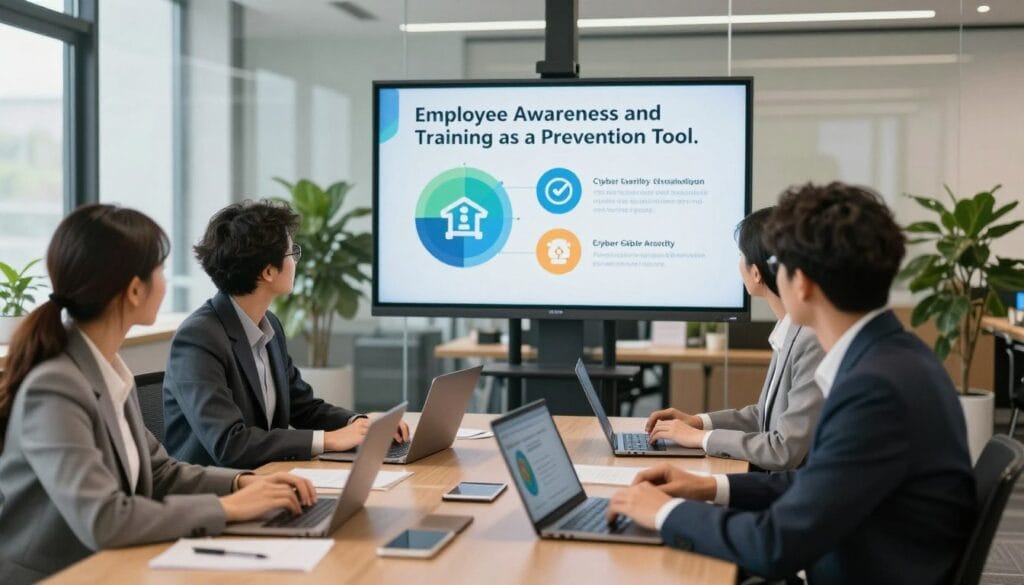
A well-informed workforce is essential to combating the ever-evolving threats in today’s cyber landscape. Employees serve as the first line of defense against potential security breaches. In fact, 49% of security breaches can be traced back to human error, such as clicking on dangerous links or accepting malicious emails.
It is crucial to educate employees on the risks they face online. They must learn to identify phishing emails, suspicious attachments, and social engineering attempts that target organizations. Even C Suite executives, who often feel secure, are prime targets for hackers. These individuals have immediate access to valuable information that cybercriminals seek.
Educating Employees on Cyber Threats
Regular training sessions should cover various cyber threats and the best practices for avoiding them. Employees should be aware of how to recognize potential risks and respond appropriately. Providing real-world examples of attacks can make the training more relatable and effective.
Establishing Clear Security Policies
Organizations need to establish clear security policies that outline how employees should handle and protect sensitive information. These policies should specify the consequences of violating cybersecurity protocols. Every team member must understand their role in safeguarding data.
Regular Cybersecurity Training and Audits
Conducting regular training and audits helps organizations identify vulnerabilities. Training sessions should address the latest threats, keeping security at the forefront of employees’ minds. Additionally, routine audits of server and network activity can proactively uncover weaknesses in the current data security plan.
It’s important to create basic guidelines on data security, including appropriate use policies. Having every employee read and sign these guidelines ensures accountability across the company. Remember, hackers often work their way up from the bottom of an organization to acquire valuable data, making comprehensive training at all levels essential.
In conclusion, employee awareness and training can transform a small business’s workforce from a potential security liability into an active part of the data protection strategy. Investing in training is not just beneficial; it is a necessity in today’s digital world.
Securing Your Small Business Network and Server
Establishing robust security measures for your network and server is vital to protect sensitive information. Small businesses often face unique challenges when it comes to cybersecurity. Implementing effective strategies can significantly reduce the risk of unauthorized access and data breaches.
Firewall Configuration and Maintenance
A well-configured firewall is essential for safeguarding your internet connection. It encrypts information on your server, keeping data hidden and secure from external threats. Regular maintenance of firewalls, along with associated software like antivirus and anti-malware tools, minimizes vulnerabilities that cybercriminals may exploit.
Data Backup and Recovery Strategies
Backing up critical data is paramount. Small businesses should regularly back up all essential files, including financial records and human resources data. Store backup copies in a secure cloud or an offsite physical location. Utilizing cold storage offline can protect against ransomware attacks, ensuring that your information remains safe.
Restricting Access and Privilege Management
Managing access is crucial for data security. Create separate user accounts for each employee and require strong passwords that are changed regularly. Limit administrative privileges to trusted IT staff to further reduce the risk of unauthorized access.
Email Security Best Practices
Emails are often the weakest point of digital entry for organizations. In fact, 64% of companies have experienced malware infiltration through email communications. To mitigate this risk, use antivirus software and only employ email providers that offer automatic protection. Establish a clear email procedure to prevent the forwarding of chain messages that could expose sensitive information.
Securing your network and server through these layered measures is essential. By protecting both customer data and personal information, small businesses can form a critical component of a comprehensive security strategy.
| Security Measure | Description | Benefits |
|---|---|---|
| Firewall Configuration | Encrypts information on the server to safeguard against external threats. | Protects sensitive data from unauthorized access. |
| Data Backup | Regularly back up critical files to secure locations. | Ensures data recovery in case of loss or ransomware attacks. |
| Access Management | Create user accounts with strong passwords and limited privileges. | Reduces the risk of unauthorized access to sensitive information. |
| Email Security | Implement antivirus protection and secure email procedures. | Minimizes the risk of malware infiltration through email. |
Creating and Implementing a Data Breach Response Plan
An effective response strategy can significantly reduce the impact of a security incident on an organization. Small companies must be prepared to act quickly when a breach occurs. This readiness can prevent further data loss and protect sensitive information.
One of the first steps in managing a breach is assembling a breach response team. This team should include experts from various areas:
- Forensics
- Legal
- Information Security
- Information Technology
- Operations
- Human Resources
- Communications
- Management
Once the team is in place, the next step is identifying and containing the breach. Take all affected equipment offline immediately, but do not turn off any machines until forensic experts arrive. Preserving evidence is crucial for understanding the breach’s scope.
Documenting and preserving evidence throughout the investigation is essential. Clear instructions should be given to avoid destroying any forensic evidence during remediation. Consult with legal counsel to understand the implications of the breach under federal and state laws.
Additionally, stopping further data loss is critical. Monitor all entry and exit points closely, update credentials and passwords, and replace affected machines with clean ones.
Finally, create a comprehensive communications plan that reaches all affected audiences. This includes employees, customers, investors, and business partners. Designate a point person within the organization to manage information release and anticipate questions from stakeholders.
A well-prepared response plan enables a small company to act decisively, minimize damage, and begin the recovery process swiftly after a breach.
Legal Notification Requirements and Best Practices
Navigating the legal landscape after a security incident is crucial for organizations to maintain compliance. Understanding the requirements can help small companies manage their obligations effectively and minimize the risks associated with breaches.
Understanding State and Federal Laws
All states, the District of Columbia, Puerto Rico, and the Virgin Islands have enacted laws requiring notification of security breaches involving personal information. Compliance with these laws is essential for businesses. Additionally, it is important to understand both state and federal regulations that apply to a security incident.
For example, the HIPAA Breach Notification Rule governs electronic personal health records, while the FTC’s Health Breach Notification Rule applies to certain health-related data. Familiarity with these regulations ensures that companies act appropriately when a breach occurs.
Notifying Law Enforcement and Affected Parties
When a breach occurs, small businesses should notify law enforcement immediately. This includes local police, the FBI, or the U.S. Secret Service. The sooner law enforcement is informed, the more effective their response can be.
Furthermore, if Social Security numbers have been compromised, it is necessary to contact major credit bureaus like Equifax, Experian, and TransUnion. This step is crucial in preventing identity theft and protecting affected individuals.
Effective Customer Notification Strategies
Notifying affected parties is a critical step in the aftermath of a breach. Businesses should use letters, websites, and toll-free numbers to communicate with individuals whose personal information may have been compromised.
Clear communication is vital. Companies should explain what happened, what information was taken, and what actions have been taken to remedy the situation. Additionally, it is important to inform individuals how they can protect themselves moving forward.
Providing Support: Credit Monitoring and Identity Theft Protection
Offering support to affected individuals is a best practice. The FTC recommends providing at least a year of free credit monitoring or identity theft protection services, especially when financial information or Social Security numbers are involved.
Using the FTC model letter can help guide the notification process. This template advises individuals to place fraud alerts or credit freezes on their credit files, providing them with essential steps to safeguard their information.
Furthermore, tailored advice based on the type of personal information exposed can be beneficial. For instance, encouraging early tax filing can help prevent tax identity theft when Social Security numbers are compromised.
In conclusion, proper legal notification not only fulfills regulatory obligations but also demonstrates a small company’s commitment to data protection and customer care. This proactive approach can help rebuild trust after a breach.
Conclusion
Ensuring the safety of sensitive information is paramount in today’s interconnected world. A staggering 60% of businesses that suffer a cyber-attack close within six months. This reality underscores the critical importance of a comprehensive approach to security.
Employing strong passwords, multi-factor authentication, regular software updates, and network segmentation can provide robust defenses. Employee training and a well-crafted response plan are equally vital. Remember, protecting sensitive information is not a one-time effort; it requires ongoing commitment from every member of the organization.
Even with limited budgets, the strategies outlined can be implemented immediately to reduce risks significantly. Viewing data security as a fundamental practice safeguards not just information but also reputation and customer trust.
For additional resources, visit business.ftc.gov or call the FTC helpline at 1-877-ID-THEFT. Small businesses can also provide feedback to the National Small Business Ombudsman at 1-888-REGFAIR or www.sba.gov/ombudsman.
Assess your current security measures today and begin implementing the strategies detailed in this guide. In today’s data-driven environment, taking control of security is essential for survival and success.
With the right plan, tools, and commitment, every organization can build a robust defense against the growing threat of cyber incidents.


 By
By