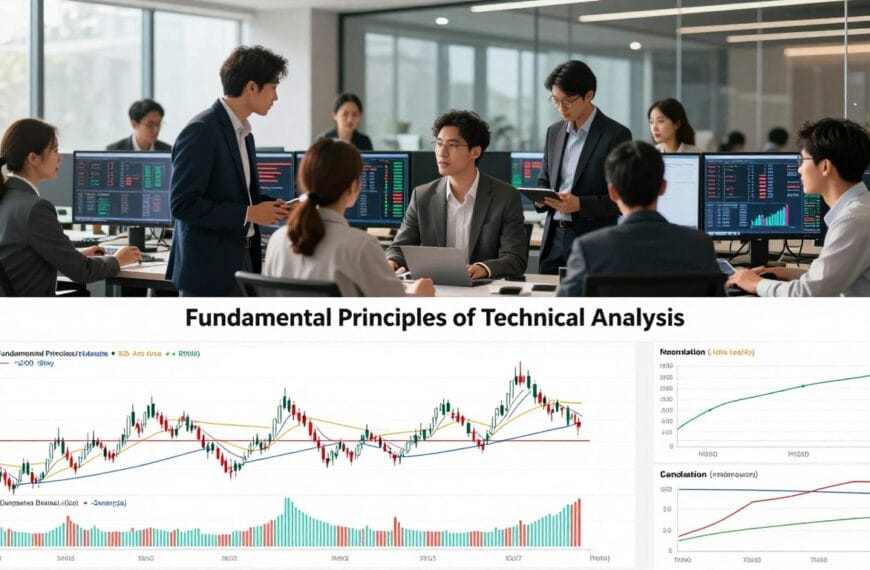


Many investors seek a balance between active daily moves and long-term positions. This approach, known as swing trading, identifies price shifts over several days or weeks. It offers more freedom for those who manage a professional career while watching markets.
Experienced traders use technical charts to identify where a new price trend begins. By analyzing specific price levels, you can find excellent entry points for your deals. A disciplined strategy is a great way to manage risk and grow your account.
This guide provides the tools you need to master these market fluctuations. We will cover indicators and patterns that signal when to exit a position. You will learn to use swing trading to achieve consistent gains in various market conditions.
Key Takeaways
- Identify entry and exit points on a price chart.
- Apply risk management to protect your capital.
- Master technical indicators for better timing.
- Create a plan that fits your personal schedule.
- Understand why discipline leads to success.
- Capture short-term gains from market fluctuations.
Understanding Swing Trading and How It Works
At its core, the concept of swing trading focuses on capturing gains over a few days or weeks. This method capitalizes on dramatic price movements in various securities within the broader market. Unlike day trading, where positions close before the bell, this strategy allows for overnight holds to maximize potential.
To understand how swing trading work, you must look at the natural oscillations of an asset. These “swings” occur as a security moves between support and resistance levels. A successful swing trader identifies the trend direction and sets clear entry points.
Effective trading involves more than just buying low; it requires disciplined risk management. Traders must establish specific profit targets and protective stop-loss levels for every position. This approach helps manage time effectively while focusing on high-probability setups.
By analyzing price action and market psychology, traders can exploit temporary inefficiencies. The goal is to capture a significant part of a move without needing to time the exact top or bottom. This balance makes swing trading a favorite for those seeking active participation.
Knowing exactly how swing trading work helps individuals navigate the swing of the trend with confidence. Modern trading demands this level of precision to remain profitable. Patience and consistency are the true hallmarks of a professional trader in this swing environment.
Why Swing Trading Appeals to Active Traders
The appeal of swing trading lies in its ability to fit around a standard workday seamlessly. Many swing traders appreciate the freedom of not having to close their positions at the end of a single day. This flexibility allows a profitable trade to develop over several sessions without the pressure of arbitrary deadlines.
This strategy requires very little time compared to intensive scalp or intraday methods. Most active traders only need to check their positions once per evening when major exchanges close. It is a perfect solution for investors who want to grow their capital while maintaining a regular 9-to-5 job.
Lower psychological stress is another major benefit of this trading style. You do not need to make split-second decisions or watch every price tick on the screen. Because you trade less often, your total trading costs remain low, which protects your bottom line over the long term.
Finally, swing strategies provide unique opportunities during sideways market moves that frustrate other traders. Private individuals often see better statistical results with this time-efficient approach than with high-frequency trading. Experienced swing traders can capture meaningful price swings without needing massive capital reserves or full-time dedication.
“The goal of a successful trader is to make the best trades. Money is secondary.”
| Feature | Swing Trading Benefit | Impact on Trader |
|---|---|---|
| Flexibility | Positions held overnight | Allows trends to mature fully. |
| Efficiency | Once-daily check-ins | Saves hours of screen monitoring. |
| Psychology | Lower decision frequency | Reduces burnout and emotional stress. |
| Cost Control | Fewer transactions | Minimizes fees and spread expenses. |
Swing Trading vs. Day Trading vs. Position Trading
Distinguishing between various market approaches is essential for any professional looking to optimize their portfolio. Each strategy offers a unique balance of effort and potential returns. Understanding these differences helps you select the right path for your financial goals.
Key Differences in Time Frames and Holding Periods
Day traders operate on the shortest time frames, often closing all active setups before the market bell to avoid overnight volatility. This fast-paced trading style focuses on minute-to-minute price action. In contrast, swing trading targets larger market moves over several days or weeks.
Position traders take the longest view, often holding a position for months or even years. While day traders ignore long-term trends, position holders focus on expansive fundamental shifts. They might hold through many small rallies or pullbacks that a shorter-term trader would exit. This contrast highlights why day trading requires constant screen time while others allow for more flexibility.
Comparing Risk and Reward Profiles
The risk profile changes significantly based on your chosen horizon. Day traders face rapid intraday volatility but sleep soundly without overnight exposure. Conversely, swing trading accepts gap risks between sessions to capture larger price swings. Reward potential also scales with time, moving from tiny frequent gains to substantial trend-following profits.
Transaction Costs and Trading Frequency
Frequency is a major factor in overall profitability. Because day traders execute dozens of trades each day, they often incur the highest cumulative commission costs. Active day trading involves high volume and narrow margins. Those in a long-term position minimize costs by making only occasional adjustments to their portfolio. This high-frequency trading demands strict discipline to remain profitable.
| Feature | Day Trading | Swing Trading | Position Trading |
|---|---|---|---|
| Holding Period | Seconds to Hours | Days to Weeks | Months to Years |
| Analysis Type | Strict Technical | Technical & Fundamental | Strict Fundamental |
| Cost Impact | High Commissions | Moderate Costs | Minimal Trading Costs |
Essential Components of a Successful Swing Trading Setup
Before placing your first order, you must define the essential pillars that support every profitable trading strategy. A successful swing trading setup relies on a structured framework that guides your decision-making from start to finish.
Pre-defining these elements helps you avoid emotional choices and ensures disciplined execution. Technical analysis plays a vital role here because price targets often must be reached within a specific time window.
Determining Trade Direction: Long or Short
Traders begin by analyzing the current trend structure and momentum indicators. You need to decide whether to take a long position in an uptrend or look for short opportunities during a decline.
Analyzing the broader market context helps you anticipate the next big swing in price movement. This step ensures you are trading with the path of least resistance rather than against it.
Identifying Optimal Entry Points
Finding a precise entry requires using technical tools like support and resistance levels. You should look for breakout confirmations or pullbacks that offer a favorable reward-to-risk ratio.
Ask yourself why you are buying or selling at a specific price level before committing capital. If the asset fails to move as expected within your timeframe, consider closing the trade to preserve capital.
Setting Realistic Profit Targets
Establishing a realistic profit target is critical for maintaining a positive expected value over time. You can use historical price behavior and chart pattern projections to find logical exit zones.
Strategic swing trading requires taking gains at levels where the market has previously stalled or reversed. This approach prevents you from turning a winning trade into a losing one by waiting too long.
Establishing Protective Stop-Loss Levels
Every swing needs a safety net to manage downside risk and protect your account balance. Place your protective stops below support for long setups or above resistance for short setups.
Logical alignment between your entry, target, and stop levels is the foundation of a professional trade. Following this structured trading strategy allows you to stay calm and focused during market volatility.
| Component | Primary Focus | Strategic Implementation |
|---|---|---|
| Swing Direction | Trend Analysis | Identifying higher highs or lower lows |
| Market Entry | Technical Triggers | Using breakouts and support pullbacks |
| Exit Strategy | Risk Management | Setting stops and profit objectives |
Core Technical Indicators for Swing Trading
To excel in the markets, traders must master the core technical indicators that filter noise from signal. These tools help you identify high-probability trading opportunities and confirm the strength of current trends. By combining multiple data points, you create a robust framework that reduces false entries.
Moving Averages and Trend Detection
A moving average smooths out price data to reveal the underlying direction of a security. Traders often use the Simple Moving Average (SMA) or the Exponential Moving Average (EMA) to identify these paths. A moving average helps you stay on the right side of the market by showing average values over specific periods.
Short-term averages typically look at up to 50 days of data. Medium-term periods range from 50 to 100 days, while long-term views focus on 100 to 200 days. A crossover occurs when a short-term moving average crosses a long-term one, signaling a potential swing trade entry.
Using a moving average compensates for short-term outbreaks and provides a more realistic view of price action. This smoothing effect is essential for separating minor fluctuations from significant directional changes.
Relative Strength Index (RSI) for Momentum
The Relative Strength Index measures momentum by comparing the magnitude of recent gains to recent losses. It operates on a scale from 0 to 100 to help you spot extreme conditions in the market. This tool is a vital part of a comprehensive technical analysis strategy.
Values above 70 indicate overbought conditions, which often signal a potential price correction. Conversely, values below 30 suggest the market is undersold, pointing to a potential rise. Traders use these levels to anticipate when a move might be losing steam.
Stochastic Oscillators for Timing
Stochastic oscillators complement other indicators by measuring where the current price falls within its recent range. This tool provides precise timing signals for potential reversals. It is especially useful for a swing trader looking to enter at the start of a new price wave.
Values typically above 80 are considered overbought, whereas values below 20 are undersold. These oscillators predict turning points by measuring changes between different trading periods. Following these signals helps you avoid entering a position at the very end of a move.
Volume Analysis for Trend Confirmation
| Indicator | Signal Type | Key Level |
|---|---|---|
| RSI | Momentum | 70 Overbought / 30 Oversold |
| Stochastic | Timing | 80 Overbought / 20 Undersold |
| Volume | Strength | Rising vs. Falling |
Volume is a critical metric that shows the strength of any price movement. Higher volume during a breakout indicates strong conviction among market participants. This activity confirms that the price move has enough support to continue its current trajectory.
Effective trading requires confirming price action with these activity levels. Lower volume suggests a slowdown and a possible reversal in the near future. Integrating this into your analysis ensures you focus on moves with the highest probability of success for your swing portfolio.
Chart Patterns Every Swing Trader Should Master
Learning to spot specific price actions helps swing traders identify profitable entry and exit points. These visual formations act as a map for the market. By recognizing these shapes, you can find setups that align with current momentum.
Bull Flag Patterns and Continuation Signals
The bull flag is a powerful continuation pattern that begins with a sharp rally called a flagpole. This move happens on high volume, showing strong buyer interest. After the surge, the price moves into a small, declining channel known as the flag.
Smart swing participants wait for the market to move above the flag resistance. This breakout must occur on increased volume to confirm the trend is resuming. You can estimate a profit target by measuring the height of the initial flagpole move.
Ascending Triangles as Bullish Indicators
Ascending triangles show a period where buying pressure slowly accumulates. These patterns feature a flat resistance line and rising support levels. The rising lows indicate that traders are willing to buy at higher prices over time.
As the swing range tightens, the market prepares for a significant move. A breakout above the horizontal line usually signals a strong upward trend. You can measure the vertical distance of the triangle to project a potential price target.
Double Tops and Double Bottoms for Reversals
Double bottoms resemble the letter “W” and signal a move from a downtrend to an uptrend. The pattern completes when the market clears the middle peak after the second low. This swing formation shows that sellers have finally lost their control over the market.
Double tops work in the opposite way and look like the letter “M.” These patterns warn that a fall is likely after the second peak fails to break higher. Both formations are essential for trading major directional changes in the market.
Symmetrical Triangles and Breakout Opportunities
Symmetrical triangles occur when converging trendlines create a period of market compression. The price range narrows as both the resistance and support lines move toward each other. This often indicates a “wait-and-see” market where a big move is coming.
Legitimate trading breakouts from this pattern typically feature expanding volume. Without volume confirmation, swing traders might get trapped in a false signal. This pattern results in explosive moves, though the direction is often less predictable than other setups.
| Pattern Name | Pattern Type | Expected Direction | Key Visual Signal |
|---|---|---|---|
| Bull Flag | Continuation | Bullish | Strong pole with a small flag |
| Double Bottom | Reversal | Bullish | “W” shape at the bottom |
| Double Top | Reversal | Bearish | “M” shape at the peak |
| Ascending Triangle | Continuation | Bullish | Flat top with rising support |
| Symmetrical Triangle | Breakout | Neutral/Explosive | Converging swing lines |
Swing Trading Strategies for Traders: Proven Approaches
Mastering various swing trading strategies allows you to adapt to changing market conditions with confidence. By choosing the right method, you can focus on high-probability setups that match your personal risk tolerance.
Professional traders often switch between different approaches as the volatility of the assets changes. Understanding these core methods is the first step toward achieving consistent results in your portfolio.
Trend Following Strategy for Directional Moves
This strategy relies on identifying the overriding trend to take several long or short positions. You enter trades when the price moves in a clear direction, supported by moving averages.
Traders use stochastic oscillators to recognize potential trend ends and manage their swing trades through normal pullbacks. This keeps you in the move longer while protecting your capital from sudden reversals.
Breakout Trading Strategy for Range Exits
A breakout swing trading strategy looks for explosive price moves after a period of sideways consolidation. These moments occur when the price pushes through a major resistance or support level.
High trading volume often confirms that the breakout is genuine and not a false signal. You can capture significant gains by entering the trade just as the momentum begins to accelerate.
Range Trading Strategy for Sideways Markets
Range trading focuses on markets where the price moves horizontally between defined support and resistance lines. These trading strategies allow you to profit from up-and-down oscillations while waiting for a bigger move.
You buy near the bottom of the range and sell near the top to capture consistent gains. This disciplined approach requires patience but works exceptionally well in non-trending environments.
COT Report Strategy for Commodities Trading
The COT Report strategy analyzes institutional positions in the US commodities market. By reviewing Friday reports, you can detect large positions held by major commercial players.
This data helps you prepare swing trades based on imminent trend reversals that others might miss. Successful traders use these trading strategies to gain a specialized edge in gold, oil, or agricultural markets.
Using various trading strategies ensures you remain adaptable to any economic environment. Every swing trading strategy works best under specific conditions, so choosing the right strategy for today’s trading environment is vital for long-term success.
| Strategy Type | Market Condition | Primary Indicator |
|---|---|---|
| Trend Following | Strong Directional Move | Moving Averages |
| Breakout Trading | Post-Consolidation | Volume & Volatility |
| Range Trading | Sideways/Flat | Support & Resistance |
| COT Report | Commodities Focus | Institutional Data |
How to Develop Your Swing Trading Strategy Step-by-Step
To achieve consistent results, you must follow a systematic process to develop a robust swing trading strategy. Building a professional framework involves more than just a gut feeling or watching news headlines. You need to align your personal risk tolerance with the specific conditions of the financial market. This objective process ensures you remain calm and disciplined during volatile periods in your swing career.
Every successful trading strategy requires a written plan that serves as your personal roadmap. By documenting your rules, you create an accountability tool that prevents emotional errors. Let’s explore the essential steps to build a plan that fits your financial goals and resources.
Step 1: Identify Market Opportunities and Set Clear Goals
Start by finding technical setups that you fully understand and can identify quickly on a chart. You must set measurable goals for your expected returns and define your swing trading strategy risk limits. Determine exactly how much capital you are willing to lose before you exit a position to protect your account. A clear strategy defines your trading frequency and your desired risk-reward ratio for every setup.
Step 2: Select Suitable Markets and Securities
Not all assets are equal when it comes to swing trading. You should evaluate liquidity and volatility to ensure you can enter and exit trades without significant price slippage. Choose asset classes and geographies that fit your personal investment return targets and familiarity. A focused market approach helps you master the specific price movements of a few reliable securities.
Step 3: Define Specific Entry and Exit Criteria
Create strict rules to remove subjective interpretation from your swing execution. Use technical indicators and price action to determine the precise moment to buy or sell. Your trading strategy should dictate timing based on objective analysis rather than fear or greed. Always set protective stop-loss levels and profit targets before you open a new position.
Step 4: Back-Test Your Strategy with Historical Data
Before risking real capital, you must see how your plan would have performed in the past. Reviewing your rules against historical data helps you identify potential weaknesses and performance metrics. This testing phase allows you to refine your trading strategy and build the confidence necessary for live markets. Remember that strategy development is an iterative process that requires constant evaluation.
| Development Phase | Primary Objective | Key Deliverable |
|---|---|---|
| Goal Setting | Define risk limits | Risk-reward ratio |
| Asset Selection | Find liquid assets | Watchlist of stocks |
| Execution Rules | Identify entry points | Entry/Exit checklist |
| Historical Review | Validate the strategy | Win-rate percentage |
Executing a Bull Flag Breakout Trade
Mastering the bull flag setup allows you to identify high-probability opportunities where price momentum takes a brief pause before resuming its upward climb. This pattern is a favorite for those who prefer a systematic swing trade approach. It offers a clear roadmap for managing risk while capturing explosive moves.
Identifying the Flagpole Formation
The process begins by locating a strong, near-vertical price advance. For example, Stock ZYX recently rallied from $150 to $185 over three weeks. This 25% gain happened on high volume, creating a clear flagpole that shows intense buying interest.
A flagpole represents the initial momentum thrust that catches the market’s attention. Without this vertical move, the pattern lacks the necessary energy for a continuation swing.
Recognizing the Flag Consolidation Pattern
After the initial surge, the price often drifts downward or sideways. In our ZYX example, the stock settled between $185 and $168 over a couple of weeks.
This phase shows the market digesting gains on lower volume, forming a slightly declining channel. It is a healthy sign that sellers are not in control, but rather that buyers are waiting for the next trading signal.
Timing Your Entry on Volume Breakout
The ideal entry happens when the candle closes above the flag’s upper resistance line. For ZYX, a trader would buy at $172 to confirm the breakout.
You should see an immediate increase in volume to confirm that active swing participants are returning. This shift in momentum suggests that the trading trend is ready to resume its primary upward path.
Setting Multiple Price Targets for Profit Taking
Successful swing trading relies on predefined exit points to secure profit. You can use the flagpole height as a measuring tool to project where the price might go next.
Target B is often set at $189.50 to capture a quick profit as momentum builds. More aggressive traders look toward Target A at $207, which represents the full length of the initial swing move.
| Trade Component | Stock ZYX Level | Strategic Rationale |
|---|---|---|
| Entry Point | $172.00 | Confirming flag resistance breakout |
| Stop-Loss Order | $167.50 | Placement below flag support line |
| Conservative Target | $189.50 | 50% flagpole height projection |
| Aggressive Target | $207.00 | 100% flagpole height projection |
Position Sizing and Risk Management Fundamentals

Protecting your capital is the single most important factor that determines your long-term survival in the competitive world of financial markets. Disciplined risk management separates the consistent winners from those who experience devastating losses. This section explores the core rules every person must follow to protect their account from unexpected market moves.
Calculating Appropriate Position Size Based on Risk Tolerance
You must decide how much money to put into each individual trade before hitting the buy button. Most professional market participants only allow a 1% or 2% loss of their total capital on any single position. This percentage-of-capital approach ensures that a string of losing trades will not destroy your entire portfolio.
To calculate the right amount, work backward from your maximum acceptable loss and the distance to your stop-loss level. This formula keeps your exposure consistent regardless of your conviction level. By staying disciplined, you treat every opportunity with the same level of professional caution.
Setting Effective Stop-Loss Orders
A stop-loss order acts as a vital safety net to avert financial disaster when the market moves against you. You should place these orders at logical technical levels rather than arbitrary price points. Avoid obvious clusters where many other participants place their stops, as these areas often attract “stop hunting” volatility.
“Risk comes from not knowing what you’re doing.”
While these orders are essential, remember they do not guarantee execution at the exact activation price during fast market gaps. However, having a plan in place provides the psychological clarity needed for long-term trading success. Never ignore a stop-loss once you have set it for a specific setup.
Determining Risk-Reward Ratios Before Entry
Before entering any swing setup, you must evaluate if the potential reward justifies the danger. Successful participants typically target opportunities that offer at least a 2:1 or 3:1 reward-to-risk ratio. This means your potential profit is significantly higher than the amount you are willing to lose on the play.
| Ratio Type | Risk Amount ($) | Potential Gain ($) |
|---|---|---|
| Conservative | $100 | $200 |
| Optimal | $100 | $300 |
| Aggressive | $100 | $500 |
Adjusting Positions as Trades Develop
Managing a swing move requires flexibility as the market provides new information. Many people take partial gains at initial targets to lock in money while leaving a small portion to capture larger moves. This dynamic approach helps mitigate risk while staying involved in a strong trend.
You can also move your stop-loss orders higher as the trade develops to protect your accumulated gains. Using trailing stops allows you to follow the trend without exiting too early. Effective trading is just as much about managing the exit as it is about finding the perfect entry.
How to Use Moving Averages for Swing Trade Signals
A moving average serves as a foundational pillar in the toolkit of a professional market analyst. These indicators smooth out volatile price data to create a single, flowing line on your chart. This clarity makes it much easier to identify the overall direction of a swing trade.
By removing the “noise” of daily fluctuations, traders can focus on the underlying momentum. Using these tools effectively requires a balance between speed and reliability. Most swing strategies rely on these smoothed lines to confirm that a trend is truly changing direction.
Understanding Short-Term vs. Long-Term Moving Averages
Traders categorize these tools by their time sensitivity to recent price changes. Short-term options typically cover up to 50 days and react quickly to new market information. These are excellent for capturing fast moves in a high-energy trading environment.
Medium-term ranges span 50 to 100 days, while long-term indicators use 100 to 200 days. Long-term lines help you filter out minor market distractions to see the “big picture.” Combining these periods allows for a more complete analysis of the current market cycle.
Identifying Crossover Signals for Entry Points
A reliable entry signal often occurs when two different lines intersect on the price chart. When a short-term moving average crosses above a long-term one, it suggests that bullish momentum is accelerating. This is often viewed as a “Golden Cross” by many market participants.
Conversely, a short-term moving average crossing from above to below indicates a potential downward move. This bearish signal warns that the upward swing may be losing its strength. Monitoring these intersections helps traders time their actions with greater precision during active trading sessions.
Using Exponential vs. Simple Moving Averages
The Simple Moving Average (SMA) calculates the average price by weighting all data points in the period equally. This results in a smoother line that is less prone to false signals. However, the SMA can sometimes lag behind sudden, significant price reversals.
In contrast, the Exponential Moving Average (EMA) places more weight on the most recent prices. Many swing traders prefer the EMA because it reacts faster to shifts in market sentiment. Using a moving average as dynamic support or resistance can further enhance your success in trading various assets.
| Indicator Type | Sensitivity Level | Primary Advantage |
|---|---|---|
| Simple (SMA) | Moderate | Filters out market noise effectively |
| Exponential (EMA) | High | Reacts quickly to recent price shifts |
| Weighted (WMA) | Very High | Emphasizes the most recent data points |
Ultimately, the choice between different types of indicators depends on your specific goals. A moving average is not a crystal ball, but it provides a logical framework for making decisions. Consistent application of these signals can lead to more disciplined and profitable results over time.
Selecting the Best Securities for Swing Trading

Finding the perfect balance of liquidity and movement is essential for every swing trader. You must identify assets that align with your specific risk profile and financial goals. Strategic selection ensures you can execute trades without facing unnecessary hurdles in a fast-moving environment.
Stocks with Sufficient Liquidity and Volume
High liquidity is a primary requirement for any stock you choose for your portfolio. This characteristic allows you to enter and exit positions quickly without facing heavy slippage or price gaps. You should monitor the average daily volume to ensure the market can support your position size effectively during the week.
Optimal Volatility Requirements for Swing Trades
Volatile price action provides the profit potential needed for successful swing trading. However, excessive movement can trigger stop-loss orders prematurely due to market noise. Aim for a stock that moves steadily rather than erratically to maintain a consistent swing throughout the trade duration.
Popular Markets: Stock, ETFs, Forex, and Commodities
Many traders prefer the S&P 500 or Nasdaq 100 because these indices offer inherent reliability and trend clarity. The forex market remains a favorite because it offers 24-hour access and the highest liquidity for major currency pairs. Traders also explore swing trading in specific stock sectors or trading commodities like gold to diversify their swing trading portfolio.
Choosing a final stock depends heavily on your available trading capital and preferred trading hours.
| Asset Class | Liquidity Level | Volatility Level | Primary Benefit |
|---|---|---|---|
| S&P 500 ETF | Very High | Moderate | Reduced Risk |
| Major Forex Pairs | Extreme | Moderate | 24-Hour Access |
| Large-Cap Tech | High | High | Strong Trends |
| Gold Futures | Moderate | High | Crisis Hedge |
Getting Started with Swing Trading: Your Action Plan
Launching a successful journey in the markets starts with a clear, step-by-step roadmap for new traders. Moving from theory to practice takes patience and discipline. Developing a consistent trading routine helps you navigate market complexities effectively.
Building Your Knowledge Foundation
Before you risk a single dollar, you must understand the core principles. Learn how to trade by studying technical indicators and fundamental analysis. Master the art of assessing risk to protect your capital from large losses.
Success in trading depends on a solid educational base. Focus on these key areas during your initial study:
- Chart reading and pattern recognition.
- Risk-to-reward ratio calculations.
- Market psychology and sentiment analysis.
Starting with Paper Trading Accounts
Beginners should first develop their swing trading strategy on a demo account. Use this time to practice without the pressure of losing real money. This allows you to see if your swing approach yields reliable profits.
Professional platforms often provide these simulated environments for free. Treat the demo funds as if they were your own cash to build realistic habits. Spend at least a few months refining your execution before committing capital.
Transitioning to Live Trading with Small Positions
Once you are comfortable, switch to a live account but start with very small positions. Managing a small trade helps you handle the psychological stress of real stakes. Many traders find that small sizes make the transition much smoother for their swing trading goals.
| Phase | Primary Focus | Key Goal |
|---|---|---|
| Education | Technical Analysis | Knowledge |
| Simulation | Demo Account | Strategy Testing |
| Execution | Small Live Trades | Emotional Control |
Tracking and Analyzing Your Performance
Maintain a detailed journal to record every swing move you make. Document your entries, exits, and the emotions you felt during the session. Analyzing this historical data ensures you learn from mistakes and improve over time.
There is enough complexity in swing trading that you may never stop learning.
Continuous swing trading education is the key to long-term trading success. Review your journal weekly to identify recurring patterns in your behavior. Refine your entry criteria based on what the numbers actually show you.
Common Mistakes to Avoid in Swing Trading
Protecting your capital means knowing the mental and technical traps in market moves. Even a solid trading strategy can fail if a person lacks the discipline to execute it well. Identifying these traps helps traders avoid losing their money while swing trading.
Taking Too Many Positions Simultaneously
Managing too many active trades at once often leads to a diluted focus. When you hold an excessive position count, it becomes hard to monitor every market swing effectively. This overwhelm usually results in missed exit signals.
Investors who cannot watch their assets carefully should rethink their approach. Over-trading increases stress and makes it impossible to manage each opportunity with precision. Limit your entries to stay sharp and focused.
Ignoring Stop-Loss Orders and Risk Management
The single biggest risk to any account is entering the market without a clear exit plan for losses. Failing to set stop-loss orders can turn a small setback into a total financial disaster. Every trade must have a predetermined point where you admit you are wrong.
Smart traders prioritize capital preservation above all else. They understand that managing risk is the only way to survive long enough to find winning opportunities. Never let a single mistake destroy your entire portfolio.
Lacking Discipline in Following Your Strategy
A consistent trading strategy requires sticking to the rules even when emotions run high. Many people override their plan based on “hunches” or external market news. This lack of discipline causes a swing in performance that usually trends downward.
“The goal of a successful trader is to make the best trades. Money is secondary.”
Consistency is more important than being right on a single call. If you ignore your rules, you are gambling rather than following a professional plan. Keep a log of your trades to track when you deviate from your system.
Chasing Trades and Making Impulsive Decisions
Entering a trade after the optimal price has already passed is a common recipe for failure. This behavior, driven by a fear of missing out, leads to a poor position entry point. A disciplined swing trader waits for the next setup rather than forcing a move.
| Mistake | Consequence | Better Approach |
|---|---|---|
| Chasing Price | Bad Risk-Reward | Wait for Pullbacks |
| No Stop-Loss | Large Drawdowns | Set Exits Early |
| Emotional Trading | Inconsistent Results | Follow the System |
Impulsive actions often lead to many small losses that quickly add up. Be patient and let the market come to you. Success comes to those who wait for the high-probability patterns defined in their plan.
Advantages and Challenges of Swing Trading
Understanding both the bright side and the potential hurdles is essential for anyone looking to master swing trading. Choosing a trading style requires a careful look at how it fits your daily routine and financial goals. This approach effectively bridges the gap between high-frequency action and long-term investing.
Key Benefits: Flexibility, Lower Costs, and Time Efficiency
One major perk of this method is its incredible flexibility. Most participants find that swing trading fits perfectly around a full-time career. Unlike a day trader, you do not have to watch every price tick on the screen.
This style is also cheaper because fewer transactions mean lower commission fees. Because your positions run for several days, you spend less time managing each specific move. It is a very comprehensible way to use various trading strategies without the constant stress of scalping.
Risks to Consider: Overnight Risk and Market Gaps
However, you must face the reality of capital risk. The biggest risk involves overnight exposure where prices can shift while you sleep. Significant news can cause a market to gap, potentially jumping over your defensive stop-loss orders.
“The goal of a successful trader is to make the best trades. Money is secondary.”
Highly volatile phases can also make even the best trading strategies struggle for consistency. You might miss out on huge rallies by focusing on small swing moves rather than holding for the long haul. This variability requires a calm mindset to navigate successfully.
Time Commitment and Psychological Demands
While it takes less time than a day job, success still requires dedicated effort. You must carve out hours to analyze the swing and plan your entries. Developing a consistent trading routine is vital for long-term survival.
| Feature | Swing Style | Day Style |
|---|---|---|
| Stress Level | Moderate | High |
| Transaction Costs | Lower | Higher |
| Price Monitoring | Occasional | Constant |
Maintaining discipline is the most significant psychological demand for any trading career. You need the emotional control to wait for setups and avoid making impulsive choices during a volatile swing. Success in trading comes from following your proven rules even when the market feels uncertain.
Tools and Resources for Swing Trading Success

Successful traders often use a set of digital tools to watch the market. Having the right setup helps you find high-quality setups without wasting too much time at your desk. These digital resources give you the competitive edge you need to stay ahead of others in the financial world.
Trading Platforms and Charting Software Options
Platforms like thinkorswim offer deep charting and analysis tools that many swing traders find helpful. You can also look into specialized signal services like TraderFox to help find new entries. High-quality software allows for fast orders while providing the indicators needed for a winning swing trading plan.
Using these digital tools makes your daily routine much faster. Speed and accuracy are the keys to catching moves before the rest of the crowd reacts.
Market Data Feeds and Research Tools
Good data is the heart of any trading plan. You need a fast feed that shows the right price and volume for every move. These feeds ensure that you never make a choice based on old or wrong information.
Extra tools like a stock screener or a calendar can help you find a specific stock that fits your needs perfectly. These resources help you filter through thousands of options to find the best picks. This saves you from the exhausting task of checking every ticker manually.
Educational Resources and Community Support
The market is always changing, so you must keep learning for any swing strategy. Joining a professional trading group or taking a class can help you improve your analysis skills over many years. Constant growth is the only way to survive in shifting environments.
While software is a great aid, your own discipline is the best asset for swing deals. Successful trading requires a long-term view of your trading path. Never stop building your knowledge base to support your swing trading goals.
Conclusion
Becoming a successful swing trader is a journey that demands consistent effort and disciplined risk management. This specialized skill is not for every trader. It requires significant time and practice to master each price swing.
Effective swing trading strategies combine technical analysis with the psychological control needed to handle short-term market fluctuations. Those with low risk tolerance or limited capital might find this swing trading strategy challenging. However, for many others, it offers a valuable way to supplement long-term investments.
Successful swing participants prioritize a plan that aligns with their personal temperament and time availability. You should begin your journey with proper education and demo accounts. This allows you to test different trading strategies without risking real funds.
As your competence grows, you can transition to live trading with small positions. Remember, swing traders must remain disciplined and avoid impulsive decisions. By using indicators and patterns that make sense, successful swing results become achievable.
When executed correctly, you can earn handsome returns while maintaining a manageable level of effort in the market. Implementing robust trading strategies ensures you stay ahead of the curve. Your chosen strategy should evolve as you gain experience.
Dedicated traders understand that growth rests on continuous refinement and study. Refining your swing trading strategies is a vital step toward independence. Every swing requires a clear exit plan.
With the right trading mindset, modern traders can turn these swing trading strategies into a consistent source of income. Skilled swing traders always respect the power of the trend. Ultimately, swing traders find their place in the trading world by building swing momentum and refining a reliable strategy for active trading.


 By
By