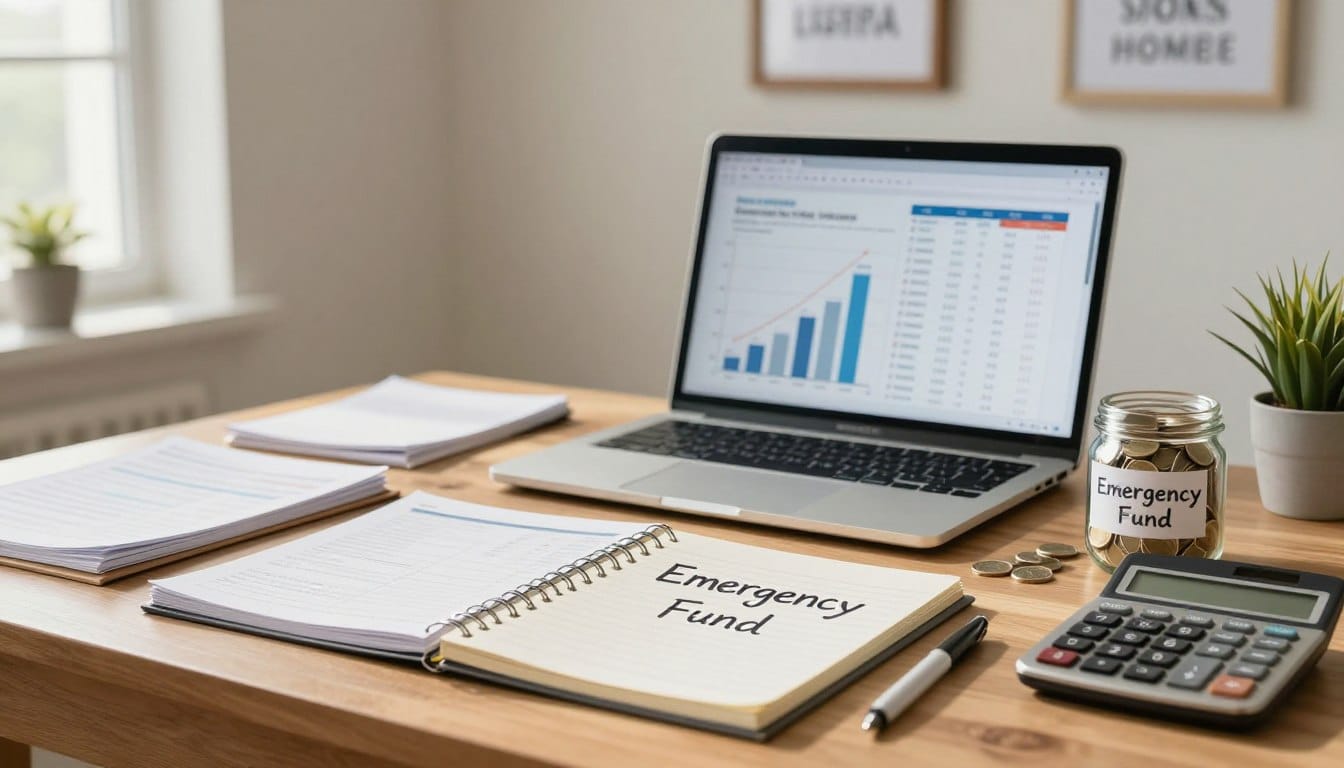


Establishing an emergency fund is crucial for financial stability. It acts as a dedicated cash reserve, providing a safety net for life’s unexpected challenges. This guide will help you create a practical plan to build your fund from scratch in just six months.
Learning the process is not only realistic but also achievable for most individuals. Regardless of your current financial situation, breaking it down into manageable steps makes it accessible. Even a small amount of savings can make a significant difference when facing unplanned expenses or sudden income loss.
Research from Vanguard shows that having as little as $2,000 in your emergency fund can offer immediate relief. This buffer can protect you from many of life’s uncertainties. The article will cover essential topics, including calculating your savings goal and strategies for effective saving.
Remember, building an emergency fund is a marathon, not a sprint. Starting small and maintaining a consistent savings habit is vital for achieving long-term financial security.
Key Takeaways
- An emergency fund provides a safety net for unexpected expenses.
- Even small savings can significantly impact financial security.
- Research shows that $2,000 can be a powerful financial buffer.
- Breaking the process into steps makes it achievable for anyone.
- Consistency in saving is key to building your fund.
What is an Emergency Fund and Why You Need One?
An emergency fund is essential for navigating financial uncertainties. This dedicated cash reserve is specifically set aside for unplanned expenses or financial emergencies. Unlike regular savings accounts, which are meant for planned purchases or long-term goals, an emergency fund serves a distinct purpose.
The core purpose of this fund is to act as a financial buffer. It allows you to cover unexpected costs without resorting to high-interest credit cards or personal loans. Prematurely withdrawing from retirement accounts can have lasting negative consequences, making an emergency fund a vital resource.
Having financial security through an emergency fund provides peace of mind. It reduces stress during challenging times, whether facing a sudden car repair, an unexpected medical bill, or a temporary loss of income from a job. Knowing you have money set aside can make a significant difference in how you handle these situations.
Common financial emergencies covered by an emergency fund include:
- Car repairs, such as engine failure or transmission issues.
- Home repairs, like a broken HVAC system or a leaking roof.
- Unexpected medical bills from accidents or illnesses.
- Loss of income due to layoffs or reduced work hours.
Vanguard identifies two types of financial emergencies: spending shocks and income shocks. Spending shocks refer to large, unexpected expenses like major home repairs. Income shocks involve disruptions to your earnings, such as job loss. Each type requires a different savings approach.
Without an emergency fund, even minor financial shocks can spiral into significant debt. Individuals may rely on credit cards with high interest rates or take out loans that become increasingly difficult to repay. According to the CFPB, those lacking emergency savings often pull from other savings, like retirement funds, jeopardizing long-term financial goals.
It’s important to note that an emergency fund is not just for large-scale disasters. It also covers smaller unplanned bills outside your routine monthly expenses, such as surprise dental procedures or urgent pet care visits. Having money set aside is one of the most effective ways to protect yourself and your family from the financial fallout of life’s unpredictable events.
In conclusion, understanding what an emergency fund is and why it is essential lays the foundation for the practical steps that follow. This knowledge motivates you to take action and start building your own financial safety net.
Calculating Your Emergency Fund Goal: How Much to Save
Calculating the right amount for your savings goal is the first step in securing your financial future. Understanding your monthly expenses is crucial for determining how much you need to save. By breaking down your expenses into fixed and variable categories, you can establish a realistic target for your emergency fund.
Assessing Monthly Expenses: Fixed and Variable Costs
Start by categorizing your monthly expenses. Fixed costs include:
- Rent or mortgage payments
- Car payments
- Insurance premiums
Variable costs may consist of:
- Groceries
- Entertainment
- Utility bills
Accurately calculating both types of expenses is essential. This total will form the foundation for your emergency fund savings goal, tailored to your individual circumstances.
Setting Realistic Savings Targets: 3 to 6 Months of Expenses
When preparing for emergencies, it’s important to set realistic savings targets. For a spending shock, aim to save at least half of your monthly expenses. For an income shock, save three to six months’ worth of expenses. Here are the equations to guide you:
- Spending shock: Monthly expenses ÷ 2
- Income shock (3 months): Monthly expenses × 3
- Income shock (6 months): Monthly expenses × 6
Using Expense Worksheets and Savings Calculators
Utilize expense worksheets and savings calculators to streamline your planning. Tools like those provided by Vanguard allow you to input your monthly expenses for each category. This helps visualize spending patterns and identify areas to cut back, accelerating your emergency fund growth.
Review your bank statements from the past 12 months to capture seasonal variations in spending. Tally all expenses in each category and divide by 12 to calculate an accurate average monthly expense. This ensures no significant costs are overlooked.
For dual-income households, saving three to four months’ worth of expenses may suffice. However, individuals with commission-based income should aim for the full six months due to potential income volatility.
Ultimately, the amount needed in an emergency fund varies from person to person. Setting a specific, measurable goal based on actual expenses increases motivation and makes your savings plan more achievable.
Consider personal risk factors like job stability and health when determining whether to target the lower or higher end of the three-to-six-month range. Taking the time to accurately calculate your emergency fund goal is a critical step. It transforms a vague intention into a concrete plan, paving the way for actionable strategies in the next section.
Step-by-Step Strategies to Build Your Emergency Fund in 6 Months
Building a solid emergency fund requires strategic planning and commitment. By implementing effective strategies, you can steadily increase your savings over the next six months. Here are some proven methods to help you achieve your financial goals.
Create a Consistent Savings Habit
Start by setting a specific, achievable goal for your emergency fund. Aim to save your first $1,000 as a milestone. Regularly monitor your progress through automatic notifications or a running total. This keeps you motivated and on track.
Effectively Manage Your Cash Flow
Analyze the timing of your income and expenses. Work with creditors, such as landlords and utility companies, to adjust bill due dates. This can help align your payments with your pay schedule, making it easier to manage your cash flow.
Leverage One-Time Money Opportunities
Boost your emergency fund quickly by taking advantage of one-time money opportunities. Consider depositing all or a portion of your tax refund directly into your savings account. Additionally, save cash gifts from holidays and birthdays, or use unexpected windfalls like bonuses to accelerate your progress.
Automate Your Savings with Recurring Transfers
Set up automatic transfers from your checking account to your dedicated emergency fund account. Choose a specific date each month, week, or pay period for these transfers. This ensures consistent contributions without requiring ongoing willpower.
Use Employer Payroll Options for Automatic Contributions
Split your direct deposit so that a predetermined amount or percentage of each paycheck goes directly into your emergency fund account. This method effectively pays yourself first before you have a chance to spend the money.
Supplement Savings with Side Jobs and Selling Unused Items
Consider taking on side jobs to supplement your emergency fund savings. Opportunities like becoming a food delivery driver with DoorDash or UberEats can provide extra cash. You can also sell unused items around your home through platforms like eBay or Facebook Marketplace.
In addition, cutting back on unnecessary expenses can free up more money for your emergency fund. Cancel unused subscriptions, pack your lunch instead of eating out, and shop at thrift stores to save. Combining multiple strategies can maximize your savings rate over the six-month period.
Building an emergency fund in six months is entirely achievable with these proven strategies. The discipline you develop during this process will serve as a foundation for lifelong financial health.
| Strategy | Description |
|---|---|
| Create a Consistent Savings Habit | Set a specific goal and monitor progress to stay motivated. |
| Manage Cash Flow | Align bill due dates with income to improve cash flow. |
| Leverage One-Time Opportunities | Deposit tax refunds and cash gifts into your savings. |
| Automate Savings | Set up automatic transfers to your emergency fund account. |
| Employer Payroll Options | Split direct deposit to save before spending. |
| Supplement with Side Jobs | Take on side gigs or sell unused items for extra cash. |
Best Places to Keep Your Emergency Fund Safe and Accessible

Selecting the right location for your emergency fund is a vital step in ensuring its effectiveness. The ideal spot should be safe, easily accessible, and separate from your everyday spending accounts. This separation helps prevent the temptation to use these funds for non-emergencies.
Bank or Credit Union Savings Accounts
Using a bank or credit union savings account is often the best choice for your emergency fund. These accounts are generally considered some of the safest places to store your money. They offer FDIC or NCUA insurance coverage, which protects your deposits up to applicable limits.
Accessing your funds is straightforward through online transfers, ATMs, or in-person withdrawals. This makes it easy to tap into your savings when a true emergency arises.
Prepaid Cards as an Alternative
Another option is using a prepaid card. This card is not connected to a bank or credit union and allows you to spend only the amount loaded onto it. This can help enforce discipline in spending, ensuring that your emergency fund remains intact. However, be mindful of potential fees and limited consumer protections associated with prepaid cards.
Holding Cash Safely: Pros and Cons
Keeping cash on hand is another way to manage your emergency fund. While it provides immediate access during situations where electronic payments are not possible, it carries significant risks. Cash can be stolen, lost, or destroyed by fire or natural disasters.
Additionally, cash does not earn interest, which means it may lose value over time due to inflation. Therefore, it is wise to consider a balanced approach. For example, keep a small amount of cash for immediate emergencies while storing the bulk of your fund in a high-yield savings account or cash management account.
Ultimately, the best place for your emergency fund is one that balances safety, accessibility, and a modest return. Align your choice with your personal risk tolerance and the types of emergencies you are most likely to face.
When and How to Use Your Emergency Fund Wisely

Knowing when and how to utilize your emergency savings is crucial for maintaining financial stability. An emergency fund serves as a financial safety net during unforeseen circumstances. However, it’s essential to distinguish between genuine emergencies and non-essential expenses.
Establishing clear personal guidelines helps define what constitutes a true emergency. An emergency is typically an unexpected and necessary expense. This can include:
- A major home repair, such as a broken HVAC system.
- Urgent medical bills not fully covered by insurance.
- A car breakdown essential for commuting to work.
- Rent or mortgage payments during a job loss.
It’s important to avoid using your emergency fund for planned purchases or lifestyle upgrades. For instance, a sale on a new television or a vacation opportunity does not qualify as an emergency. These should be budgeted separately through other savings goals.
Using your emergency savings can help you avoid high-interest debt. Relying on credit cards or personal loans to cover unexpected expenses can lead to a cycle of debt. The original bill can grow significantly due to compounding interest and fees, making it harder to escape financial strain.
Examples of appropriate uses for your emergency fund include:
- Covering essential living expenses like food and utilities during periods of reduced income.
- Paying for critical home repairs that are necessary for safety and functionality.
- Addressing urgent medical or dental emergencies not fully covered by insurance.
After utilizing your emergency fund, it’s vital to have a plan for replenishing it. Immediately resume your savings contributions and redirect any extra cash or windfalls toward rebuilding the fund. Temporarily cutting back on discretionary spending can also help restore your emergency savings to its target amount.
Replenishing your emergency fund should be a top financial priority. The likelihood of facing another unexpected expense does not diminish after one emergency occurs. Maintaining a fully funded reserve is essential for ongoing financial security.
View your emergency fund as a dynamic financial tool. It’s meant to be used when truly needed, not as a static account that should never be touched. Avoid feeling guilty about using it for legitimate emergencies, as long as you commit to rebuilding it promptly.
Having and using an emergency fund provides psychological benefits, including reduced stress during difficult times. It fosters confidence, knowing you can handle financial shocks without derailing your long-term goals or relying on debt.
In conclusion, using your emergency fund wisely is just as important as building it. By clearly defining emergencies, avoiding unnecessary debt, and diligently replenishing the fund after use, you can maintain a strong financial safety net for years to come.
| Emergency Fund Usage | Examples |
|---|---|
| Home Repairs | Leaking roof, broken HVAC system |
| Medical Expenses | Urgent medical bills, dental emergencies |
| Essential Living Costs | Rent, utilities during job loss |
| Transportation Needs | Car repairs necessary for commuting |
Conclusion
Creating a financial safety net is one of the most rewarding steps you can take. By establishing an emergency fund, you prepare yourself for life’s unexpected challenges. Remember, even a modest amount can significantly shield you from financial stress.
Start early and stay consistent. The sooner you begin, the more your savings can grow through compounding interest. Follow a structured plan, automate your savings, and choose the right account to keep your money secure.
Defining what qualifies as a true emergency is crucial. Use your fund wisely for necessary expenses and replenish it promptly after any withdrawal. This approach ensures ongoing financial security.
Ultimately, having a fully funded emergency reserve provides peace of mind. You can face job loss, medical bills, and other emergencies with confidence. Take action today, and embark on the path to a more stable financial future.


 By
By