


Managing your finances doesn’t have to feel like a full-time job. Traditional budgeting often fails because it requires tracking every single cent, which leads to burnout. Instead, using a high-level guideline allows you to focus on the big picture of your income without the stress.
The 50/30/20 Rule: The Simplest Budget Method Explained offers a clear path to stability. By dividing your cash into three main buckets, you can enjoy life while still hitting your financial goals. This strategy helps you manage money effectively without feeling trapped by complex spreadsheets or math.
It works by allocating half of your pay to needs and the rest to lifestyle choices and future security. Following this logic creates a sustainable habit that actually lasts. Whether you are just starting out or managing a family, this money management budget fits your unique life.
Simplicity remains the core strength of this system for everyone. You won’t need to save every receipt or log every coffee purchase. This approach provides structure while giving you the freedom to breathe.
Key Takeaways
- Organize after-tax income into three easy categories.
- Focus on high-level percentages instead of tracking every penny.
- Allocate fifty percent of your pay toward essential needs.
- Balance personal wants with long-term financial security.
- Reduce psychological stress with a flexible framework.
- Achieve stability across different life stages and income levels.
Why Traditional Budgeting Fails and How the 50/30/20 Rule Solves It
The constant stress of categorizing every receipt is a primary reason why standard budgeting methods rarely last. Many people feel overwhelmed when they try to track every single dollar and cent. This detailed approach creates a heavy cognitive load that consumes too much time and mental energy.
| Feature | Traditional Method | 50/30/20 Method |
|---|---|---|
| Complexity | High (10+ categories) | Low (3 categories) |
| Maintenance | Daily tracking required | Monthly overview |
| Psychology | Restrictive / Guilt-based | Flexible / Value-based |
Most traditional systems create feelings of deprivation and resentment. You might feel like you are on a strict financial diet that is impossible to keep. When you feel punished for your spending, you are more likely to abandon your goals entirely.
The 50/30/20 rule provides a clearer way to manage your money without the constant guilt. Instead of managing hundreds of line items, you only need to focus on three categories. This simplified structure reduces mental friction and makes consistency much easier to achieve.
“Simplicity is the key to creating financial habits that actually last for more than a few weeks.”
Using this rule helps you focus on the big picture instead of micromanaging every transaction. Sustainable success comes from a framework that guides your choices without overwhelming your daily life. It transforms a boring chore into an empowering strategy for long-term growth.
What Is the 50/30/20 Rule: The Simplest Budget Method Explained
If you want a stress-free financial plan, the 50/30/20 rule offers a clear path by using three specific percentage targets. This budgeting framework organizes your after-tax income into three categories to help you manage your money efficiently. Unlike complex spreadsheets, this method focuses on broad spending groups rather than tracking every single cent.
You start with your net income, which is the actual take-home pay you receive after taxes and deductions. You then divide this amount among needs, wants, and savings. Specifically, 50% covers your basic necessities, 30% goes toward lifestyle enjoyment, and 20% builds your future security and debt repayment.
This rule is simple enough for anyone to remember, from teenagers to established families. It balances your present quality of life with long-term financial goals. By using these broad categories, you ensure that your essential bills are paid while still having fun with your money.
The 50/30/20 rule serves as a sustainable approach that creates financial stability without sacrificing your daily happiness.
The rule is widely popular because it adapts to different income levels easily. Whether you earn a small salary or a large paycheck, the percentages remain the same to keep your spending in check. It eliminates the confusion of traditional budgeting and provides intentional guidance for your wants and savings.
| Budget Category | Percentage | Primary Purpose |
|---|---|---|
| Essential Needs | 50% | Rent, groceries, and basic utilities |
| Lifestyle Wants | 30% | Dining, hobbies, and entertainment |
| Future Savings | 20% | Emergency funds and debt payoff |
The 50% Category: Understanding Your Needs
Your journey toward financial clarity starts with the largest slice of the pie: the 50% reserved for essentials. This category covers the non-negotiables required to keep your household running and your life stable. By defining these costs clearly, you ensure that your basic survival is never at risk.
Essential Expenses That Qualify as Needs
A “need” is an expense you cannot avoid without serious consequences. These items are the backbone of your daily survival and financial health. Your needs typically include everything required to maintain your health, home, and legal obligations.
Housing, Utilities, and Basic Living Costs
Your primary living costs like rent or mortgage payments take top priority in this section. You should also include property taxes and homeowners insurance to protect your residence. Essential utilities like water, electricity, and basic internet for work also count as vital expenses.
Transportation and Childcare Expenses
Getting to work is essential, so transportation costs like gas and auto insurance are necessary for most Americans. If you have a car loan, the standard monthly payment fits this bucket to avoid repossession. For working parents, childcare or after-school programs are mandatory expenses that allow you to earn a living.
Minimum Debt Payments vs. Extra Payments
It is vital to distinguish between types of debt payments. Only the minimum amount required to stay current on a credit card or student loan qualifies as a necessity. Any extra money you pay to reduce your balance faster actually belongs in the savings category.
| Expense Type | Category Assignment | Financial Reasoning |
|---|---|---|
| Minimum Credit Card | Need | Prevents default and credit damage. |
| Extra Loan Principal | Savings | Accelerates financial freedom. |
| Basic Groceries | Need | Provides essential nutrition at home. |
Keeping Necessities at or Below 50%
The rule suggests keeping these total costs at or below half of your take-home pay. If your needs exceed this threshold, you may need to evaluate your lifestyle or look for ways to lower fixed bills. Mastering this balance is the secret to a stress-free financial future.
To stay on track, apply a simple test to any borderline purchase. Ask yourself if you could reasonably live without the item for a month. For example, a basic home-cooked meal is a need, but specialty gourmet items are wants that belong in a different category.
The 30% Category: Defining Your Wants
The second major bucket in this budgeting framework focuses on lifestyle choices and discretionary purchases. This category represents the money you spend to enhance your life rather than just survive. It is the flexible part of the 50/30/20 rule that keeps your financial plan sustainable.
Quality-of-Life Purchases and Lifestyle Spending
Allocating 30% to your wants allows for guilt-free enjoyment of your hard-earned income. This spending includes non-essential items like dining out, hobby equipment, and streaming services. Without this specific buffer, budgeting often feels like a chore, which can lead to early failure.
The Fine Line Between Needs and Wants
Making smart decisions requires total honesty about what is truly essential for your daily survival. Often, a “need” transforms into a “want” the moment you choose a premium or upgraded version. This is a great way to reward yourself, provided you stay within your 30% limit.
Spending money on things you want is a great way to reward yourself for working hard.
Smartphone Example: Basic vs. Premium
A functional mobile phone is a modern necessity for most workers in the United States. However, a basic model satisfies the “need,” while the latest flagship with a professional camera is clearly a want. If you choose the expensive upgrade, the price difference belongs in this 30% section.
Clothing: Essential vs. Designer
Everyone requires clothes to stay warm and meet professional standards at work. Buying basic, durable items counts as a need, but designer brands and seasonal fashion trends fall into the wants category. Luxury items are tied to your lifestyle choices rather than basic physical protection.
Common Examples of Want-Based Expenses
Distinguishing between survival and luxury helps you manage your cash flow. Here are common examples of where this portion of your income usually goes:
- Monthly gym memberships or boutique fitness classes.
- International vacations and weekend getaways.
- Tickets for concerts, movies, or professional sporting events.
- Home décor, new gadgets, and high-end electronics.
Use the table below to see how standard spending compares across different lifestyle examples:
| Expense Type | Basic Need Version | Upgraded Want Version |
|---|---|---|
| Food | Home-cooked groceries | Restaurant dining and delivery |
| Transport | Reliable used car | Luxury vehicle with premium features |
| Housing | Safe, functional apartment | Penthouse with extra amenities |
The 20% Category: Building Your Financial Future
While needs and wants cover today, the 20 percent slice of the rule focuses entirely on your future. This category is the most vital part of your long-term financial health.
It transforms your current income into lasting wealth and personal freedom. By prioritizing this foundation, you ensure that your money works for you over time.
Emergency Fund Contributions
Building an emergency fund is your first priority in this category. Most people should aim to save three to six months of basic living expenses.
This cash reserve protects you from a sudden job loss or an emergency medical bill. A solid fund ensures you do not rely on high-interest credit cards when life gets messy.
It provides peace of mind while you work toward your other financial goals. Setting up a separate account for this emergency fund keeps the money safe from daily spending habits.
Retirement Savings and Investment Accounts

Investing for retirement is the next major step for your savings. You can use employer 401(k) plans or individual retirement accounts (IRAs) to grow your wealth.
Starting early helps you reach your long-term savings goals much faster through compound interest. Many experts suggest these are the best retirement savings accounts for beginners because they offer great tax perks.
Automating these payments ensures you always pay yourself before spending on “wants.” This consistent retirement planning builds a massive safety net for your later years.
Aggressive Debt Repayment Strategies
The 20% slice also covers paying off high-interest debt. While minimum requirements are necessities, extra money here speeds up your path to freedom.
This strategy reduces the total interest you pay over the life of your loans. It is the fastest way to improve your emergency fund capacity in the long run.
Payments Above the Minimum
Any amount you pay above the minimum helps you hit your savings goals sooner. This focus on the principal balance helps you clear credit cards or student loans quickly.
Dedicated savings today lead to a life without heavy monthly bills tomorrow. Using the 20% category for debt allows you to reclaim your income for better goals.
How to Calculate Your 50/30/20 Budget in 4 Simple Steps
Executing the 50/30/20 rule requires a clear understanding of your take-home pay and simple math. You must turn these percentages into real dollar amounts to make the plan work for your life. Accuracy at this stage ensures your financial plan is sustainable.
Step 1: Determine Your After-Tax Income
Your first task is to find your actual after-tax income. This is the total amount that lands in your bank account every month after all deductions. It includes your salary minus taxes, health insurance, and 401(k) contributions.
Finding Your Net Pay from Paystubs
Check your most recent paystubs to see your net pay. Do not use your gross salary, as taxes and insurance already reduced that number. Focus on the final figure that represents your actual take-home income.
Calculating for Weekly and Biweekly Pay
If you receive a weekly pay check, multiply that amount by 4.33 to find your monthly total. Biweekly earners should multiply their check by 2.17. This math ensures your budget accounts for the extra pay periods that occur throughout the year.
Step 2: Apply the Percentages to Your Income
Once you know your after-tax income, multiply it by the specific percentages. For a clear example, if you earn $3,000 a month, your limits are $1,500 for needs and $900 for wants. This simple rule leaves exactly $600 for your financial goals.
Step 3: Track and Categorize Your Current Spending
Review your recent bank statements to see where your money currently goes. Compare your actual expenses to the targets you just calculated. You might find that your current spending on wants is higher than the 50/30/20 rule suggests.
Step 4: Set Up Automatic Transfers for Savings
Make your budget effortless by using savings accounts with automation features. Schedule a transfer of your 20% income allocation to occur immediately on payday. Moving money between accounts automatically prevents you from spending your future wealth on daily expenses.
Real-World Budget Examples Using the 50/30/20 Rule
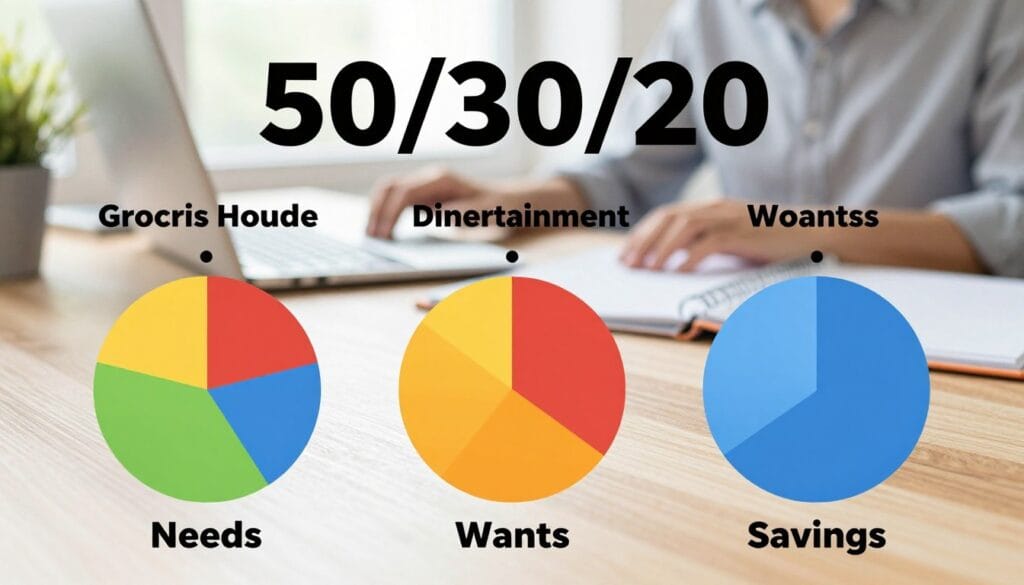
Let’s dive into some realistic scenarios to see how this percentage framework transforms into a functional monthly spending plan. These examples illustrate how you can maintain financial health regardless of your current income level. Visualizing your money in action is the first step toward true financial freedom.
By using a consistent budget, you remove the guesswork from your daily financial choices. Seeing the numbers on paper helps you commit to the 50/30/20 rule effectively.
To help you understand the scale, look at how these allocations change as your earnings grow. The table below compares two common monthly scenarios.
| Category | $3,000 Net Pay | $5,000 Net Pay |
|---|---|---|
| Needs (50%) | $1,500 | $2,500 |
| Wants (30%) | $900 | $1,500 |
| Savings (20%) | $600 | $1,000 |
Example 1: $3,000 Monthly After-Tax Income Breakdown
If your monthly after-tax income is $3,000, your targets are clear. You would allocate $1,500 for needs, $900 for lifestyle choices, and $600 for savings. This example helps you visualize limits for rent, groceries, and transportation each month.
This is a solid budget for individuals starting their careers in most cities. Allocating funds correctly ensures your bills are always paid on time.
Example 2: $5,000 Monthly After-Tax Income Breakdown
When your income increases to $5,000, the math scales with you. You now have $2,500 for needs and $1,500 for wants. Your savings contribution jumps to $1,000, which significantly speeds up your path to wealth.
This budget shows that a higher income provides more breathing room while the rule keeps you disciplined. Scaling your spending proportionally prevents lifestyle creep from ruining your future.
When the Standard Percentages Don’t Fit Your Life

Financial freedom isn’t a one-size-fits-all journey, so don’t worry if the standard percentages feel out of reach. In a perfect world, everyone would fit the 50/30 rule perfectly into their monthly routine. However, real life often brings rising inflation, high childcare expenses, or unexpected medical bills.
If your current situation is tight, you should not panic. This budgeting rule is designed to be flexible and helpful for everyone. You can change the numbers to meet your current needs while still moving forward toward your goals.
Adjusting for High Housing Costs (60/20/20 Split)
In many expensive cities, rent or mortgage costs often exceed half of your total paycheck. If this happens, you may need to spend 60% on your basic needs. This adjustment is a common reality for many living in urban areas.
To make this work, you must cut your discretionary wants down to 20%. Try to protect your savings at the 20% mark whenever possible. This ensures you still build wealth even while paying for an expensive home.
Prioritizing Aggressive Debt Payoff (50/10/40 Split)
If you want to eliminate high-interest debt fast, you need a more focused plan. You can temporarily slash your lifestyle spending to just 10% to free up cash. This allows you to put a full 40% of your income toward your debt and wealth building.
Using this aggressive version of the 50/30 rule can shave years off your repayment timeline. It requires discipline, but the long-term freedom is worth the short-term sacrifice. Many people find that this high-intensity rule provides the momentum they need to succeed.
Starting from Scratch (70/20/10 Split)
Many beginners start their journey spending 70% or more on basic necessities. If that is your current reality, start with an honest 70/20/10 split as your baseline. Attempting a perfect 50/30 rule setup overnight can often lead to frustration and failure.
It is much better to have a realistic plan than to abandon the 50/30 rule entirely. Building awareness of where your money goes is the first step toward change. Once you have a clear baseline, you can begin making small improvements.
| Budget Strategy | Needs | Wants | Savings/Debt |
|---|---|---|---|
| Standard Method | 50% | 30% | 20% |
| High Cost of Living | 60% | 20% | 20% |
| Aggressive Debt Payoff | 50% | 10% | 40% |
| Beginner Baseline | 70% | 20% | 10% |
Moving Gradually Toward the Ideal Percentages
The main goal is to migrate your percentages toward the ideal allocation over time. As you pay off old bills or increase your income, move those extra funds into your investments. Small, consistent shifts are more sustainable than drastic lifestyle changes that don’t last.
“The budget is not just a collection of numbers, but an expression of our values and aspirations.”
Your personal 50/30 rule should evolve as your life changes. Following a modified 50/30 rule that fits your reality is always better than having no plan at all. Stay focused on the progress you are making rather than seeking perfection from day one.
Common Challenges and How to Overcome Them
While the theory is straightforward, many people encounter practical hurdles when trying to align their spending with these percentages. These obstacles do not mean the rule fails for your specific situation. Instead, you just need a more flexible way to manage your budgeting habits.
Handling Irregular or Variable Income
Freelancers and gig workers often face a changing income every month. This fluctuation makes it difficult to commit to fixed dollar amounts for your categories. It is hard to stay consistent when your paycheck varies from one week to the next.
Income Averaging Approach
Try using an income-averaging approach to stabilize your plan. Look at your total income over the last twelve months and calculate the average. Build your budget based on that average income or a conservative minimum estimate to ensure you stay covered during slow periods.
Managing Periodic and Annual Expenses
Annual expenses like car registration or holiday gifts can easily disrupt a monthly plan. Even though these expenses are necessary, they are not part of your regular weekly bills. These items often get forgotten until the due date arrives.
Using Sinking Funds for Non-Monthly Costs
A sinking fund is the most effective solution for these irregular costs. Take the total annual cost of an item and divide it by twelve to find the monthly amount. Treat this transfer as a “Need” and move the money into your savings each month so the cash is ready when you need it.
| Expense Category | Annual Estimated Cost | Monthly Set-Aside |
|---|---|---|
| Car Insurance/Fees | $1,200 | $100 |
| Holiday Shopping | $600 | $50 |
| School Supplies | $300 | $25 |
Budgeting as a Couple or Family
Successful budgeting as a couple requires combining your totals and discussing shared goals. List all shared necessary expenses first to ensure the household is secure. Then, negotiate individual “Wants” so both partners feel represented and happy over time.
Who Should (and Shouldn’t) Use the 50/30/20 Rule
Finding the right balance in your finances often depends on choosing a strategy that aligns with your personality. While many find success here, others may need a different plan to reach their unique financial milestones.
Best Candidates for This Budgeting Method
The 50/30/20 rule works best for budgeting beginners who feel overwhelmed by detailed tracking. It is ideal for people with stable incomes who want clear guidelines without constant micromanagement.
This approach provides a flexible framework for those with moderate financial complexity. If you prefer a “big picture” view of your money rather than counting every cent, this is likely your best fit.
When Alternative Budget Methods Work Better
Sometimes, life requires a more aggressive approach or tighter controls. If you have significant high-interest debt, this standard method might not move the needle fast enough for your needs.
Zero-Based Budgeting
This budget system is perfect for detail-oriented individuals. You assign every dollar a specific job until your income minus expenses equals zero, ensuring no money is wasted.
Cash Envelope System
This rule helps people who struggle with overspending on digital cards. You put physical cash into labeled envelopes to create hard limits on your monthly wants.
Pay-Yourself-First Rule
This plan prioritizes your long-term goals by automating savings right when you get paid. Once you fund your future, you can spend the remaining balance without feeling any guilt.
| Budgeting Method | Ideal User Personality | Main Financial Focus |
|---|---|---|
| 50/30/20 Strategy | The Simple Balancer | Sustainable Lifestyle |
| Zero-Based | The Detail Optimizer | Total Efficiency |
| Cash Envelopes | The Tactile Spender | Spending Control |
| Pay-Yourself-First | The Automated Saver | Wealth Building |
5 Action Steps to Start Your 50/30/20 Budget Today
A clean, modern smartphone screen displaying a colorful budgeting app interface with a 50/30/20 pie chart, sitting on a wooden desk next to a cup of coffee and a calculator.
Jumpstart your financial journey today with a clear, actionable plan to master your income. First, gather one month of bank and credit card statements to track your current spending. Categorize every transaction into needs, wants, or savings to establish an honest baseline for your money.
Next, calculate your after-tax income and apply the 50/30/20 percentages. Compare these ideal numbers against your actual expenses to identify where you can reallocate funds. This step reveals exactly how much you are overspending on non-essentials.
Third, look for specific adjustments in your “wants” category. Cutting unused subscriptions or reducing dining out can help you reach your financial goals faster. Even small changes can free up significant cash flow over time.
Fourth, automate your savings by setting up a recurring transfer to a separate account. Increasing retirement contributions ensures you pay your future self before you have the chance to overspend. Automation removes the stress of manual transfers every month.
Finally, schedule a quarterly review of your accounts to keep your budget relevant. Regular check-ins ensure your money continues to support your evolving life goals. Even an imperfect start today is better than waiting for the perfect moment tomorrow.
Using high-quality budgeting tools and apps makes this process seamless and keeps your budget on track. A reliable account sync feature ensures you monitor spending in real-time. This consistency is the secret to a successful budget.
Conclusion
The 50/30/20 rule offers a refreshing alternative to traditional budgeting. It focuses your attention on what truly matters: living within your means while creating a secure future. Instead of counting every cent, you organize your money into three meaningful categories.
This method works because it balances your current life with your long-term financial goals. You can adjust the amount in each category to fit your unique needs. If you have high housing costs or a student loan, you can tweak the percentages to stay on track.
Small changes to your monthly insurance or car payments make a big difference over time. Negotiating a lower car insurance rate or selling a high-cost car helps you reach your savings targets faster. Reducing the amount you pay for a car loan or other loans frees up money for your budget.
Consistency is the key to any successful financial plan. Use the 50/30/20 rule to simplify your daily decisions and build lasting savings. When you manage the amount of your loans and total debt, you gain the freedom to enjoy your money today.
Setting a fixed amount for loans ensures you never fall behind on your obligations. Whether you are paying off a car or managing a personal loan, this rule provides the clarity you need. Mastering this framework builds valuable habits for a lifetime of financial confidence.
| Budget Category | Percentage Allocation | Core Focus |
|---|---|---|
| Needs | 50% | Survival and Obligations |
| Wants | 30% | Lifestyle and Enjoyment |
| Savings & Debt | 20% | Security and Growth |


 By
By